null
Dust Collector vs Shop Vac: Which One Is Best for Your Woodworking Shop?

Dust Collector vs Shop Vac: Which One Is Best for Your Woodworking Shop?

POWERTEC on Mar 29th 2026

Woodworking creates more dust than most people expect, and it adds up fast.

A woodworker can generate 40–60 pounds of sawdust per month, which adds up to over half a ton per year. Without proper dust management, that dust ends up in your tools, your workspace, and most importantly, your lungs.

That’s why upgrading your dust collection setup is one of the most important improvements you can make in your shop.

So the big question is: Should you use a dust collector or a shop vac?

While both remove dust and debris, they are designed for very different purposes. In this guide, we’ll break down the differences, help you choose the right system, and show how to build a complete dust management setup.

Upgrade your workshop
Build a Better Dust Collection Setup
Explore POWERTEC dust collectors, shop vac accessories, and air filtration systems designed to keep your shop cleaner and safer.
Shop Dust Collection

Dust Collector System (Best for Stationary Tools)

Dust collectors are designed for high airflow (measured in CFM — cubic feet per minute), making them ideal for machines like table saws, planers, and jointers that generate large volumes of chips and fine dust.

A complete system includes a collector, hoses, adapters, blast gates, and fittings to move dust away from your tools efficiently.
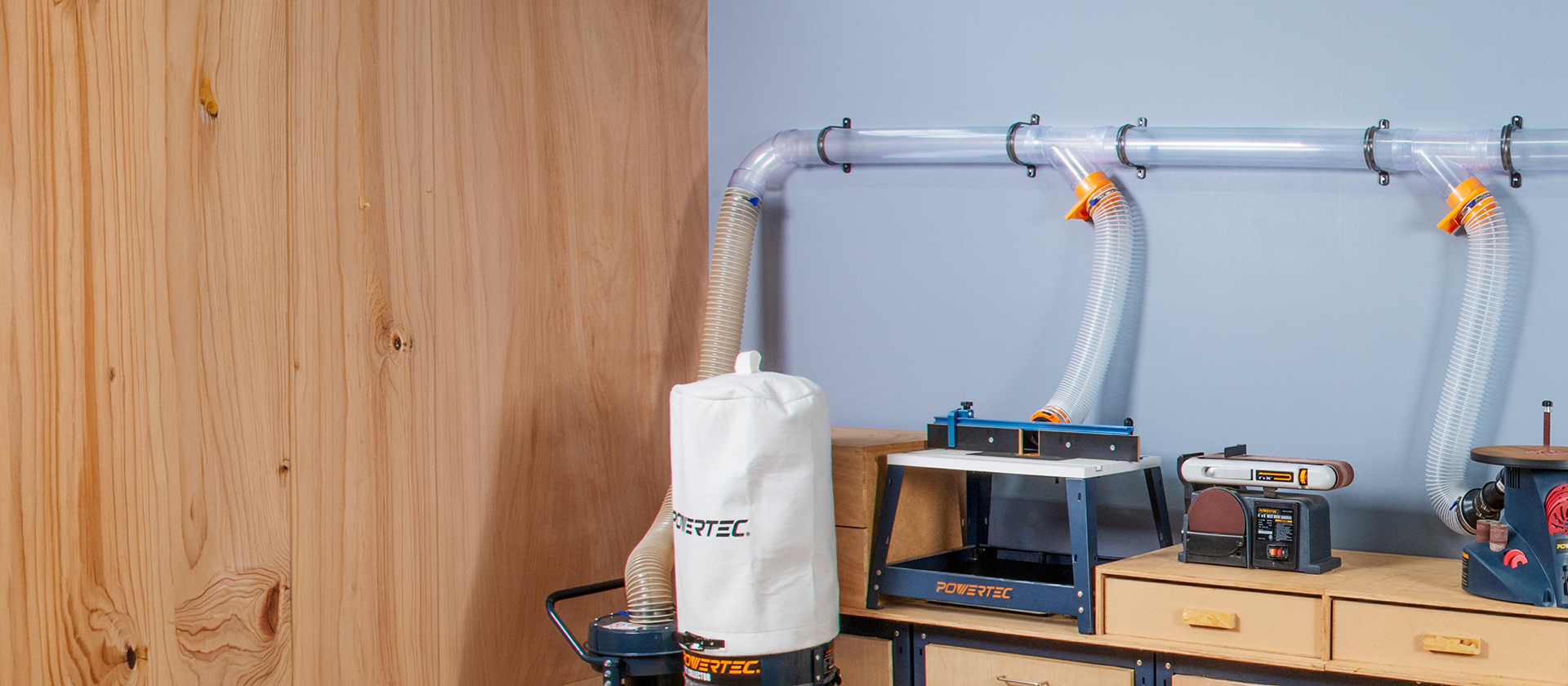
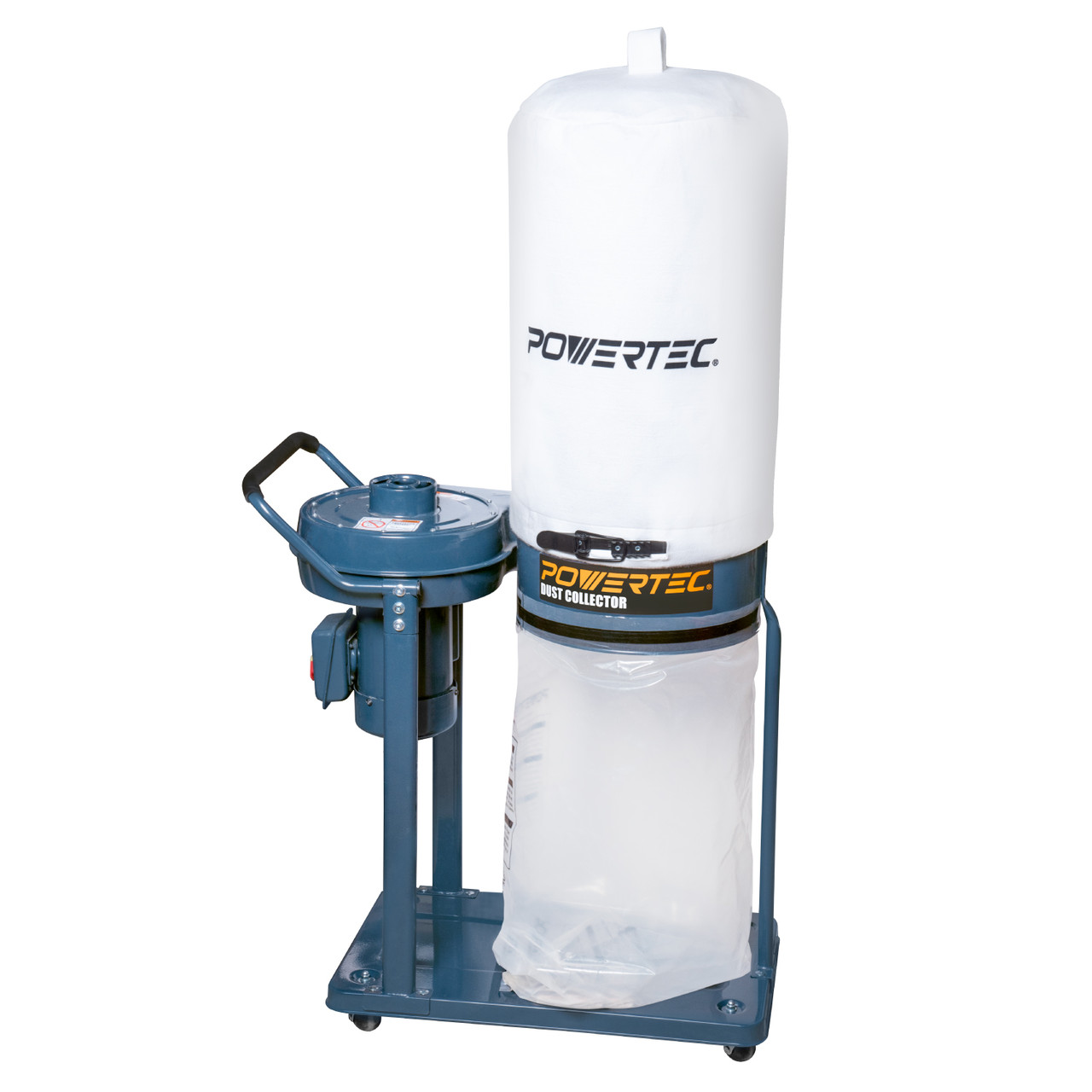
dust collector system setup

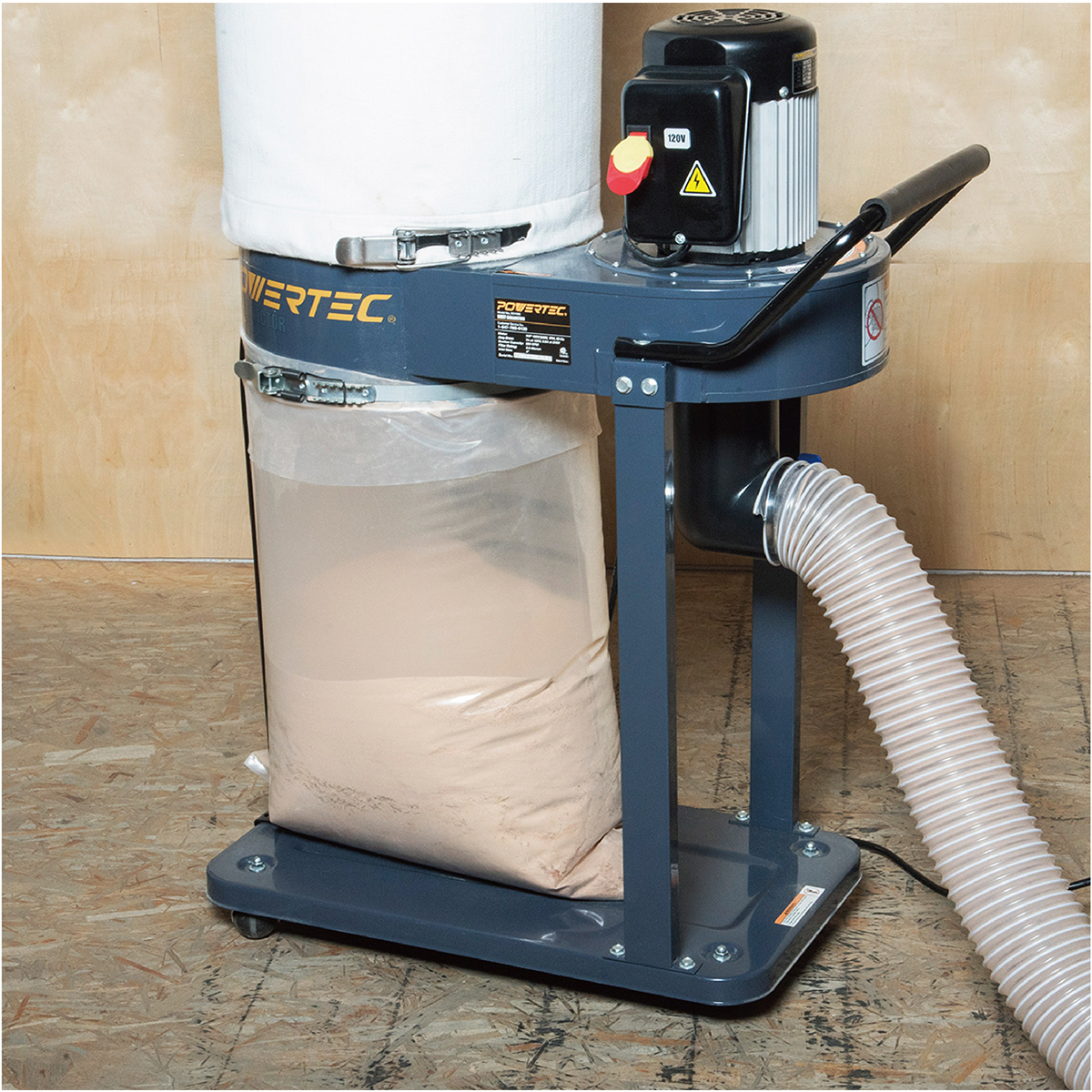
1HP Dust Collector (DC1081)
  • 800 CFM airflow for large tools
  • Captures chips + fine dust
  • Ideal for central systems

Clear Plastic Dust Collection Bags (Multiple Sizes)
  • Transparent design lets you see when the bag is full
  • Ideal for chip collection in high-volume dust systems
  • Multiple sizes available to match different collectors
Available options:
• 20" x 43" — (70002) View 20" x 43" →
• 14" x 32" — (70008) View 14" x 32" →
• 19-1/2" x 33" — (70009) View 19-1/2" x 33" →

Dust Collector Bag (70335)
  • 1-micron filtration
  • Maintains airflow efficiency

4" Dust Collection Hose (70393)
  • 4” diameter = higher airflow
  • Flexible machine connection

Dust Port Adapter (70354)
  • Adapts small ports to 4"
  • Expands tool compatibility

Blast Gate (70295)
  • Directs airflow
  • Maximizes suction efficiency

Hose Hangers (70343)
  • Organizes hose routing
  • Reduces clutter

Fittings Network (70306)
  • Custom duct layouts
  • Expand your system

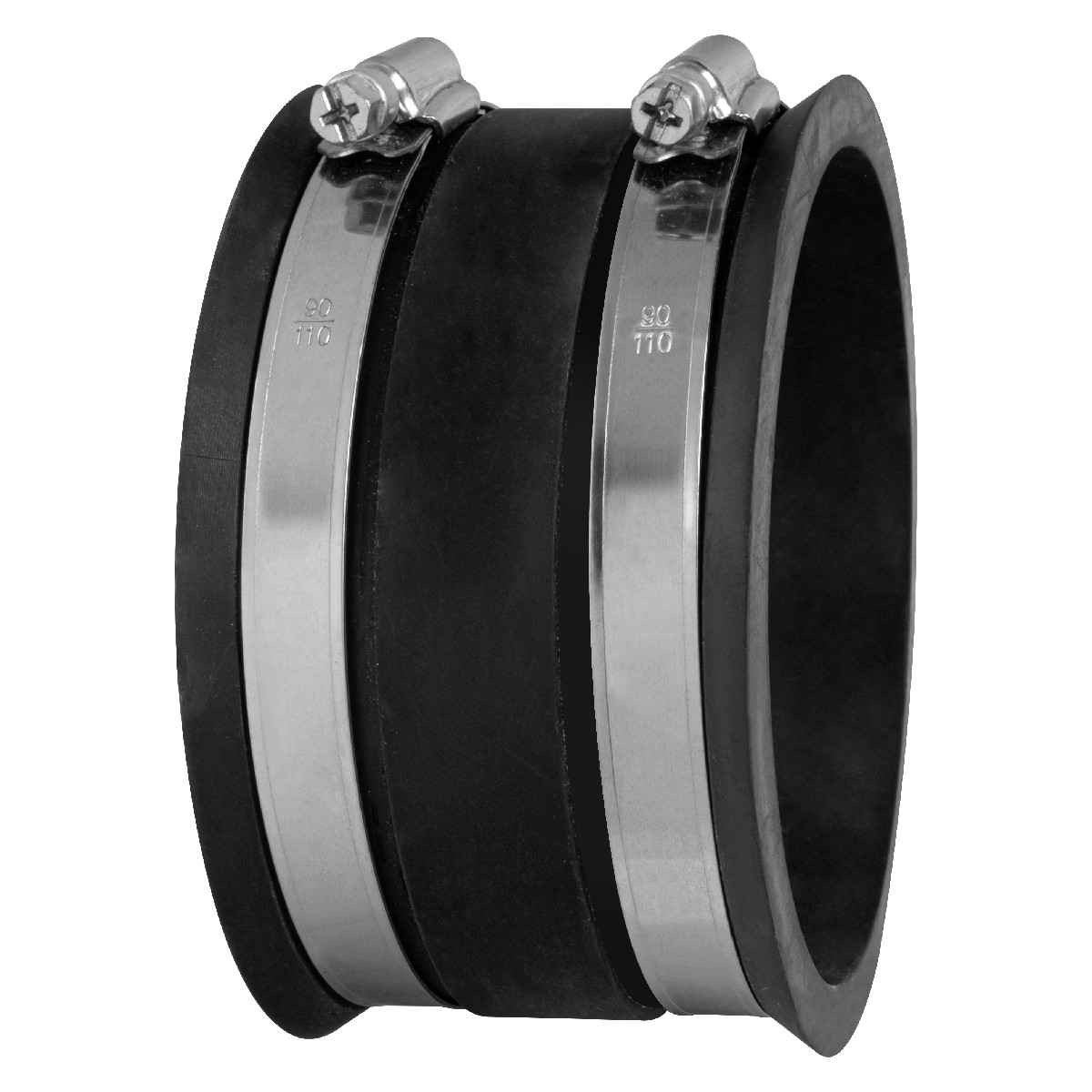
Flex Cuff (70149)
  • Secure connections between two 4” OD ports or fittings
  • Prevents air leaks

Shop Vac System (Best for Small Shops & Portable Tools)

A shop vac is often the best way to drive a 2-1/2" dust collection system, making it ideal for handheld tools, benchtop tools, and general cleanup. It is often the better choice for smaller shops or woodworkers who need a more portable setup.

Most shop vacs have a 2-1/4" ID port, so one of the most efficient ways to connect them to a 2-1/2" hose network is to use a reducer that bridges the two sizes.

With the right separator, hose, reducer, fittings, and accessories, a basic shop vac setup can become much more efficient and easier to maintain.
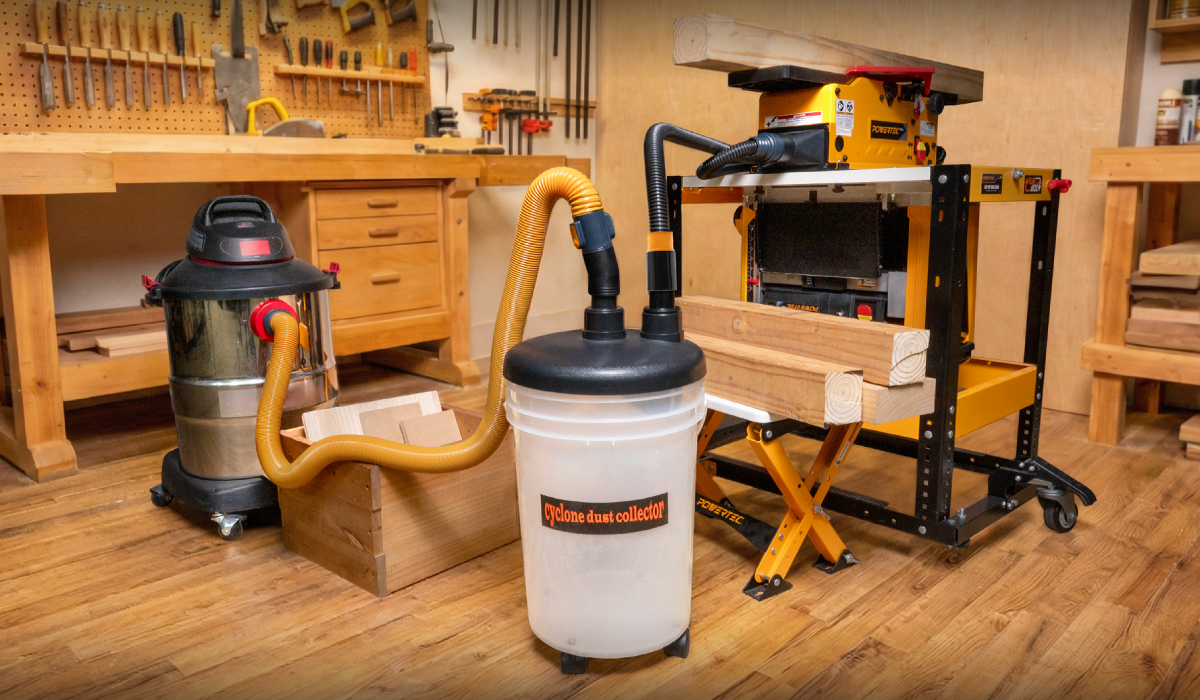
shop vac dust collection setup

Cyclone Dust Collector (70293)
  • Separates debris before the vacuum
  • Helps prevent filter clogging
  • Keeps suction stronger for longer

Reducer 2-1/2" to 2-1/4" (70141)
  • Provides a quick connection between a 2-1/4" ID port and a 2-1/2" ID hose or fitting
  • Helps connect your shop vac to a 2-1/2" dust collection system

2-1/2" x 20' Dust Collection Hose (70144)
  • Long reach for flexible setups
  • Ideal for portable tools and cleanup

2-1/2" Dust Control Flex Cuff with Key Hose Clamps (70337)
  • Secures connections between two 2-1/2" OD ports or fittings
  • Prevents air leaks

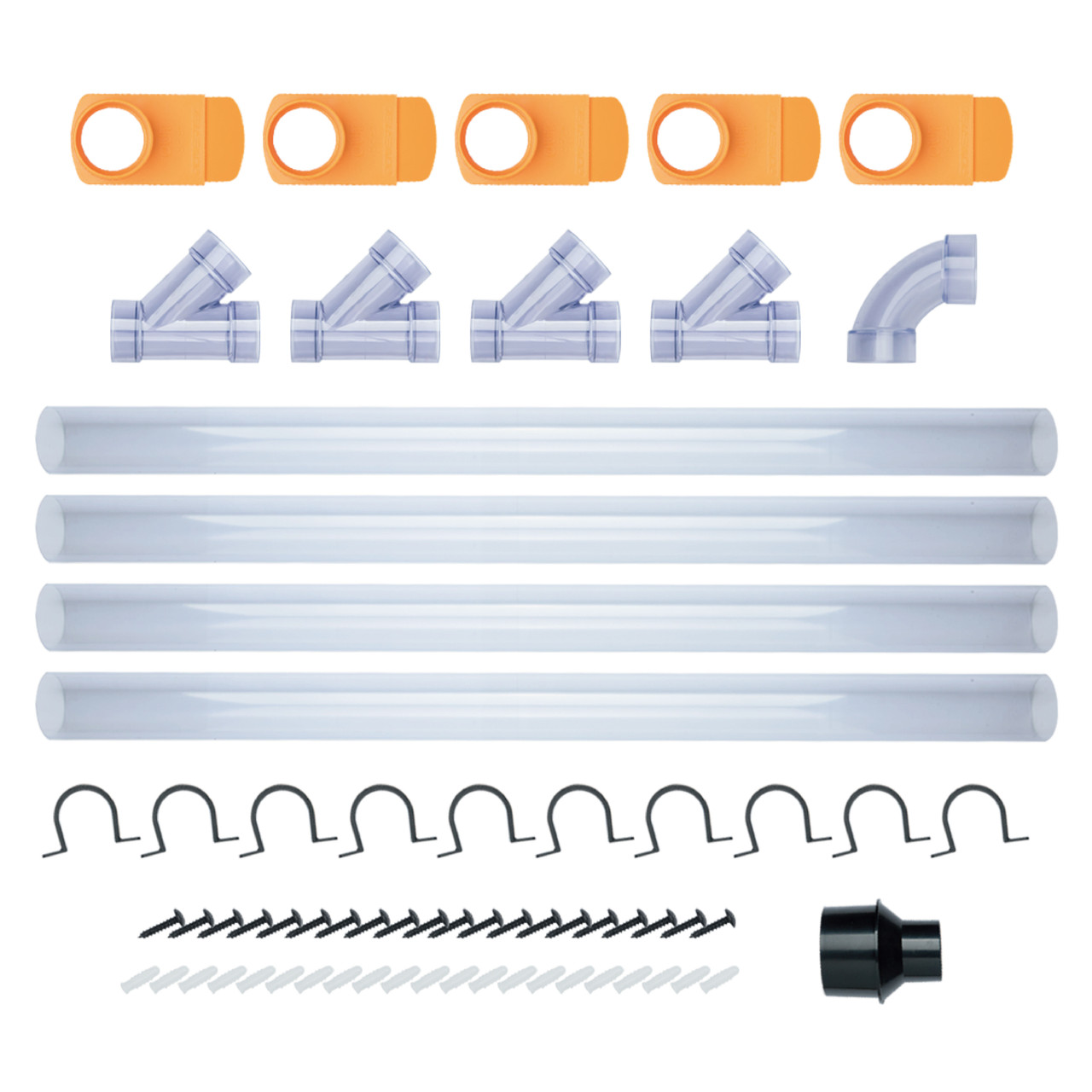
2-1/2" Dust Collection Fittings Network (70304)
  • Builds a modular small-hose system
  • Helps route connections between tools

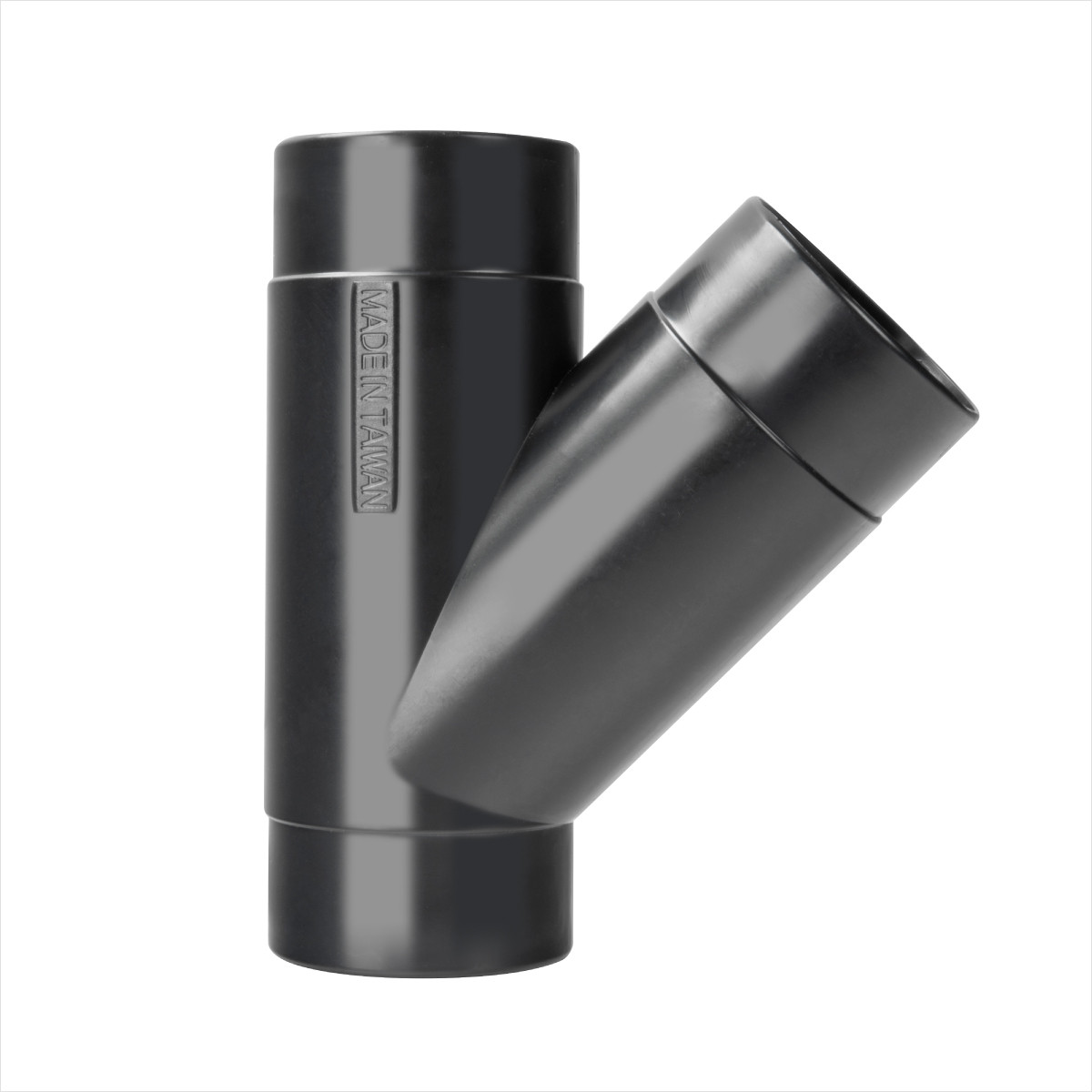
2-1/2" Y Fitting (70179)
  • Splits airflow paths
  • Adds flexibility to hose routing

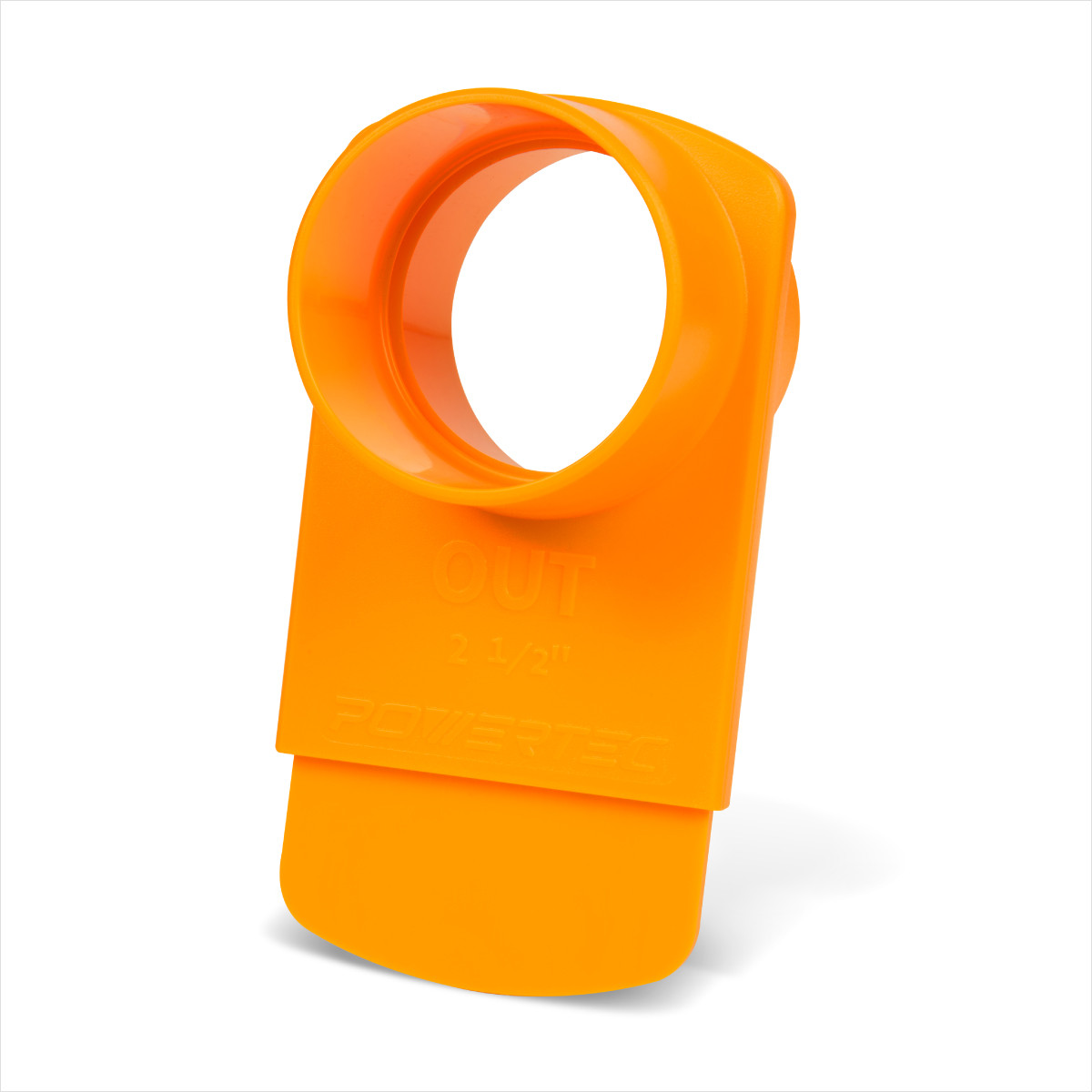
2-1/2-Inch Clog-Resistant Blast Gate (70294)
  • Directs suction where needed
  • Improves multi-branch efficiency

Floor Sweep Kit (70443)
  • Makes floor cleanup faster
  • Helpful for daily shop maintenance

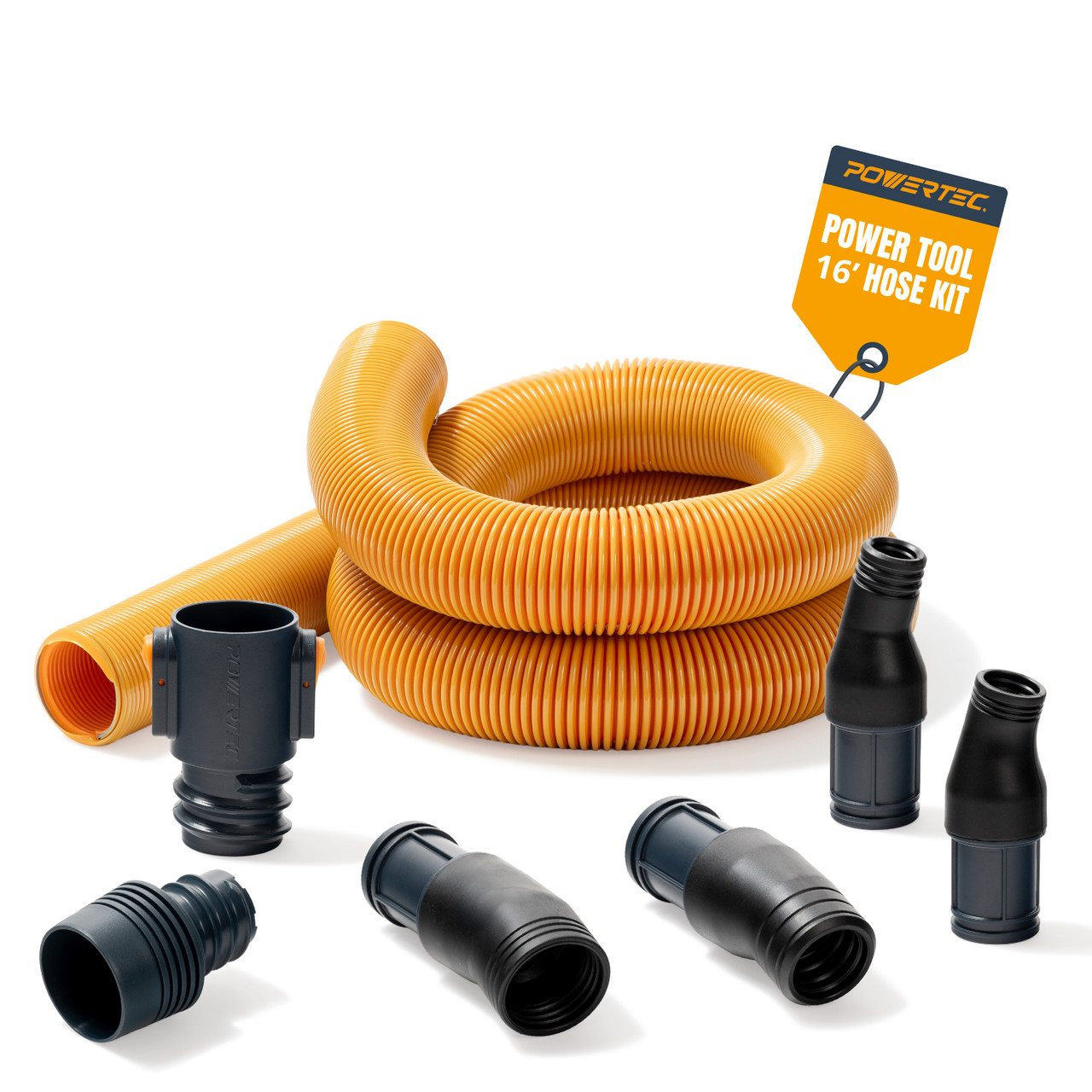
Power Tool Hose Kit (70482)
  • Connects vac systems to power tools
  • Includes quick-connect adapters
  • Great for routers and sanders

Air Filtration (The Missing Piece)

Even the best dust collection setup cannot capture everything at the source. Fine airborne dust can remain suspended in the air, which is why air filtration is an essential final layer of protection.

By continuously filtering the air in your shop, you reduce lingering dust particles and create a cleaner, healthier workspace.

Air Filtration System (AF4000)
Currently available on Amazon
  • 400 CFM air circulation
  • Captures fine airborne dust
  • Runs continuously to clean the shop air
Replacement Filters for AF4000
5 Micron Outer Filter (75040)
Captures larger airborne particles.
Activated Carbon Filter (75094)
Helps reduce odors and VOCs.
1 Micron Inner Filter (75006)
Captures fine dust particles.
Filter Combo Pack (75065)
Complete replacement set for routine maintenance.
Choosing the right filter combination helps maintain airflow performance and improves air quality based on your shop’s needs.
Air Quality Monitor (AD1001)
  • Tracks PM2.5, TVOC, and air quality
  • Monitors shop conditions in real time
  • Helps validate your dust setup

Dust Collector vs Shop Vac: Quick Comparison

Both systems help manage dust, but they solve different problems. Dust collectors are better for moving large volumes of air from stationary machines, while shop vacs excel at high suction for smaller ports, portable tools, and cleanup.

Feature Dust Collector Shop Vac
Best for Stationary woodworking machines Portable tools and cleanup
Airflow Higher airflow (better for chips + fine dust) Lower airflow
Suction Moderate Higher suction through small hoses
Typical hose size 4" systems 2-1/2" systems
Shop size fit Small-to-medium shops with fixed machines Small shops, mobile workstations, multi-use spaces
Common add-ons Hose, fittings, blast gates, adapters Separator, hose kit, Y fitting, floor sweep

Best Setup by User Type

The best dust management setup depends on your tools, workspace, and how often you work. Here’s a simple way to think about it:

Beginner setup
Shop Vac + Cyclone Separator
Best for small garages, portable tools, and woodworkers who need a flexible setup without taking up much space.
  • Strong suction for small tool ports
  • Compact and easy to move
  • Lower entry cost
Growing workshop
Dust Collector + 4" Hose Network
Better for shops with stationary machines that produce higher dust volume and need more continuous airflow.
  • Higher airflow for larger machines
  • Supports central dust collection
  • More efficient for daily woodworking
Most complete approach
Dust Collector + Shop Vac + Air Filtration
This is the best overall setup for many serious woodworkers because each system handles a different part of the problem.
  • Dust collector for stationary machines
  • Shop vac for handheld tools and cleanup
  • Air filtration for lingering airborne dust

FAQs About Dust Collectors and Shop Vacs

Can a shop vac be used as a dust collector?
Yes, for some tools. A shop vac works well for handheld tools and cleanup, but it usually cannot match the airflow needed for larger, stationary woodworking machines.
Do I need a dust collector for woodworking?
It depends on your tools. Small portable setups can work with a shop vac, but larger machines like planers, jointers, and table saws usually benefit from a true dust collector system.
What is the main difference between a dust collector and a shop vac?
A dust collector is built for higher airflow through larger hoses, while a shop vac provides stronger suction through smaller hoses. They solve different dust collection problems.
Why is air filtration still important if I already collect dust at the tool?
Source collection helps capture dust where it is created, but fine airborne particles can remain suspended in the shop. Air filtration helps remove that lingering dust from the air.
What is the best overall dust management setup for a woodworking shop?
For many woodworkers, the most complete approach is using a dust collector for stationary machines, a shop vac for handheld tools and cleanup, and an air filtration system for the fine dust that remains in the air.
Build a better dust setup
Cleaner Air Starts Here
Explore POWERTEC dust collectors, separators, hoses, fittings, and air filtration solutions designed to help keep your workshop cleaner and safer.
Shop POWERTEC Dust Solutions