
Browse Categories
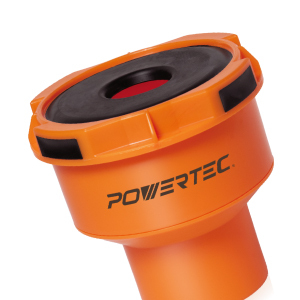
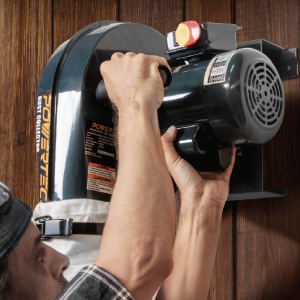
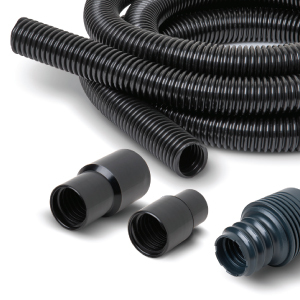
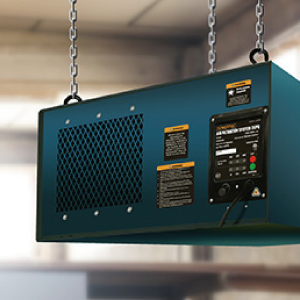



What a dust collection system includes: parts, subcategories and featured products
A complete dust collection system has four stages, and a weak link in any one of them lowers the performance of the whole setup. Each table below covers one stage: the POWERTEC subcategory, what it is for, and the products customers look at most (item number in brackets).
Start here: dust collection kits
| Subcategory | Featured products |
|---|---|
| Dust collection kitsMatched parts in one box, so you do not have to calculate every fitting. Good for first-time buyers and temporary job-site setups. | 10 ft hose kit with 5 fittings (70347) 4 inch three-machine dust collection kit (70316) 20 ft vacuum hose kit, quick connect (70483) 30 ft vacuum hose kit, quick connect (70484) 4 inch magnetic connector, 8 magnets (70502). See the magnetic fittings guide. |
Stage 1: Pickup at the tool
| Subcategory | Featured products |
|---|---|
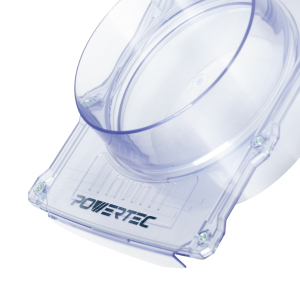
| Dust hoods and dust portsCapture dust where it is made. A hood close to the source collects far more than a larger hood placed far away. | Big Gulp dust hood (70122) Mini Gulp dust hood, 4 inch port (70169) 12 inch table saw dust hood (70131) 14 inch table saw dust hood (70132) Universal dust port, 2-1/2 inch (70124) 4 inch inlet flange (70126) 2-1/2 inch inlet flange (70298) 21 inch floor sweep (70103) |
Stage 2: Ducting
Stage 3: Collector
| Subcategory | Featured products |
|---|---|
| Dust collectorsCreate the airflow for the whole system and separate chips from air. Wall mounted saves floor space, portable moves between tools, and the 1 HP mobile unit suits a busy shop. See the cyclone dust collector guide. | DC1081: 1 HP, 800 CFM, mobile base DC5371: wall mounted, 1 micron bag DC5371C: wall mounted, with spare filter bag DC5372: portable, 1 micron bag Cyclone dust collector (70293) Cyclone dust separator, 99.9% (72295) |
Stage 4: Filtration
For a one-page look at the whole range, see the dust management catalog.
Why every shop needs dust collection
Wood dust is a health, fire and equipment problem at the same time. The US National Institute for Occupational Safety and Health (NIOSH) recommends keeping wood dust exposure to 1 mg/m³ for total dust, which is far below the OSHA general limit of 15 mg/m³ for total dust and 5 mg/m³ for the respirable fraction. Exposure is linked to dermatitis, asthma, chronic bronchitis and, with certain hardwoods such as oak, mahogany, beech and walnut, nasal cancer (OSHA wood dust overview). Fine dust is also combustible: NFPA 664 sets the minimum fire and explosion prevention requirements for wood processing and woodworking facilities, and it applies to some carpentry shops depending on size and collection airflow. Dust that is not captured also works its way into motors, bearings and switches. A small shop vac is not a substitute for a dedicated system once you run several machines, as explained in dust collector vs shop vac.
Find your setup: which dust collection system fits your shop?
Pick the row that matches how you work today. Each setup can grow into the next one without throwing parts away, because hose, fittings, clamps and blast gates are shared across sizes.
| If you are | Start with | Why it works |
|---|---|---|
| A beginner with one or two tools and a shop vac | A dust collection hose kit plus a cyclone dust separator in front of the vacuum | The separator drops most chips into a bucket, so the vacuum filter stays clean and suction stays steady |
| A hobbyist in a garage or basement shop | A wall mounted dust collector or portable dust collector with a short hose run | Real collector airflow without a large footprint, and nothing on the floor in the wall-mounted version |
| A serious woodworker or small commercial shop running several machines | The DC1081 1 HP, 800 CFM mobile dust collector with a 4 inch fittings network and blast gates | Wheels let it move to the tool in use, and blast gates send all the airflow to one machine at a time |
| A contractor or remodeler working on site | A power tool vacuum hose kit, matching vacuum filters and a drill dust collection system | Portable, fits the vacuums you already own, and captures dust at drilling and sawing points |
| A shop that needs an industrial dust collection system | Use POWERTEC for pickups, hose, fittings, clamps and filters, and have an engineered system sized for your process | Large production and combustible-dust installations need a designed system. POWERTEC's collectors suit workshops and small commercial shops. |
Size your dust collection system: CFM, duct size and static pressure in a real multi-machine shop
Three numbers decide whether a system works: airflow (CFM), the speed of air in the duct (feet per minute, fpm), and resistance (static pressure). Common design targets are about 4,000 fpm in branch ducts that serve individual tools and about 3,500 fpm in main ducts, which is fast enough to keep chips moving. The duct diameter then sets the airflow each branch needs. The table below shows one branch. The sections after it show what changes when several machines share one collector.
| Duct or hose diameter | Airflow needed at about 4,000 fpm | Typical use |
|---|---|---|
| 2-1/2 inch | About 140 CFM | Sanders, routers, small handheld tools, shop vac lines |
| 4 inch | 350 CFM | Table saws, band saws, miter saws, router tables, most benchtop machines |
| 5 inch | 550 CFM | Larger branch lines and jointers |
| 6 inch | 785 CFM | Main trunk lines, planers, shared runs |
The 4, 5 and 6 inch figures are the standard duct-sizing values at about 4,000 fpm. The 2-1/2 inch row is calculated from the same formula (air speed times duct area, rounded). Treat every figure as a starting point and check the port size and airflow your machine's manual calls for.
How much CFM do you need when several machines share one collector?
Add up the machines that run at the same time, not the machines you own. Blast gates are what let one collector serve many tools, because only the open branches draw air, and the CFM you need at the collector is the sum of the branches that are open together. These are typical demands for common machines. Always check your own machine manual for its minimum.
| Machine | Typical CFM demand | Nearest duct size at about 4,000 fpm |
|---|---|---|
| Table saw, 10 inch | 350 to 450 | 4 inch |
| Band saw, 14 inch | 350 to 400 | 4 inch |
| Jointer, up to 8 inch wide | 350 to 450 | 4 inch |
| Planer, 12 inch | 500 | 5 inch |
| Planer, 15 inch and larger | 600 to 900 | 6 inch or larger |
| Disc sander, 12 inch | 300 to 350 | 4 inch |
| Horizontal belt edge sander | 550 to 600 | 5 inch to 6 inch |
| Vertical belt sander, up to 6 inch wide | 400 to 450 | 4 inch |
| Drum thickness sander, up to 12 inch drum | 400 | 4 inch |
| Drum thickness sander, 12 to 24 inch drum | 550 | 5 inch |
| Drill press | 300 | 4 inch |
| Scroll saw | 300 to 350 | 4 inch |
The duct column pairs each demand with the nearest size from the duct table above. A machine at the top of its range may need the next size up. Now add the machines that run together:
| Real shop situation | Gates open | CFM needed at the machines | What it means for ducting |
|---|---|---|---|
| One machine at a time, 10 inch table saw | 1 | 350 to 450 | One 4 inch branch and a short 4 inch run to the collector |
| Table saw and jointer running together | 2 | 700 to 900 | Two 4 inch branches into a 6 to 7 inch trunk. At 900 CFM a 6 inch duct runs at about 4,600 fpm and a 7 inch duct at about 3,400 fpm. |
| 12 inch planer and table saw running together | 2 | 850 to 950 | A 5 inch planer branch, a 4 inch saw branch and a 6 to 7 inch trunk |
| 15 inch or larger planer on its own | 1 | 600 to 900 | A 6 inch branch or larger, kept short and straight |
| 12 inch planer, jointer and table saw all open at once (a gate left open by habit) | 3 | 1,200 to 1,400 | More than a typical small-shop collector can deliver, which is why you open one gate at a time |
| One 5 inch branch and one 6 inch branch | 2 | 1,335 at 8 inches of static pressure | A standard worked example: 550 plus 785 CFM |
The sums and fpm figures in this table are calculated from the demand and duct figures above.
Why rated CFM is not the CFM you get: static pressure
A collector's rated CFM is measured with little or no resistance. Every foot of hose, every bend, every leaking gate and every filter adds static pressure, measured in inches of water, so the airflow that reaches the tool is lower than the label. Narrow ducts and frequent turns (elbows, wyes and tees) raise it. The limit is real: a collector rated for a maximum of 12 inches of water stops moving air at all when the system reaches that resistance. Manufacturers publish performance ratings (a fan curve) that show how much air a collector delivers at different resistance levels, and without them the output at a given resistance is a guess. So compare the CFM column above with the collector's CFM at your system's static pressure (the worked example above uses 8 inches), not with the headline number on the box.
That is why a 1 HP, 800 CFM machine such as the DC1081 is best used on one machine at a time. Two 4 inch machines running together need about 700 to 900 CFM, which already matches or exceeds the 800 CFM rating before hose and bend losses. For the maths behind this, read airflow by the numbers, and for hose and fitting sizes read ID vs OD: what you need to know.
What to do when your machines need more than your collector delivers
- Open one gate at a time. Fit a blast gate on every branch, and close the gate of any machine that is not running. Gates with an air leak seal, such as the 4 inch aluminum blast gate, keep closed branches from stealing airflow.
- Cut resistance before you add power. Shorten the run, replace sharp 90 degree turns with gentle elbows, and keep flexible hose to the last few feet. The design rules below are the cheapest way to raise real CFM.
- Give the heavy producers their own plan. A planer needs 500 CFM and up, so put it on a short dedicated run, or on its own collector, instead of sharing a long trunk with other machines.
- Move low-demand tools to a vacuum line. Small handheld tools and sanders can run on a 2-1/2 inch line, which needs far less air (about 140 CFM in the duct table above). Use the shop vac hose kit with a cyclone dust separator.
- Step up when you need several big machines at once. If your shop regularly needs two or more large machines open together, plan a larger or engineered system. POWERTEC's pickups, hose, fittings and blast gates are sized to carry over to it.
Six design rules to maximize the efficiency of your dust collection system, from beginner shops to contractor shops:
- Keep the main run as short and straight as possible, and use gentle elbows or two 45 degree turns instead of sharp 90 degree turns.
- Use smooth-wall dust collection pipe for long runs and keep flexible dust collection hose to the last few feet, because ribbed hose has much higher resistance.
- Never shrink the duct toward the collector. Step down only at the tool with a reducer.
- Put a blast gate at every branch and open only the gate for the machine in use.
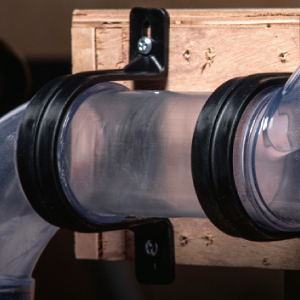
- Support long runs with hangers so the pipe does not sag and collect dust.
- Seal every joint with the right hose clamp; a small leak near the collector costs more airflow than a long hose.
Dust collection by tool: table saw, miter saw, router table and more
Most dust problems start at the pickup, not at the collector. Use the table to match each machine to the right capture point, then follow the links to the parts.
| Tool | What to connect | Featured parts |
|---|---|---|
| Table saw dust collection | A 4 inch connection at the cabinet or base, plus a hood or port above the blade where possible | 12 inch table saw dust hood, 14 inch table saw dust hood, angled 4 inch dust port |
| Miter saw dust collection | A hood or bag at the saw's dust port, then a vacuum or collector line. Dust ports on miter saws vary from about 1-1/2 to 2-1/2 inches, so match the port first. | Replacement miter saw and track saw dust bag, dust port adapter for 1-3/4 and 2-1/2 inch ports, miter saw accessories |
| Router table dust collection | Two pickups: one at the fence and one below the table | Router table dust collection system, 2-1/2 inch router table fence dust port, router table dust port |
| Band saw and benchtop machines | A universal 2-1/2 or 4 inch port and a short flexible hose | Universal dust port, Big Gulp dust hood, Mini Gulp dust hood |
| Drilling (shop and job site) | A vacuum-connected base that seals to the wall or ceiling. See the drill dust collection guide. | Drill dust collection system with drill guide |
| Floor and bench cleanup | A floor sweep or nozzle on the same collector, so you can clean without a second machine | 21 inch floor sweep, rectangular dust collection nozzle |
Set up and maintain your dust collection system
Set-up steps
- List your machines and their dust ports. Note each port size (2-1/2 inch, 4 inch and so on) and how often you run each machine.
- Pick the collector. One or two machines, used one at a time: a wall mounted or portable unit. Several machines or a larger shop: the 1 HP mobile dust collector.
- Sketch the shortest route from each machine to the collector and mark where branches meet.
- Fix the pickups first. A good hood or port at the tool matters more than a bigger collector.
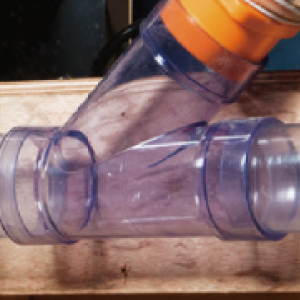
- Build the run with pipe, Y fittings, blast gates and hangers, and keep flexible hose short.
- Seal and test. Tighten every hose clamp, run one machine at a time, and listen for whistling at joints, which signals a leak.
- Add an air filtration system to clean the fine dust that reaches the room air.
Care checklist
- Empty the collection bin or lower bag when it is about half full, so airflow stays high.
- Clean or replace the filter bag when suction drops.
- Check hoses and fittings for clogs after cutting wet or resinous wood.
- Re-tighten clamps and look for cracks in hose and ducts.
- Sweep and vacuum surfaces so dust does not build up on beams, lights and the tops of machines.
Dust collection system FAQ
What is a dust collection system and how does it work?
A dust collection system uses a fan to pull air through hoods and ducts at your tools, separates the chips from the air, and traps them in a bin or bag while returning filtered air to the room. The parts are pickups, ducting, a collector and a filter. See what a dust collection system includes.
Do I need a dust collection system in my home woodshop?
If you cut, plane, sand or rout wood regularly, yes. A basic shop dust collection system is the most direct way to cut your exposure to fine dust, and the NIOSH recommended limit for wood dust is 1 mg/m³, which a shop vac alone rarely meets once several machines run. Start with the dust collector for your busiest machine.
How much CFM do I need for a woodworking dust collection system?
Add up the machines that run at the same time. A 10 inch table saw needs roughly 350 to 450 CFM, a 12 inch planer about 500 and a 15 inch planer 600 to 900, and at about 4,000 fpm a 4 inch duct carries 350 CFM, a 5 inch 550 and a 6 inch 785. Real airflow drops with every foot of hose and every bend, so compare the machines' demand with the collector's CFM at your system's static pressure, not its rated CFM. The machine-by-machine table is in the sizing section above, and airflow by the numbers explains the maths.
Should I use a 4 inch or 6 inch dust collection hose or pipe?
Use 4 inch for most single machines and for branch lines, and use 6 inch for a main trunk that serves several branches or a high-volume machine such as a planer. Never reduce the size on the way toward the collector. Browse dust collection hose in both sizes and the reducers that step between them.
What is the difference between a dust collector and a shop vac?
A dust collector moves a large volume of air at low resistance for big chips and sawdust, while a shop vac moves a small volume at high suction, which suits fine dust and cleanup. For a small shop, a shop vac plus a cyclone dust separator is a sensible start. The full comparison is in dust collector vs shop vac.
How do I set up table saw dust collection?
Connect a 4 inch hose to the saw's cabinet or base port, and add a table saw dust hood above the blade if your saw allows it. Keep the hose short and straight, and close the gates on every other branch.
How do I set up miter saw dust collection?
Miter saws throw dust in a wide fan behind the blade, so capture at the saw's own port with a hood or dust bag, then connect that port to a vacuum or collector through the right port adapter. A fully enclosed backdrop behind the saw improves capture further. See miter saw accessories.
What is the difference between a single-stage dust collector and a cyclone?
A single-stage collector pulls chips and air straight into the bag. A cyclone spins the air first so most chips fall into a bin before they reach the filter, which keeps the filter cleaner and airflow steadier. Read the two-stage cyclone dust collector guide.
Is a wall mounted dust collector good for a small shop?
Yes, when floor space is your limit. A wall mounted dust collector sits off the floor and works best with a short, straight hose to one or two machines. If you want to move it between tools, choose the portable dust collector.
Do I need an air filtration system if I already have a dust collector?
Often yes. A collector captures dust at the tool, but some fine dust always escapes into the room. An air filtration system cleans that remaining air, and an air quality monitor shows you how well the whole setup is working.
What micron filter bag should I use?
A 1 micron bag filters much finer dust and suits a shop where the collector exhausts indoors. A 30 micron bag lets fine dust pass and is better for chips and for outdoor or ducted exhaust. Shop for 1 micron and 30 micron filter bags.
Do I need blast gates, and how many?
If you run more than one machine on a collector, yes. Put one gate at each branch so that only the machine in use gets airflow. See five types of blast gates and the blast gates range.
What are magnetic dust collection fittings and are they worth it?
Magnetic fittings attach a hose to a steel ring on the tool with magnets, so you can swap between machines without clamps or tools. They suit a shared collector in a small shop. Read the magnetic dust collection fittings guide.
Should I use PVC pipe, metal duct or flexible hose, and how do I ground a dust collection system?
Smooth rigid pipe gives the best airflow, and flexible hose is best kept short at the tool. Static electricity is a debated topic for plastic pipe, so follow your local fire code and ask a qualified professional about grounding for larger or commercial systems. Clear PVC dust collection pipe lets you see blockages.
What is an industrial dust collection system, and is a shop system the same?
An industrial system is engineered for continuous production and large airflow, often with explosion protection, and is designed to a standard such as NFPA 664 for wood processing. A workshop system is smaller and built for hand-fed machines. POWERTEC's range covers pickups, hose, fittings and collectors for workshops and small commercial shops, and its parts also fit many larger ducted setups.
Can contractors use a dust collection system on a job site?
Yes, in portable form: a vacuum hose kit and HEPA or MERV filters on a site vacuum, plus a drill dust collection system for drilling. Use a HEPA-rated vacuum and follow OSHA rules when cutting materials that release silica dust.
How do I connect my shop vac to dust collection hose?
Use a shop vac hose adapter set or a reducer for shop vac ports to match your vacuum's port, then use a shop vac hose kit.
How often should I empty the dust collector and replace the bag?
Empty the bin when it is about half full. Replace or clean the bag when you notice weaker suction or visible wear, since a clogged bag restricts airflow long before it fails.
Can I connect a router table or a drill to a dust collection system?
Yes. Use the router table dust collection system for the fence and cabinet, and the drill dust collection system for drilling. See the drill dust collection guide.
How much CFM do I need to run two machines at once?
Add the demand of each machine. A table saw plus a jointer needs about 700 to 900 CFM at the machines, and a 12 inch planer plus a table saw about 850 to 950 CFM, before hose and bend losses. A 1 HP, 800 CFM collector such as the DC1081 is best used one machine at a time with blast gates. If you need two large machines open together, plan a larger system.
What is static pressure in a dust collection system, and why does it matter?
Static pressure is the resistance the fan works against, measured in inches of water. Hose, bends, filters, narrow ducts and leaks all add to it, and as it rises the collector delivers less air than its rating. Ask for a collector's CFM at a given static pressure (its fan curve) instead of relying on the rated CFM alone. See airflow by the numbers.
How do I design a dust collection system for a small shop?
Draw a top-down diagram of the shop that shows each machine, its dust port size, the collector position and the shortest route between them. Put the collector near the machines you use most, run a straight trunk along a wall with Y fittings at the branches, add a blast gate at every branch, and add up the CFM of the machines that run together before you choose the collector and trunk size. The set-up steps above walk through it, and a three-machine dust collection kit is a ready-made starting point.
What is a central dust collection system?
A central dust collection system is a fixed network of pipe that connects several machines to one collector, usually with a blast gate at each machine, so you do not move a hose or a portable unit around the shop. It is built from the same parts as any ducted system: dust collection pipe, Y fittings, blast gates and hangers.
How do I install or build a DIY dust collection system?
Follow the set-up steps above: list your machines and ports, pick the collector, sketch the routes, fix the pickups, build the run, then seal and test. A dust collection kit gives you matched hose and fittings. For a first DIY system, a hose kit and a cyclone dust separator on a shop vac is the lowest-cost way to start, and it grows into a ducted system later.
What parts and accessories do I need for a dust collection system?
At minimum: a pickup at each tool, hose or pipe, fittings and reducers that match your port sizes, a blast gate for every branch, hangers and hose clamps, a collector and a filter bag. The table in the parts and products section lists every subcategory with featured products, including hoses and pipes, adapters and fittings and filter and collector bags.