
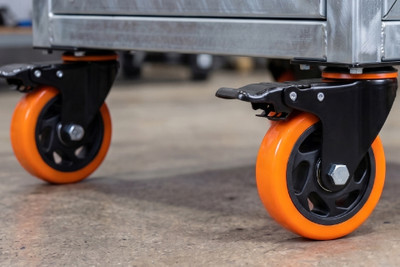
How to Choose the Best Casters for Your Workbench
POWERTEC on Jul 2nd 2026
Adding casters to your workbench can completely change how your workshop functions.
The right caster setup makes heavy benches, carts, and equipment easier to move, while still keeping your workspace stable and safe when it is time to work.
But not all casters are the same. Load capacity, wheel size, wheel material, brake style, swivel movement, and floor conditions all matter. This guide explains how to choose the best casters for your workbench, tool cart, furniture, or heavy-duty shop setup.
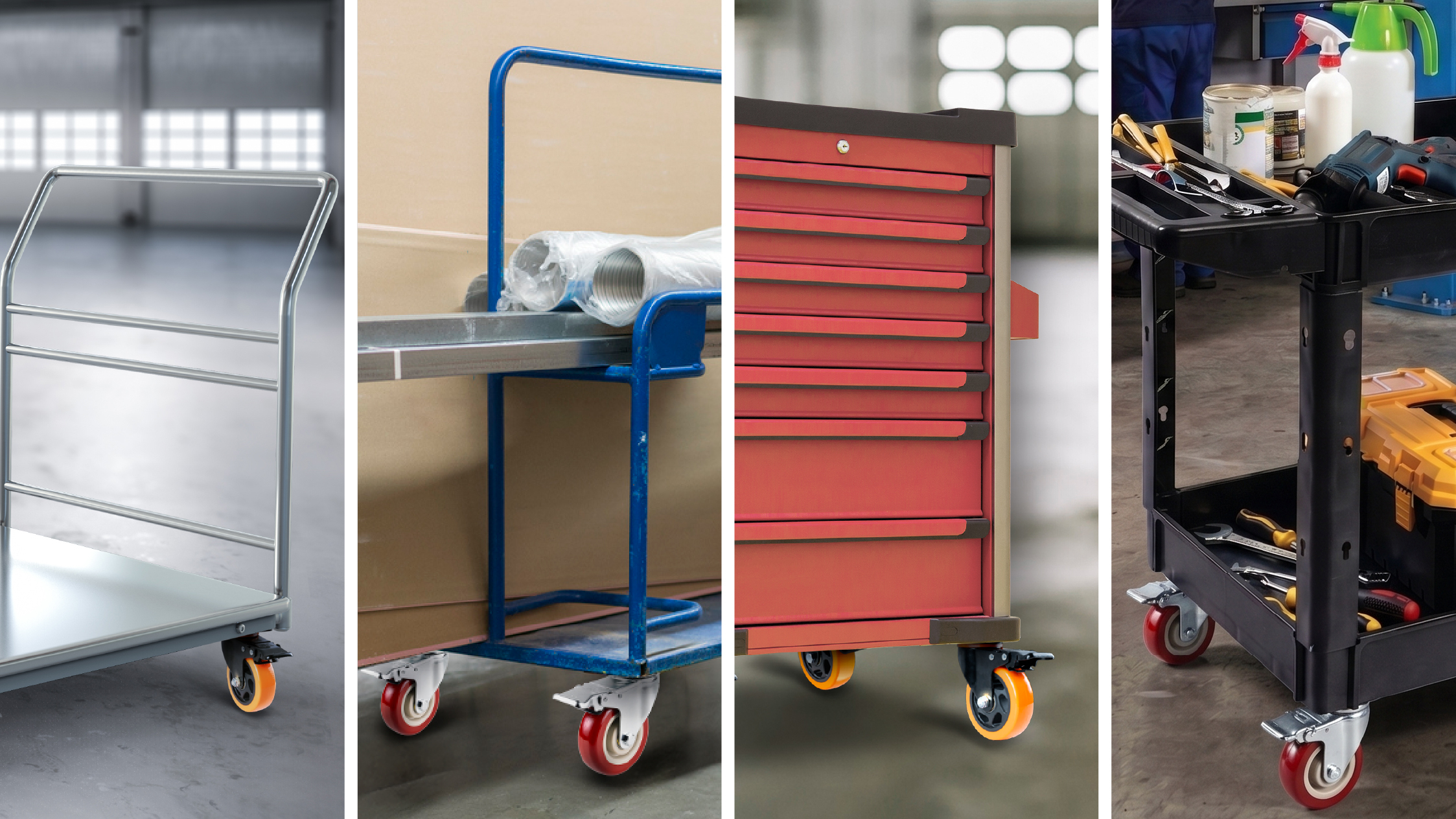
Start with Load Capacity
Load capacity is the first thing to check when choosing caster wheels. Your casters need to support the combined weight of the workbench, tools, materials, and any additional forces you apply while working.
Here’s the part a lot of guides get wrong. It’s tempting to divide by four, one number for each wheel. But on any floor that isn’t perfectly flat, one caster is usually barely touching the ground, so only three are really carrying the load at any moment. Divide by three, and you automatically build in a safety margin.
Example: a 900 lb loaded bench ÷ 3 = 300 lbs per caster minimum. And since moving a loaded bench puts more stress on the wheels than letting it sit, a little extra capacity never hurts.
That "one wheel barely touching" issue is exactly what makes a bench rock on its casters. If your shop floor slopes or your concrete is a little wavy, leveling casters fix it: roll the bench where you want it, then drop the leveling feet to take the wobble out and put the weight on solid footing. More on those below.
Types of Casters Explained
The best caster depends on how you need your project to move. Some setups need maximum maneuverability, others need straight-line control, heavy-duty rolling, or rock-solid stability when parked.
- • Leveling casters roll like a normal caster, then drop retractable feet so the bench sits stable and level. Best when you need both mobility and a solid footing.
- • Swivel casters rotate a full 360°. Best for maneuverability and tight spaces.
- • Fixed casters roll in one direction only. Best for straight-line control, and they pair well with swivel casters for steering.
- • Heavy-duty industrial casters handle large loads, rough floors, and outdoor movement.
Wheel Material and Your Floor
The wheel material matters as much as the size, because it decides how the caster treats your floor and how it rolls. Match the wheel to the surface you actually work on.
Quick rule: if you can see your reflection in the floor, go polyurethane to keep it that way. If the floor already takes a beating, rubber or steel will roll better over the rough stuff.
Why Brake Style Matters
Not all brakes hold a bench the same way, and the difference shows up the second you lean into your work.
- • A single-wheel brake locks only the wheel from spinning. The caster can still swivel, so the bench can drift or swing when you push on it.
- • A dual-lock brake locks both the wheel and the swivel at once, so the bench stays put. For sanding, assembly, routing, or any bench that holds a machine, that’s the one you want.
Best POWERTEC Casters by Application
Use these as a starting point when choosing casters for workbenches, carts, equipment bases, and heavy-duty shop projects. Capacities are shown per caster and per set of 4 so you can compare them directly.
 |
2" Leveling Casters (17300)
|
 |
3" Fixed Plate Casters (17207)
|
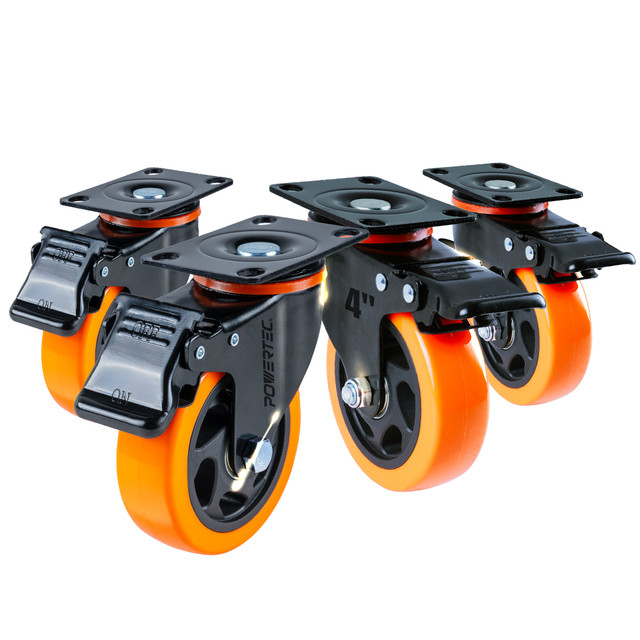 |
4" Swivel Casters w/ Brake (17226 / 17227)
|
 |
6" Industrial Casters (17050 / 17052)
|
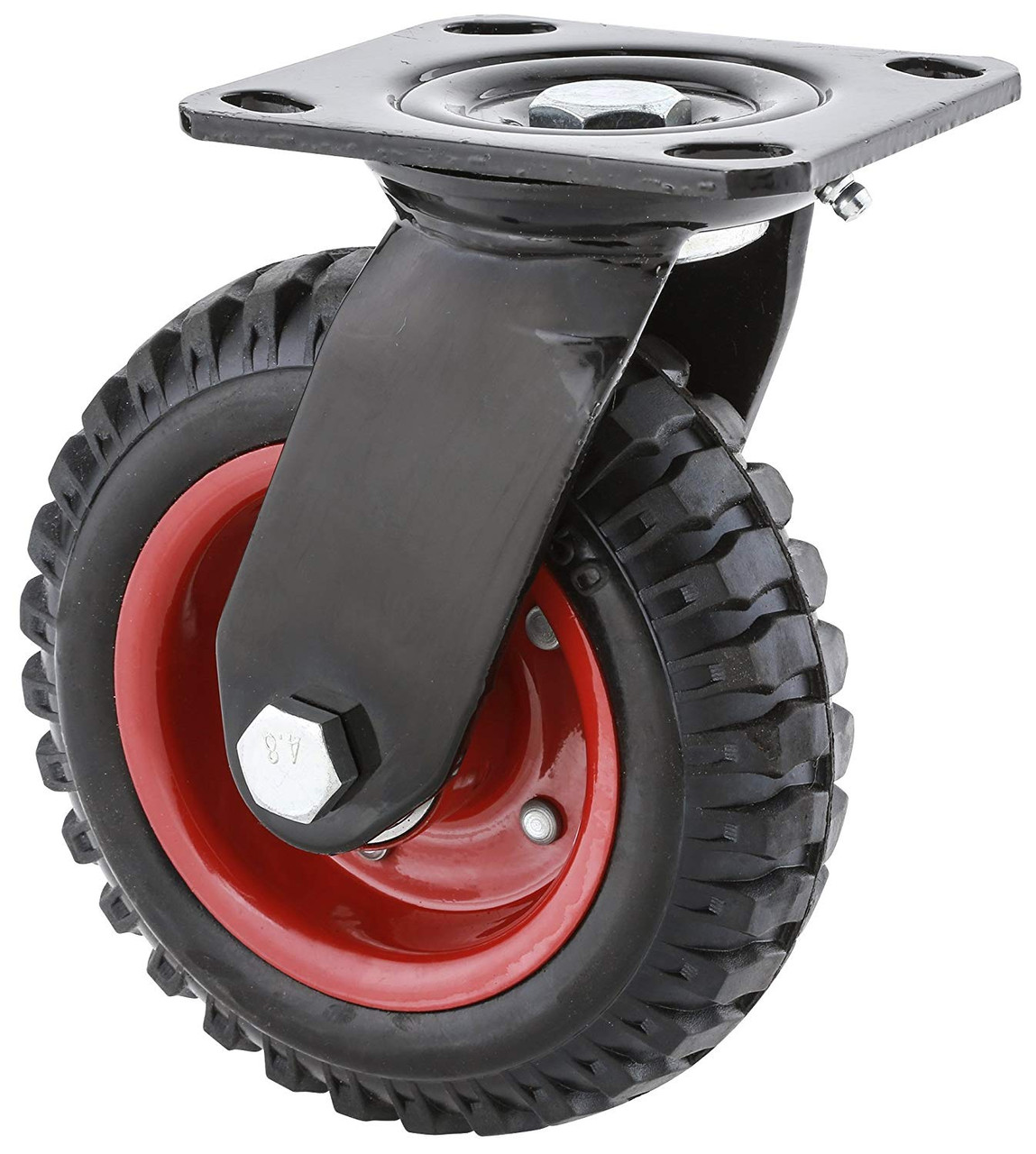 |
8" Industrial Casters (17051 / 17053)
|
What Size Casters Do You Need?
Larger casters roll more easily, especially over debris, uneven floors, cords, thresholds, or outdoor surfaces. Smaller casters are more compact and work well for lighter-duty indoor setups.
Bigger wheels roll better, but they also raise your bench. If your bench already sits at a height you like, jumping to 6" or 8" casters can add an inch or two and change how it feels to work. Factor the caster height into your total before you commit.
Best Caster Setup by Use Case
Common Caster Mistakes to Avoid
- • Picking too little load capacity. Undersized casters can bend, damage the wheel, or move unsafely under weight.
- • Using only unlocked swivel casters. With nothing fixed or braked, the bench is hard to steer and won’t hold still.
- • Choosing wheels that are too small. Small wheels make a heavy bench a fight to move over cords and cracks.
- • Skipping brakes or leveling feet. Without them, the bench can drift or rock while you work.