
Indoor Air Quality Monitor for Workshops: What to Know
POWERTEC on Jan 12th 2026
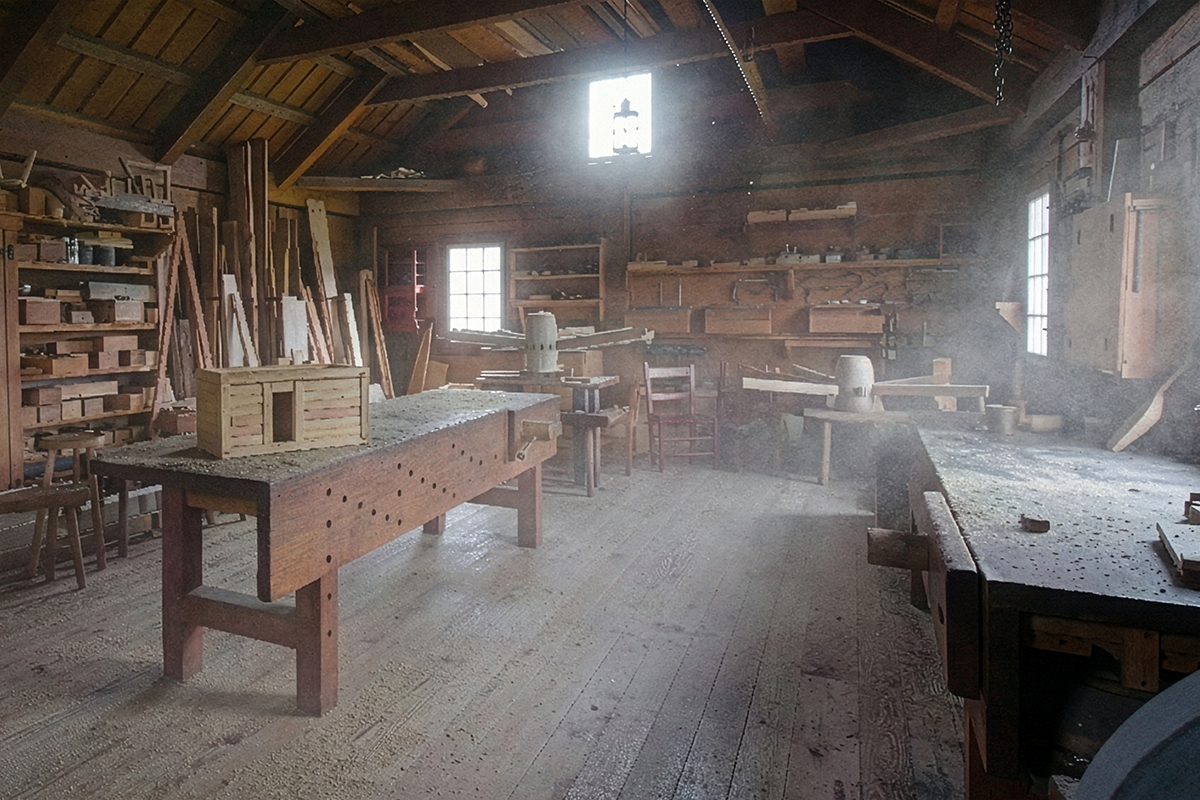
Woodworking shops, garages, and fabrication spaces may look clean, but the air can tell a very different story. Fine wood dust, chemical fumes from finishes, and carbon dioxide buildup can remain suspended long after tools are shut off. Over time, these invisible pollutants can affect breathing, comfort, and long-term health.
That’s why more professionals and DIY enthusiasts are recognizing the value of an indoor air quality monitor, not just as a smart-home device, but as a critical workshop safety tool. Whether you’re learning how to monitor indoor air quality or comparing options for accuracy and reliability, understanding what to measure is the first step.
What Is an Indoor Air Quality Monitor?
An indoor air quality monitor is a device that continuously measures airborne pollutants and environmental conditions inside enclosed spaces.
Unlike air purifiers or dust collectors, a monitor doesn’t clean the air. Instead, it tells you when the air is unsafe, helping you decide when to ventilate, filter, or pause work. This real-time visibility is especially important in workshops where conditions can change quickly during sanding, cutting, or finishing.
Many people first encounter an indoor air quality monitor for home use, but workshop environments demand more robust sensing due to higher dust loads and chemical exposure.
What Pollutants Do Air Quality Monitors Measure?
- Particulate Matter (PM1.0, PM2.5, PM10): Airborne dust and fine particles
- Carbon Dioxide (CO₂): Indicates ventilation effectiveness and occupancy
- Volatile Organic Compounds (VOCs / TVOCs): Fumes from solvents, paints, and finishes
- Formaldehyde (HCHO): Off-gassing from plywood, MDF, and coatings
- Temperature & Humidity: Factors influencing comfort and air behavior
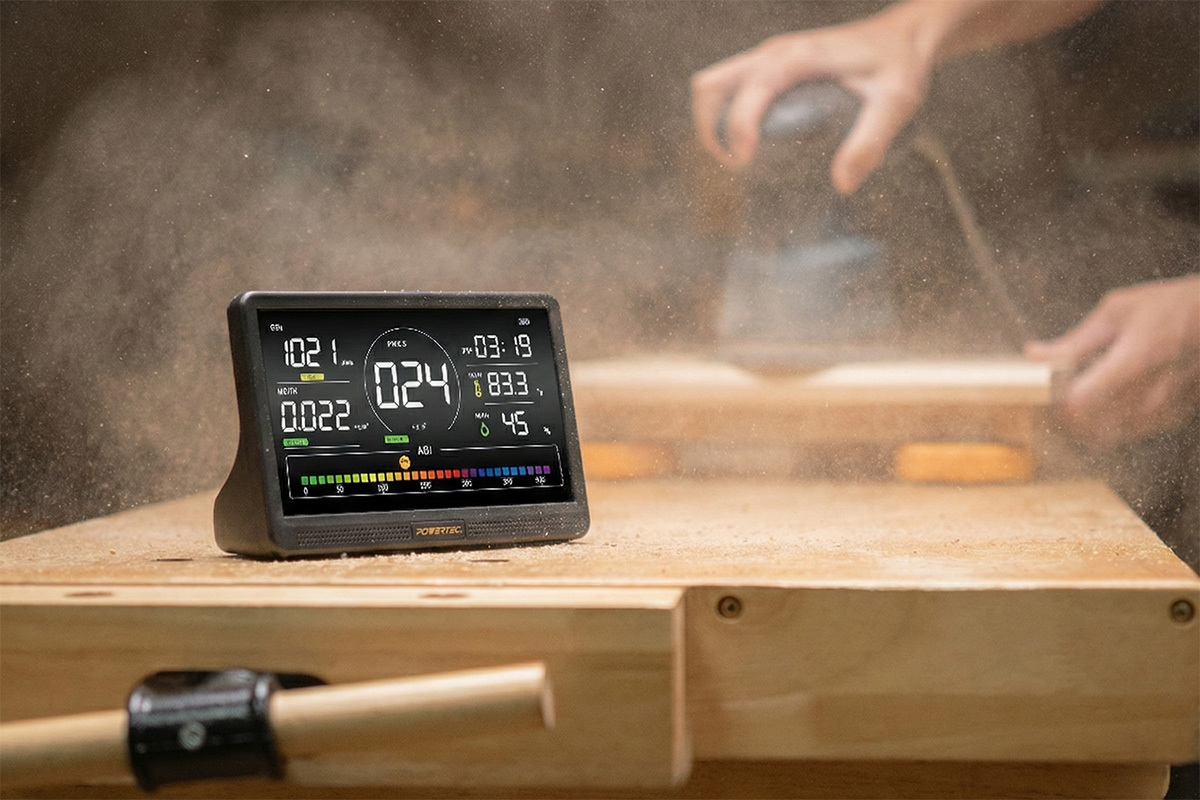
For workshops, particulate matter and VOCs are especially critical and behave very differently from typical household contaminants.
Why Indoor Air Quality Matters in Workshops & Garages
Wood Dust, PM2.5 & PM10 Explained
During cutting, sanding, routing, and shaping, sawdust becomes airborne. PM2.5 and smaller particles can remain suspended for hours and penetrate deep into the lungs, even when the shop appears clean.
VOCs, Formaldehyde & Finishing Fumes
Finishes, stains, paints, and adhesives release VOCs and formaldehyde that can accumulate quickly in enclosed garages and basements with limited ventilation.
This is one reason many professionals seek the most accurate indoor air quality monitor they can find, especially when working in tight spaces.
Why Dust Collection Alone Isn’t Enough
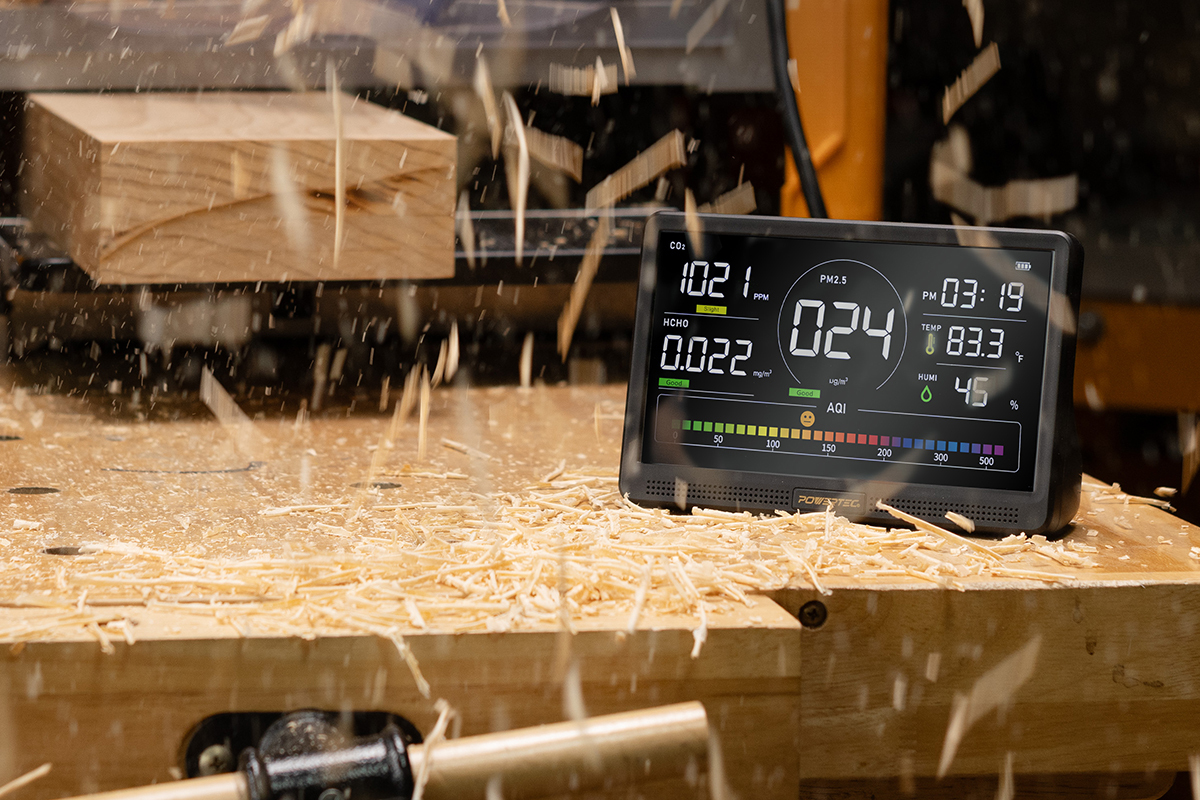
Dust collection removes debris at the source, but it doesn’t tell you what remains suspended in the air, when VOC levels spike, or whether carbon dioxide is building up due to poor ventilation.
What to Look for in an Indoor Air Quality Monitor
Multi-Sensor Detection
Look for monitors that track particulates and gases together: PM1.0 / PM2.5 / PM10, CO₂, VOCs, and HCHO. Single-sensor devices may be adequate for basic home monitoring, but they often miss workshop-specific hazards.
Alerts, Visibility & Accuracy
Color-coded indicators, audible alarms, large displays, and sensor technologies like NDIR CO₂ detection all contribute to better usability and more reliable readings.
How the POWERTEC AD1001 Monitors Workshop Air Quality
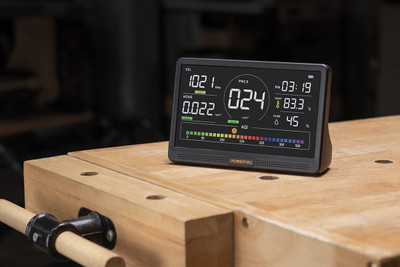
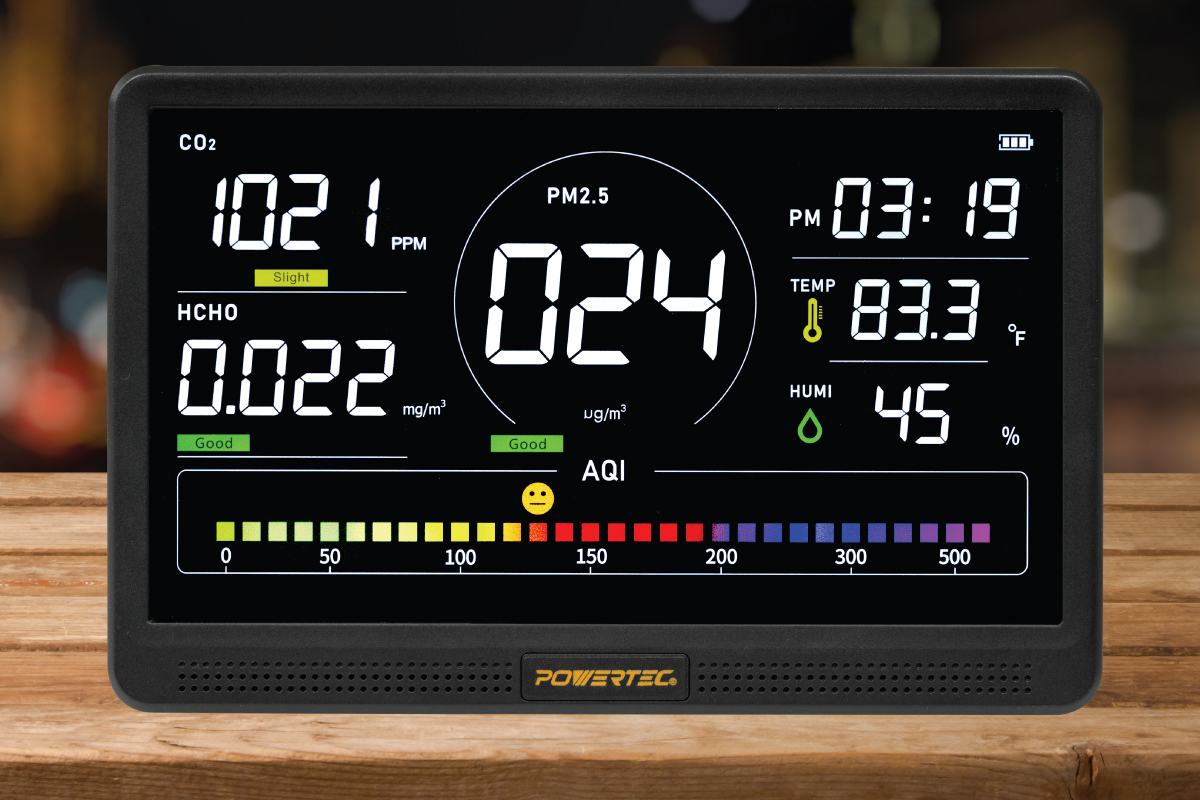
The POWERTEC AD1001 Air Quality Monitor is designed specifically for dusty, fume-heavy environments such as woodworking shops, garages, and fabrication spaces.
- PM1.0, PM2.5, PM10 (0–999 μg/m³)
- CO₂ via NDIR sensor technology
- HCHO (0–2 mg/m³)
- TVOC (0–5 mg/m³)
- Temperature and humidity
A large 7-inch LCD, color-coded alerts, audible warnings, and cordless operation make it suitable for both workshop and indoor air quality monitoring at home or in mixed-use spaces.
View the POWERTEC AD1001 Air Quality Monitor
Workshop vs Home Air Quality Monitors
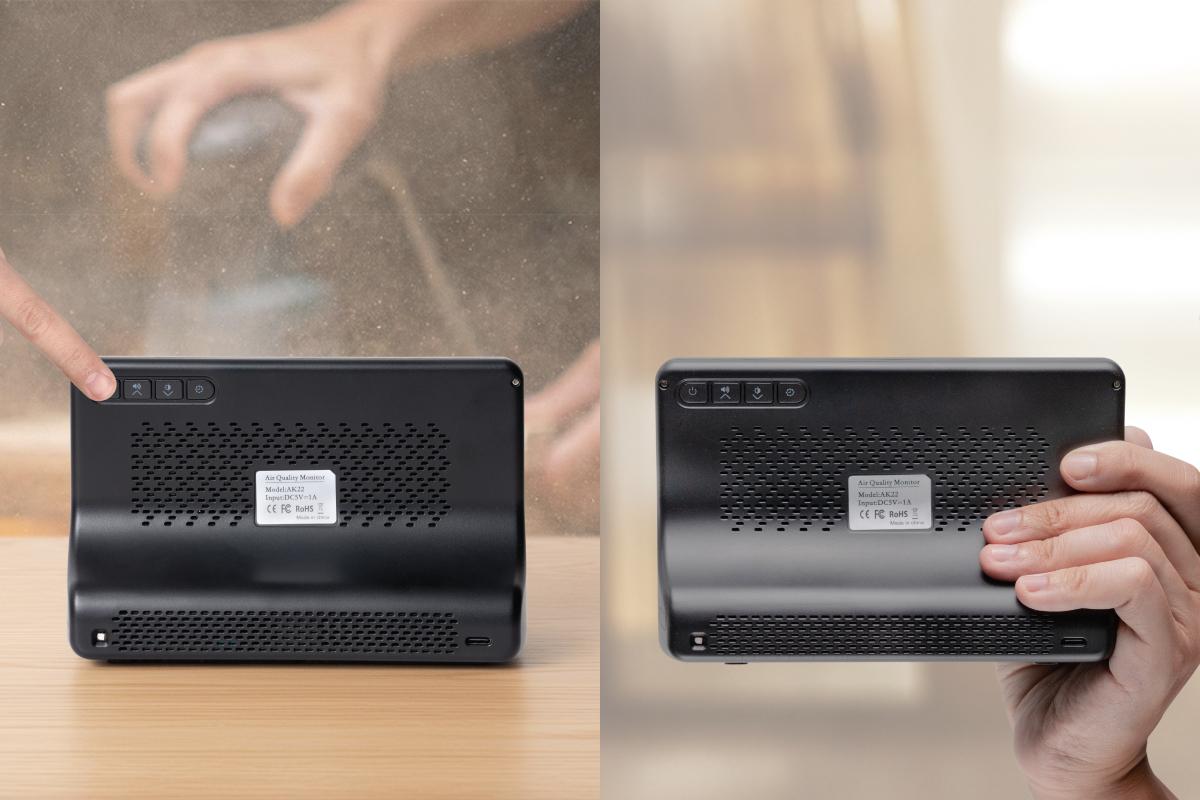
Many consumer monitors designed for bedrooms or nurseries may struggle in workshops due to limited particulate range, weaker VOC detection, smaller displays, and a lack of audible alerts.
A professional-grade monitor is built for higher pollutant loads and harsher conditions.
Why an Indoor Air Quality Monitor Matters
Clean-looking air doesn’t always mean safe air, especially in workshops and garages. An indoor air quality monitor provides real-time awareness of dust, fumes, and gases so you can work with confidence instead of guesswork.
FAQs About Indoor Air Quality Monitors
- Q: What does an indoor air quality monitor measure?
A: Most monitors measure particulate matter, gases like CO₂ and VOCs, plus temperature and humidity.
- Q: Is an air quality monitor necessary if I have dust collection?
A: Yes. Dust collection helps, but it doesn’t confirm what remains airborne or when VOC levels spike.
- Q: Are indoor air quality monitors accurate?
A: Accuracy depends on sensor quality. Models using NDIR and dedicated sensors are generally more reliable.