
Small Shop Dust Collection System: A Real 12 × 20 Wood Shop Setup
POWERTEC on Sep 9th 2026
Small Shop Dust Collection: Inside Chandler’s 12 × 20 Woodworking Shop
How Chandler connected nine major tools to a single dust collection system, and what he learned after putting it to work.
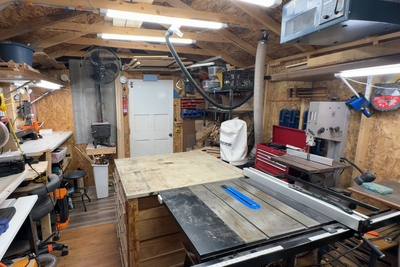
Chandler’s entire woodworking shop fits inside a 12 × 20-foot shed in his backyard. Since building the shop in 2023, he has completed several projects there, from dining tables and reception desks to cutting boards and fingerboard ramps.
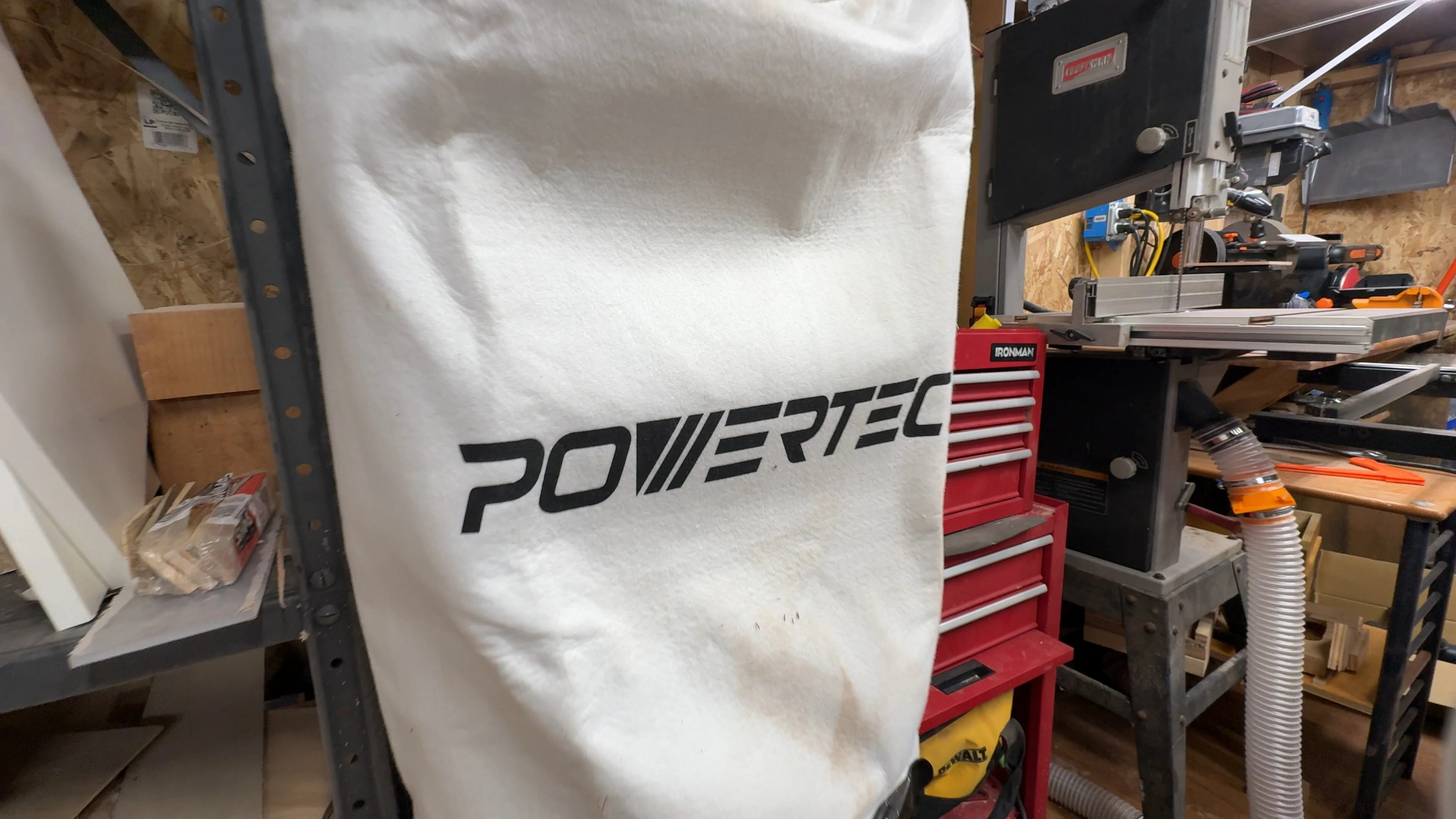
But as the shop filled with tools and projects, it also filled with something else: dust. Before the upgrade, his table saw had a shop vac, his thickness planer had an older dust collector, and most of the other tools in the shop had no dust collection at all. Eventually, cleanup became part of his daily routine.
My weekly sessions of using a leaf blower to clean my shop turned into daily sessions, and I knew I needed a more permanent solution.
That was the turning point. Instead of adding another temporary fix, Chandler worked with POWERTEC dust collection tools to build one centralized system that could connect the major tools throughout his shop without making the space harder to use.
Chandler’s Small Shop Dust Collection Upgrade
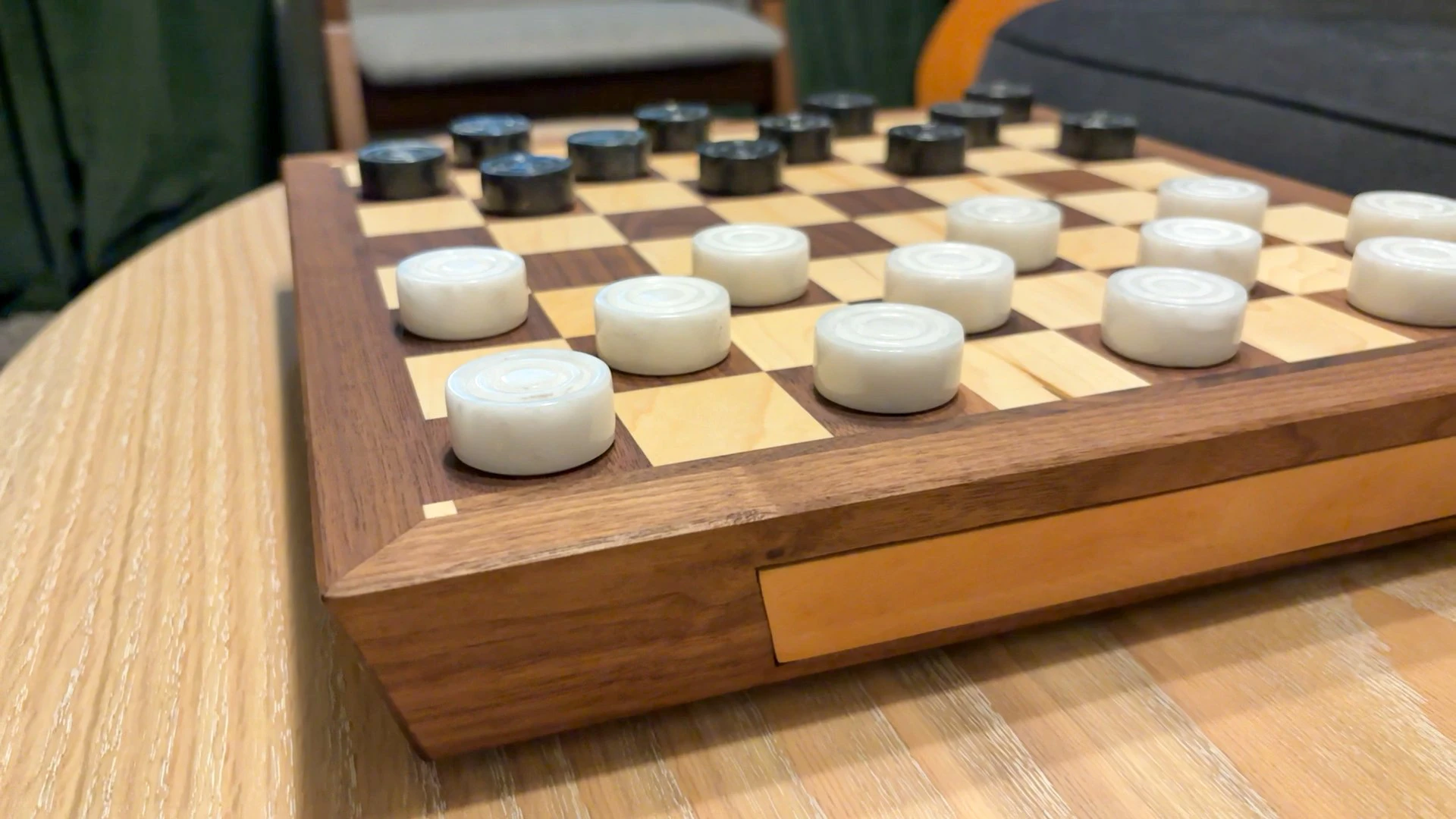
See Chandler install the dust collection network, work through the layout of his 12 × 20 shop, and use the finished system to build a custom walnut-and-maple checkerboard.
The Challenge: Dust Collection in a Small Shop
Small-shop dust collection is not only about suction. It is also about space. The system has to reach the tools without taking over the limited floor area you are trying to keep usable.
For Chandler, that meant solving two problems at once:
The fine dust was a different problem.
So the goal was not just to add another collector. It was to build a system that was already connected, easy to use, and better suited to the way Chandler actually worked.
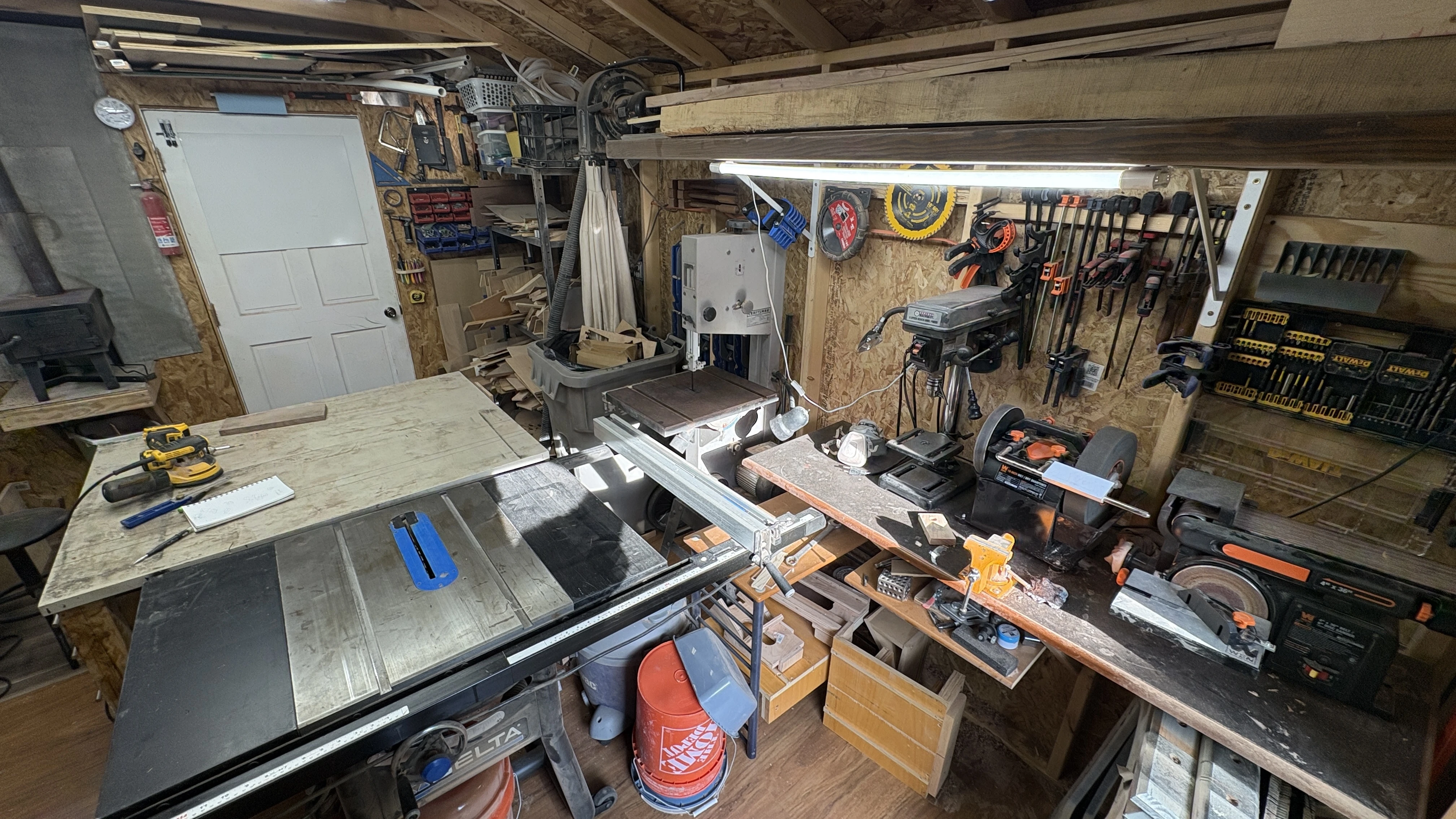
Before
|
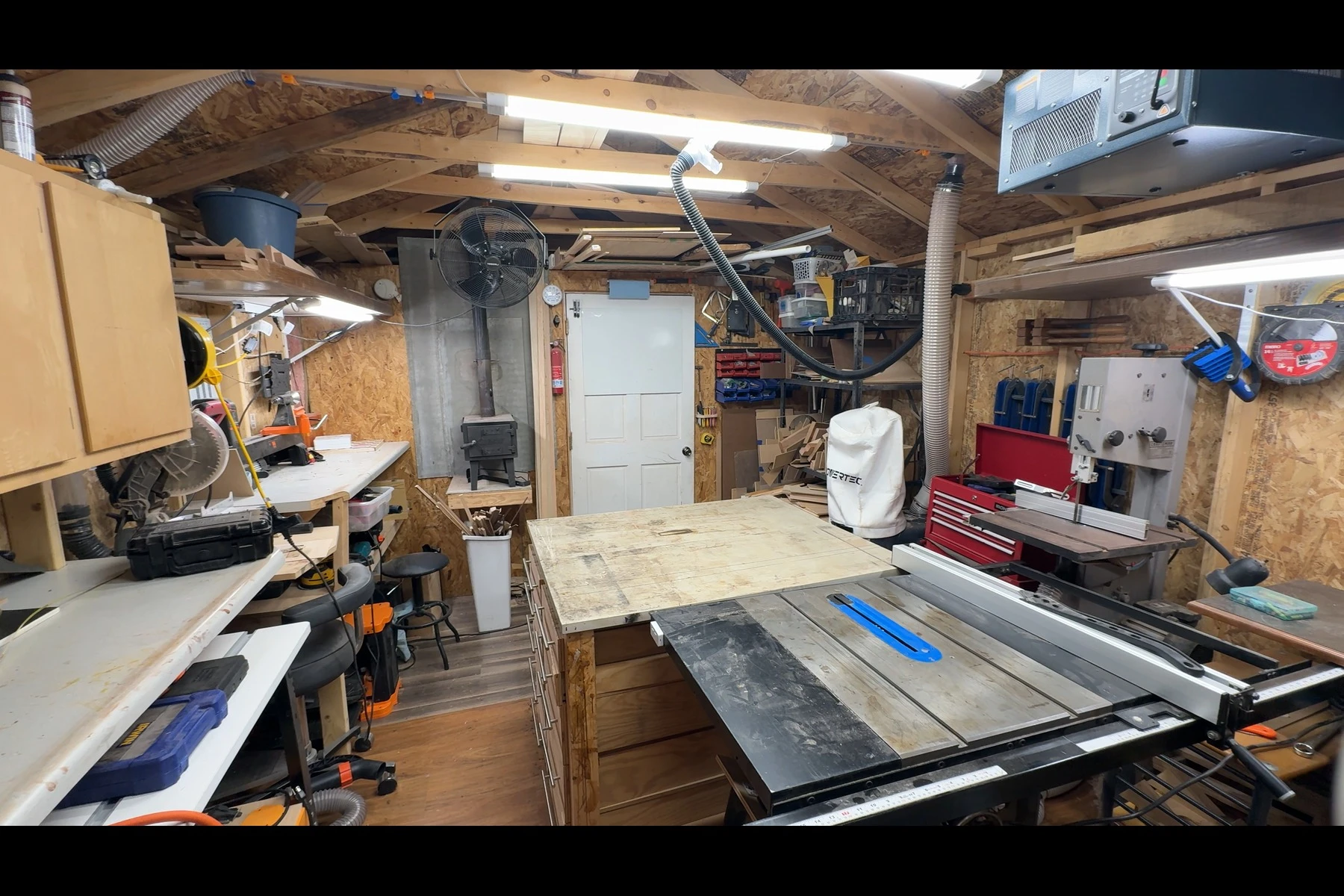
After
|
Building One Dust Collection System Around Nine Tools
The heart of Chandler’s setup is the POWERTEC DC1081 1 HP Dust Collector, rated at up to 800 CFM with a 4-inch intake. From there, the system branches out through 2-1/2-inch rigid pipe, flexible hose, fittings, blast gates, and quick-connect adapters.
The basic flow is simple:
That layout allowed Chandler to connect nine major tools to one central collector. The hardest part was not connecting the pieces. It was deciding where all of the piping should go.
In a 12 × 20 shop, a few badly placed hoses can make the whole space harder to move around. Chandler planned the network around that.
He worked on the installation during nights and weekends, usually an hour or two at a time.
Piping, Blast Gates & Quick Connections
Running the Piping
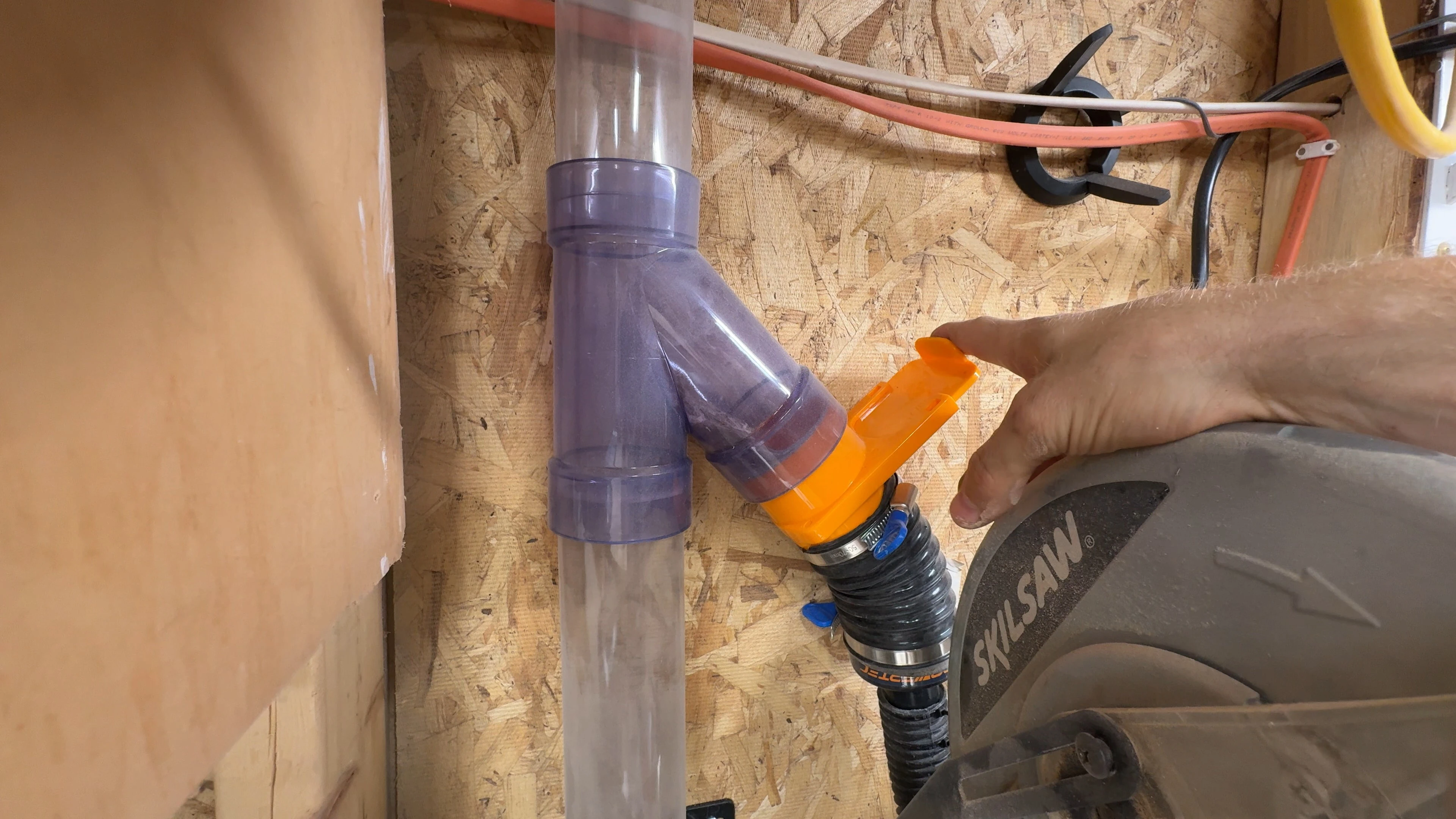
Much of Chandler’s main network uses 2-1/2-inch clear rigid PVC pipe. The rigid sections let him create fixed routes through the shop instead of relying entirely on long runs of flexible hose. Because the pipe can be cut to length, he could adjust each section to the actual layout of the shop. The clear material also makes it easier to see what is moving through the network and spot a blockage if one develops.
The POWERTEC 70342 Open Style Hangers help keep sections of pipe and hose secured along the walls and out of Chandler’s walkways. Flexible hose is then used where movement or a final tool connection makes more sense. The result is a mix of fixed and flexible connections built around the shop rather than forcing the shop to fit the dust collection system.
A Blast Gate at Every Tool
Each major branch of Chandler’s network has a blast gate. When he wants to use a machine, he opens the gate for that tool and closes the others. That small change made a much bigger difference than he expected.
Closing the branches that are not being used helps direct the system’s available airflow toward the active tool.
Chandler took the convenience one step further by plugging the collector into a remote-controlled outlet, so he can switch the whole system on or off from anywhere in the shop. As he puts it, it removed the last bit of friction from actually using dust collection, and the collector runs quietly enough that he sometimes forgets it's on.
One of the most useful parts of Chandler’s experience is that the system was not completely trouble-free. During the checkerboard build, material from planing resin caused a clog near the main collector.
Connecting Tools With Different Dust Ports
Not every machine in a shop uses the same dust-port size. That can become one of the biggest headaches when connecting several tools to one system.
For smaller tools such as Chandler’s sander and track saw, the POWERTEC 70376 Power Tool Vacuum Hose Kit gives him a quick-connect setup that can move between different power tools. The kit uses a 10-foot hose and several quick-connect fittings for smaller dust ports.
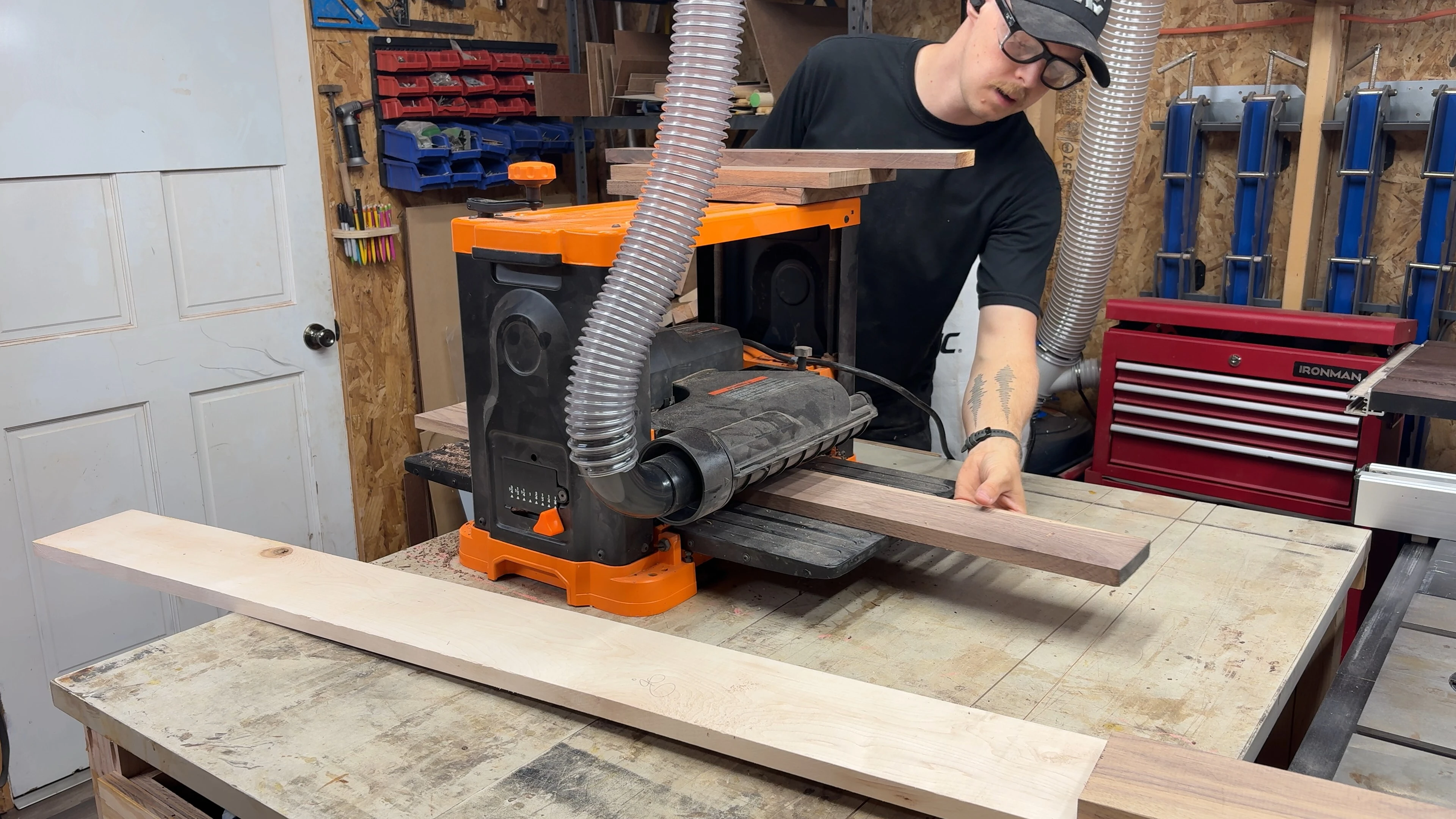
Chandler even created his own solution for one machine. Later in the checkerboard build, he 3D printed a custom adapter for his planer so it could work with the same quick-connect setup.
Planning tip: Check the actual dust-port size on every tool before buying hose and fittings. Real workshops rarely have perfectly matching connections.
Dust Collector + Air Filtration: Two Different Jobs
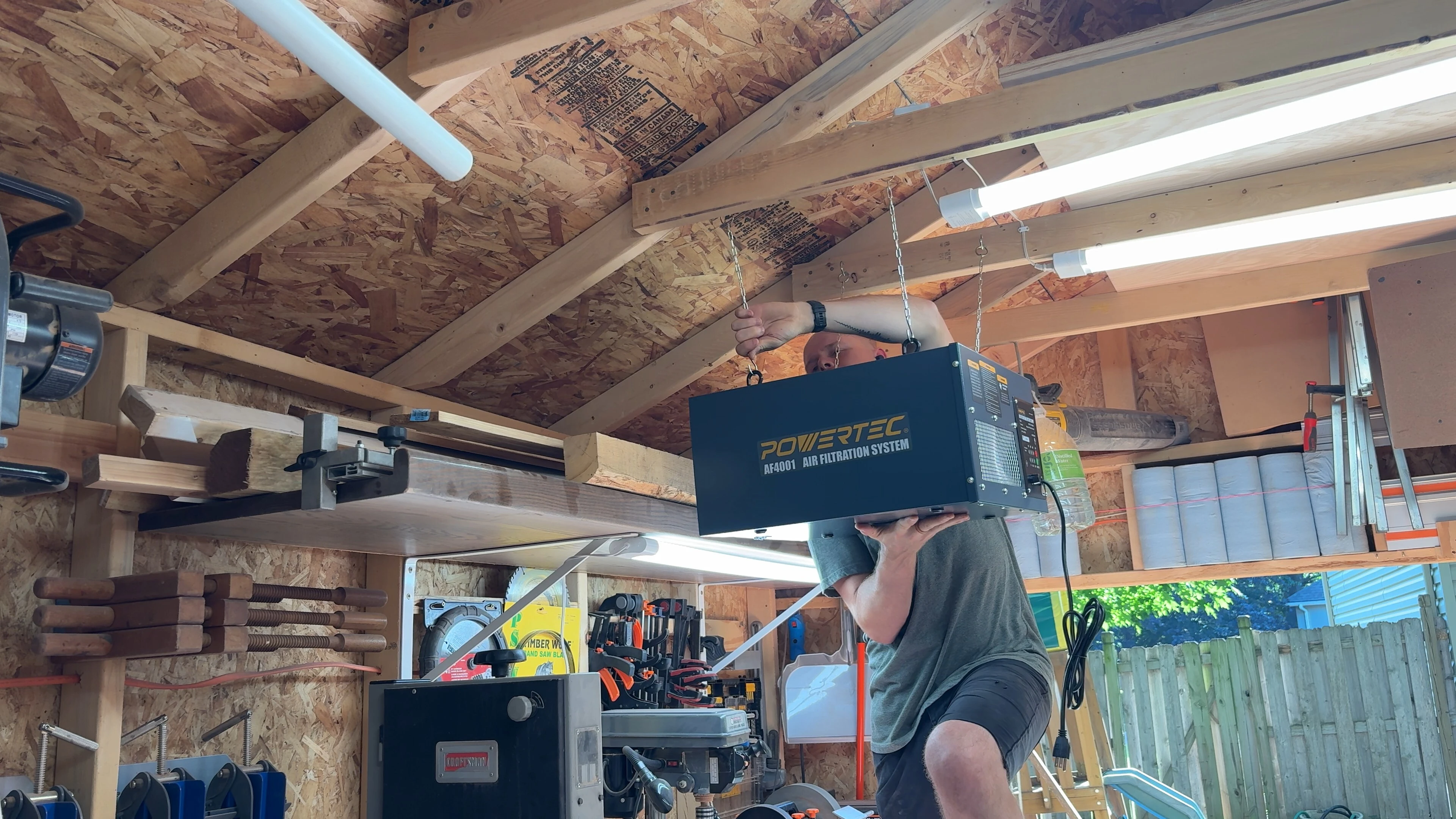
Chandler’s system tackles dust in two different places.
|
At the tool
DC1081 Dust Collector
Captures sawdust and chips through the connected network. |
In the shop air
AF4001 Air Filtration
Circulates workshop air through its filters to capture airborne particles that were not collected at the tool. |
These two systems are not doing the same job. The air filtration unit uses a 5-micron outer filter and a 1-micron inner filter, with three airflow settings of 300, 350, and 400 CFM.
For Chandler, the difference became noticeable in a place away from the machines themselves.
Now he can leave the air filtration system running quietly in the background.
That is the simplest way to think about the two systems: the dust collector captures at the tool, and the air filtration filters what remains in the room.
Putting the System to Work
Installing the network was only the first test. The real question was how it would perform during an actual project. Chandler’s checkerboard build involved planing, cutting, routing, sanding, and general cleanup, exactly the kind of workflow the centralized setup was meant to support.
One of the biggest surprises came from his router table. The router table sits at the end of the longest run of piping and tubing in the shop, and Chandler considers it one of his worst dust-producing tools behind the thickness planer.
During the build, Chandler routed a large recessed pocket for the checkerboard’s hidden piece storage, creating a lot of waste. This time, much of that material was being collected as he worked instead of spreading across the shop.
By the end of the project, the amount of material in the collector made the difference obvious.
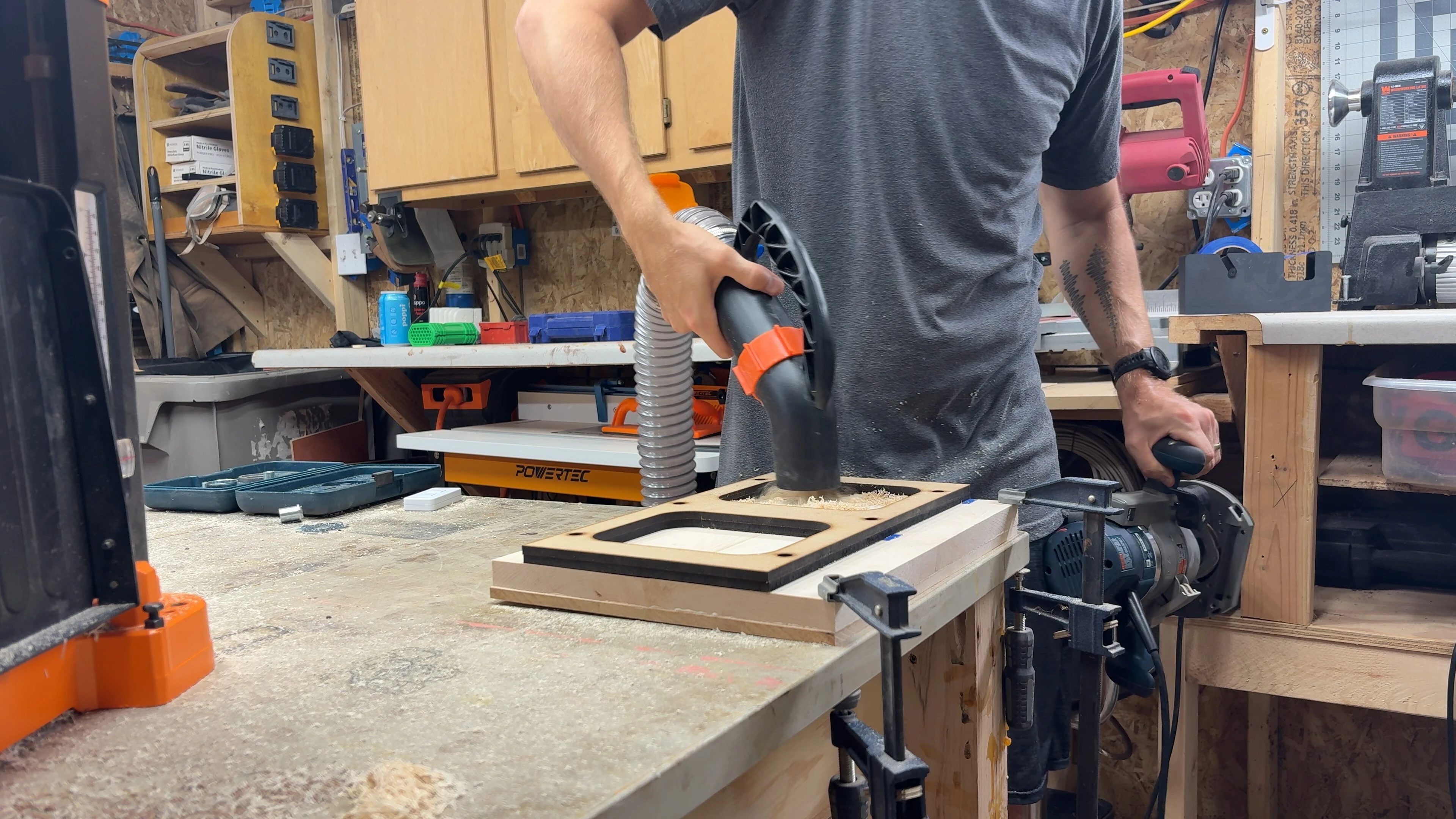
For Chandler, the biggest benefit was not a number on the dust collector. It was time. He balances woodworking with a full-time job, family life, and a side business. When he gets a few hours in the shop, he wants to spend that time building.
That is what the centralized system changed.
Before the upgrade, dust collection could mean moving hoses, setting up another machine, or deciding whether one small cut was worth the trouble. Now the system is already there. Open the right blast gate, turn on the collector, and get to work. That is probably the strongest measure of whether Chandler’s setup worked.
What Chandler Would Do Differently
A real shop upgrade is rarely perfect on the first try. Chandler already knows one part of the system he would change if he were starting again.
Give the Planer a More Direct Route
His thickness planer creates the largest amount of dust and chips in the shop.
His goal would be simple:
That is one of the best lessons from the whole project. When planning a network, do not only look at where the tools are located. Also think about which tools create the most material and which ones would benefit most from a short, simple route.
Planning Your Own Small-Shop Dust Collection System
Chandler’s setup is one example, not a one-size-fits-all blueprint. But his experience gives other woodworkers a few useful things to think about before buying pipe and fittings.
|
1
|
Start with your highest-demand machines. Identify the tools that create the most dust and chips and think about their routes first. |
|
2
|
Map the shop before installing pipe. Decide which runs should go overhead and which should go under or behind tools so the network does not block walkways. |
|
3
|
Check every dust-port size. Different machines may need different adapters, reducers, or quick connections. |
|
4
|
Keep blast gates easy to reach. If opening the correct gate is inconvenient, it is easier to forget or skip. |
For Chandler, the best system was not the most complicated one. It was the one that fit the way he actually works.
Products Used in Chandler’s Setup
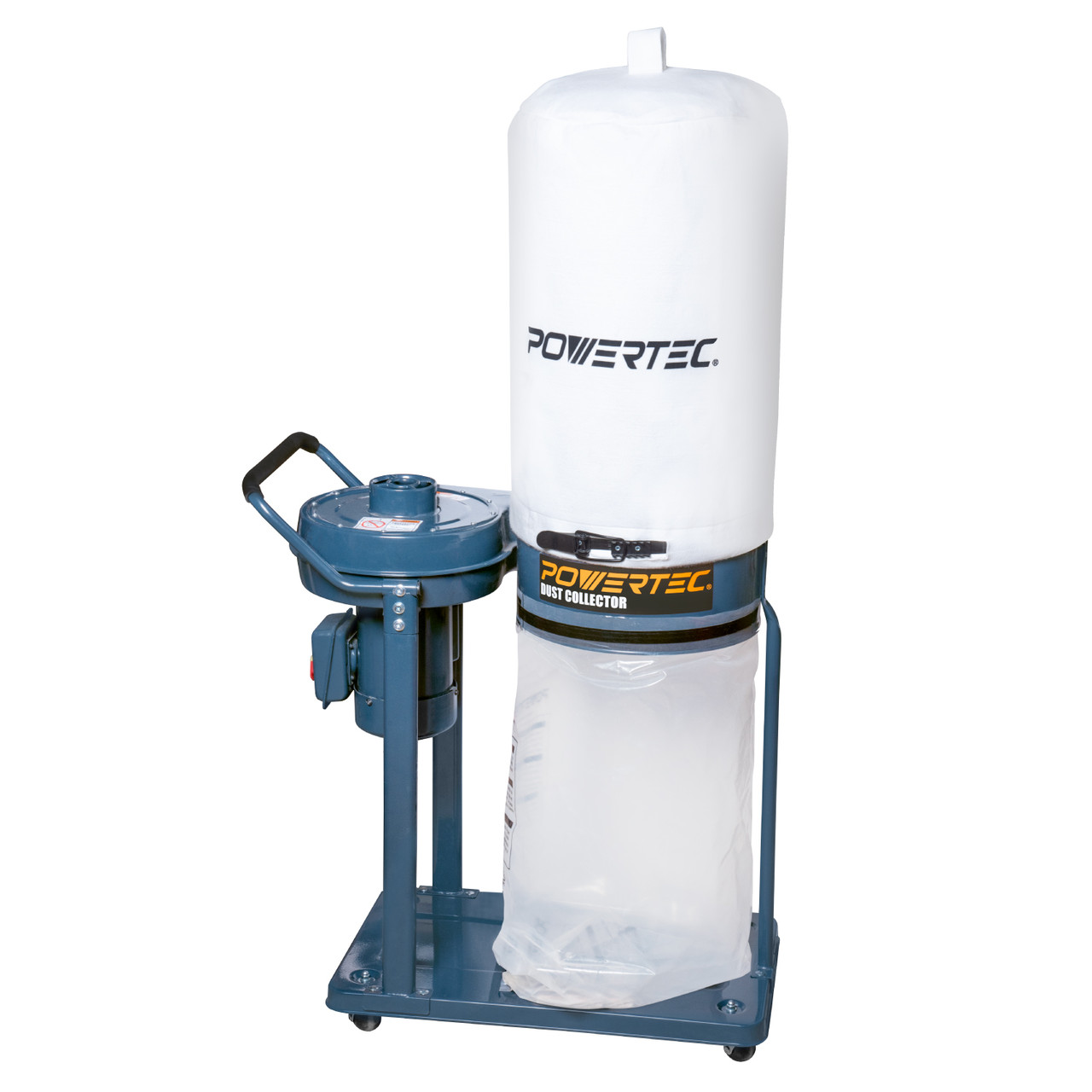 |
The main collector
DC1081 1 HP Dust Collector
Its role: The main collector powering the centralized network. • 1 HP motor
• Rated airflow up to 800 CFM
• 4-inch intake
• 1-micron filtration bag
• Mobile base with casters
|
 |
Air quality
AF4001 Air Filtration System
Its role: Circulates and filters fine airborne dust remaining in the workshop. • 5-micron outer filter
• 1-micron inner filter
• 300 / 350 / 400 CFM airflow settings
• RF remote control
• 1 / 2 / 4-hour timer settings
|
Build the Network
| 70304 Dust Collection Network
Main pipes, Y-fittings, blast gates, elbows, reducers, and mounting hardware.
|
| 70374 Fittings Kit
Additional Y-fittings, elbows, blast gates, and clamps.
|
| 70176 36" Clear PVC Pipe
Rigid sections for fixed runs.
|
| 70342 Pipe & Hose Hangers
Secures the 2-1/2" network along walls.
|
Connect the Tools
| 70243 2-1/2" Flexible PVC Hose
Flexible connections to machines and network sections.
|
| 70393 4" × 5' Dust Collection Hose
Larger hose connection at the main system.
|
| 70376 Power Tool Vacuum Hose Kit
Quick-connect hose for smaller power-tool dust ports.
|
Cleanup
| 70443 Floor Sweep Kit
Connects cleanup tools directly to the dust collection network.
|
Small Shop Dust Collection FAQs
Can you connect multiple tools to one dust collector?
Do you need air filtration if you already have a dust collector?
What should you plan before building a small-shop dust collection system?
About Chandler
Chandler Meierarend is the maker behind Chandler Makes, a woodworking studio focused on heirloom-style furniture and home accessories built from premium natural materials. He blends traditional woodworking techniques with modern digital tools to turn one-off ideas into pieces made to last for generations.
Woodworking was not his first craft. Raised in a small Missouri town and trained in audio engineering, Chandler spent years working in A/V and video production before renovating his first house in 2017, which sparked a love of building things by hand. He started out making handboard and fingerboard obstacles in 2018, launched Chandler Makes in 2020, and turned it into an LLC in 2024, growing from small skate obstacles to custom furniture and home pieces for customers around the world.
 |
 |
 |