
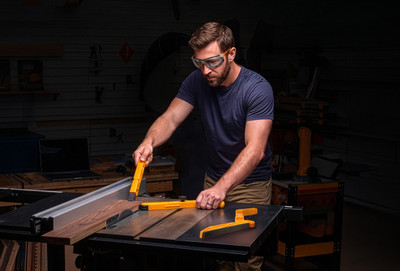
Table Saw Push Stick: How to Choose & Use One Safely
POWERTEC on Sep 9th 2026
One push stick is not ideal for every cut. Narrow rips, long boards, router-table work, band-saw cuts, and fence-guided feeding each require a different type of control.
The right push tool helps you maintain more consistent forward, downward, or side pressure while keeping your hands farther from the cutting area. Exploring proper push blocks & sticks helps you understand how push tools work, how they differ from traditional blocks, what EVA is, and how to match the right configuration to the woodworking problem you are trying to solve.
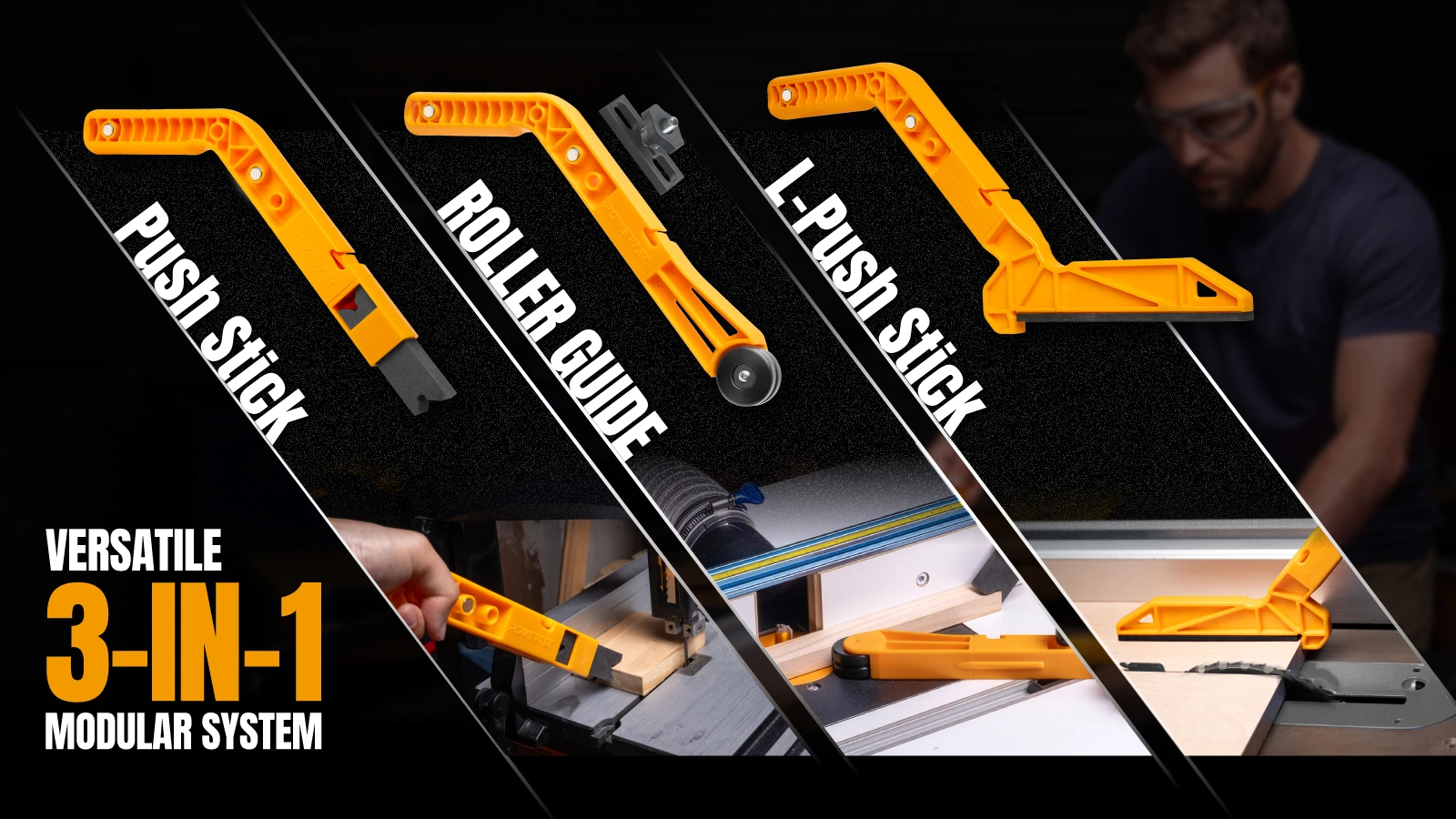
What Is a Push Stick?
A push stick is a woodworking hand tool used to guide short or narrow stock through a machine while helping the operator keep their hands farther from the cutting area. Depending on its design, it may provide forward, downward, rear-edge, or side pressure.
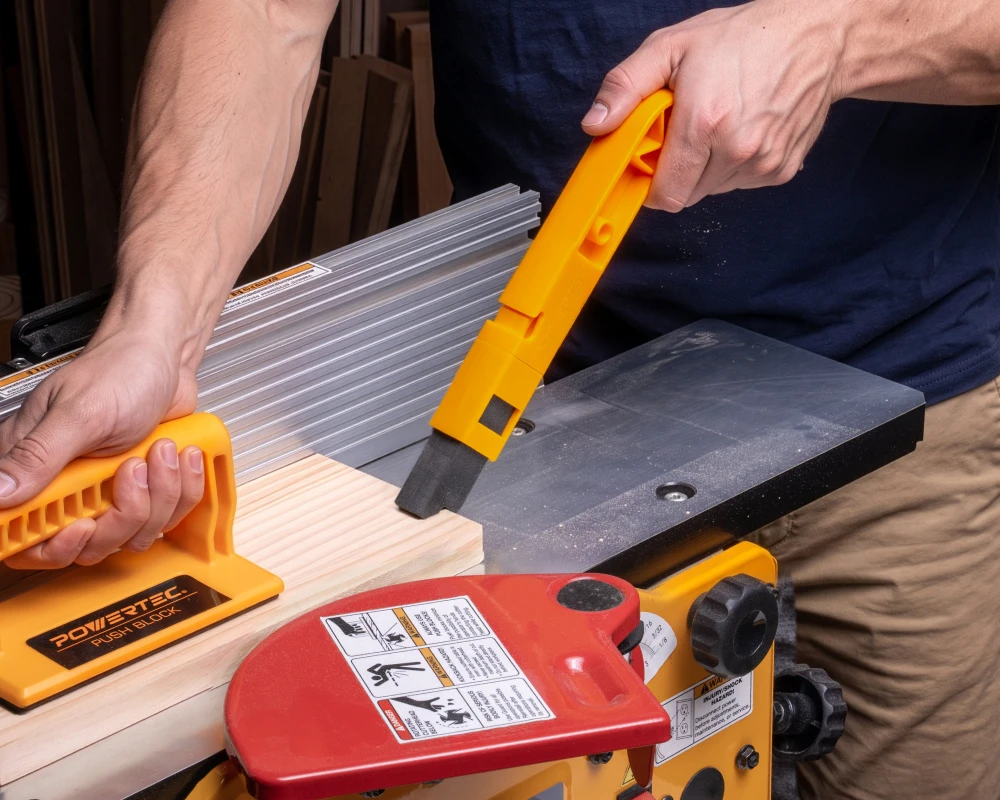
Push sticks are most closely associated with table saws, but suitable push tools may also be used with router tables, band saws, and jointers when the machine, workpiece, and operation call for controlled feeding near a blade or cutter.
A push stick does more than create distance between your hand and the cutting area. It gives you a repeatable contact point for moving the workpiece through the cut while supporting better control.
Always use guards, riving knives, featherboards, jigs, and other safeguards when appropriate, and follow the instructions supplied with your machine.
Why Should Every Woodworker Use a Push Stick?
A push stick helps improve workpiece control while keeping hands farther from the point of operation. It is especially valuable when feeding small or narrow stock and when completing the final portion of a rip cut.
What Types of Push Sticks Are Available?
Push sticks differ in the way they contact and control the workpiece. Some prioritize narrow clearance, some hook the back edge, and others guide stock toward a fence. Understanding those differences is more useful than looking for one universal “best” design.
| Type | Best for | Control provided | Primary limitation |
|---|---|---|---|
| Traditional notched stick | General ripping | Forward feed from a rear notch | Limited contact area and specialization |
| EVA push stick | Narrow stock and precision feeding | High-friction contact with controlled downward and forward pressure | Wear surface requires inspection and replacement |
| L-style push stick | Longer boards and extended reach | Rear-edge engagement plus downward hold-down | Not ideal when side pressure toward a fence is the main need |
| Roller guide | Fence-guided feeding and long stock | Side pressure while the roller allows forward motion | Requires a compatible miter track and correct setup |
| Push block | Wider stock and broad hold-down | Large surface area and substantial downward pressure | May not fit beside a blade during narrow rip cuts |
What Is EVA, and Why Is It Used on a Push Stick?
EVA stands for ethylene-vinyl acetate, a resilient polymer used where grip, cushioning, and controlled wear are valuable. On a push stick, a high-density EVA tip provides a high-friction contact surface that conforms slightly to the workpiece and can be replaced when worn.
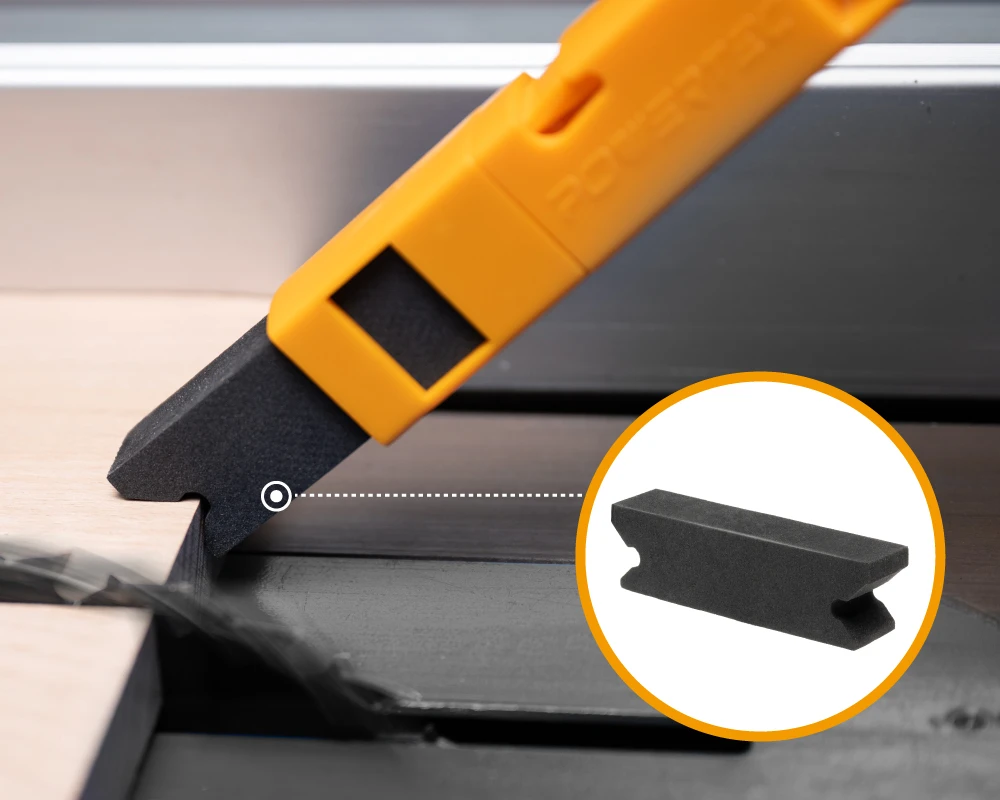
- • High-friction grip: Helps reduce slipping while feeding stock.
- • Slight conformity: Compresses enough to maintain contact across the workpiece surface.
- • Workpiece protection: The softer contact surface helps reduce marks on many materials.
- • Sacrificial behavior: Designed to wear at the contact surface rather than requiring immediate replacement of the complete tool.
- • Reversible design: The POWERTEC tip on the 72357 EVA Push Stick can be flipped when one side becomes worn.
- • Replaceable maintenance: Installing 72360 Replacement EVA Tips restores the primary gripping surface in seconds.
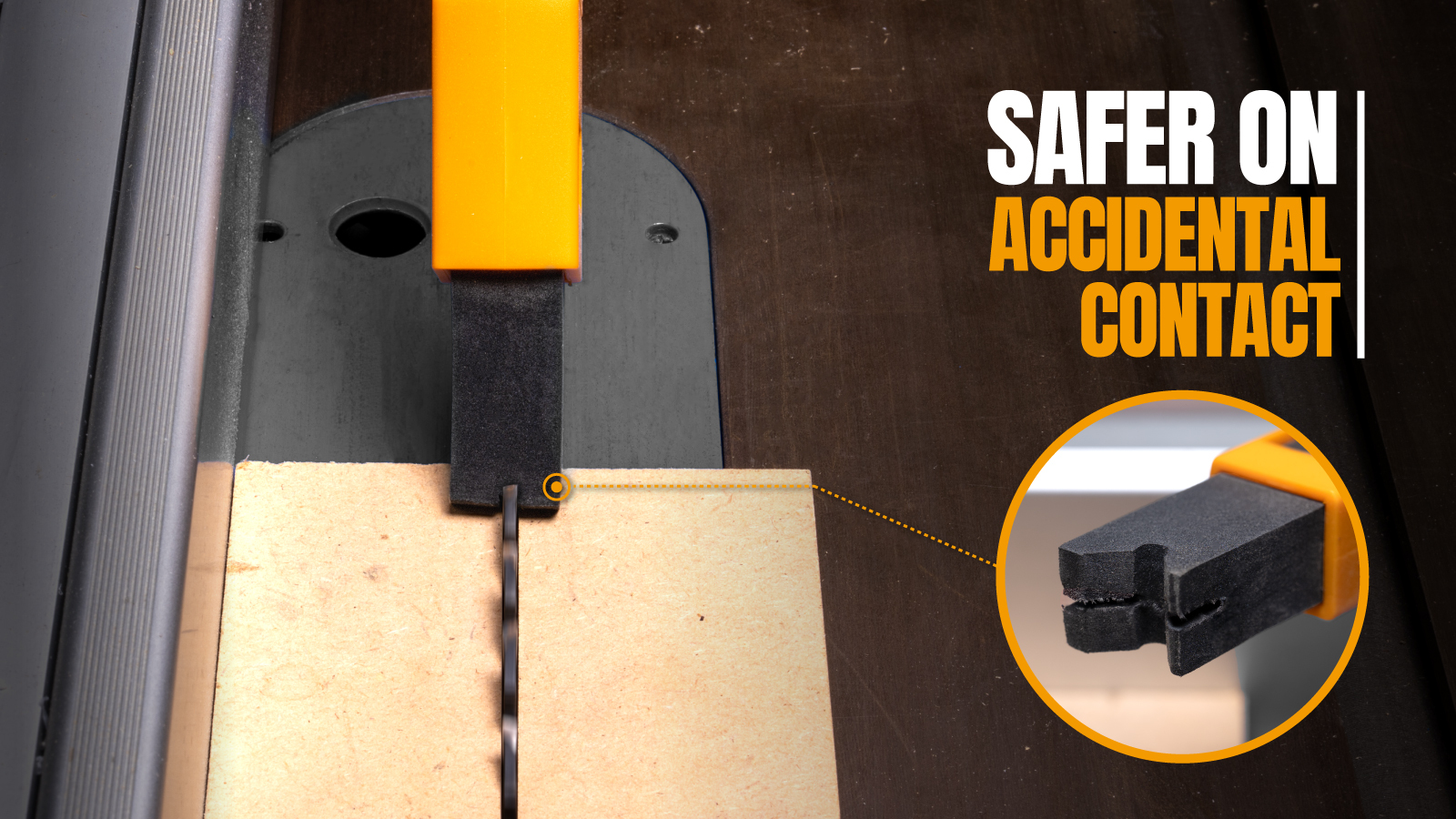
What Happens If a Push Stick Touches the Blade?
Any push stick that contacts a blade must be stopped, inspected, and replaced or repaired as needed before it is used again. The way the contact surface behaves depends on its material and design.
May chip, splinter or become damaged after contact. The complete push stick may need to be replaced depending on its condition.
The contact surface is designed to act as a sacrificial wear component. If damaged, the tip can be flipped or renewed with 72360 replacement tips.
Which Push Stick Solves Your Woodworking Problem?
Choose a push configuration based on the control problem you need to solve, not simply on the machine name. The same table saw may require a different push tool for a narrow rip, a long board, or a fence-guided repetitive cut.
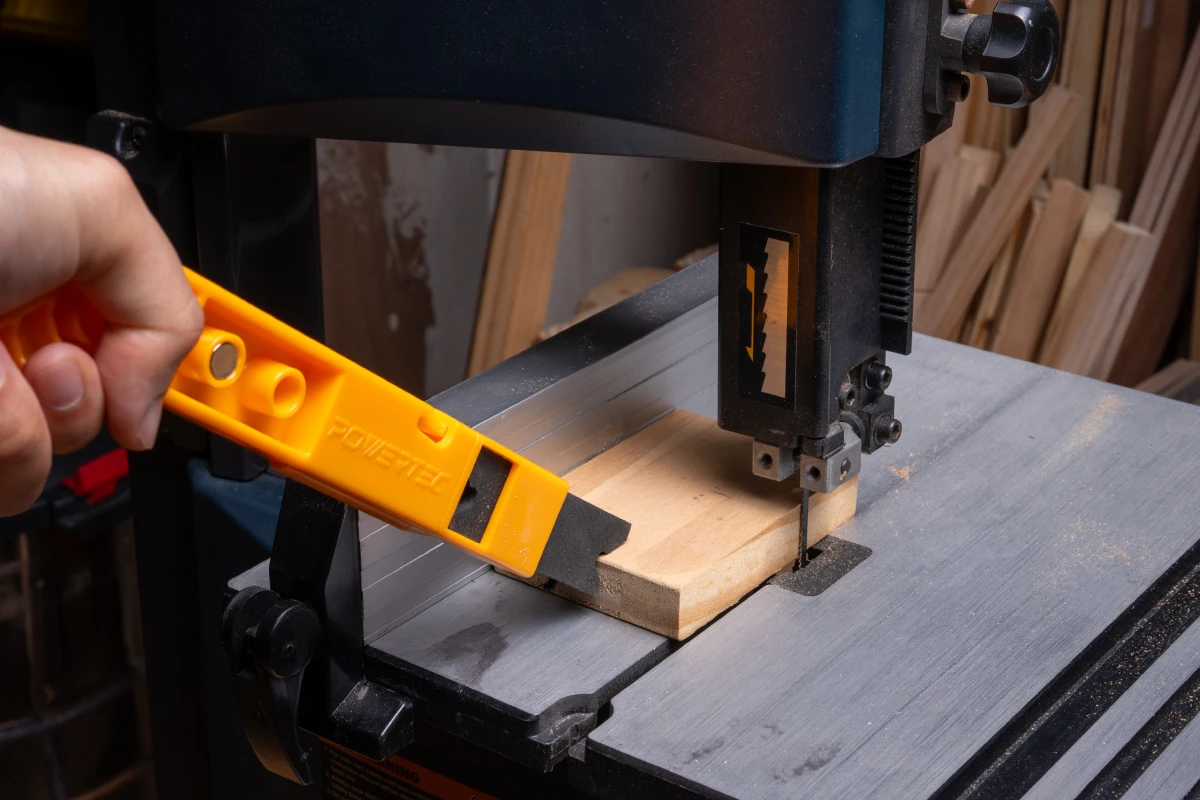
Narrow stock leaves less room for hand placement and makes it harder to maintain controlled downward and forward pressure beside the blade.
Recommended configuration Replaceable EVA Push Stick (72357)
View 72357 Details ›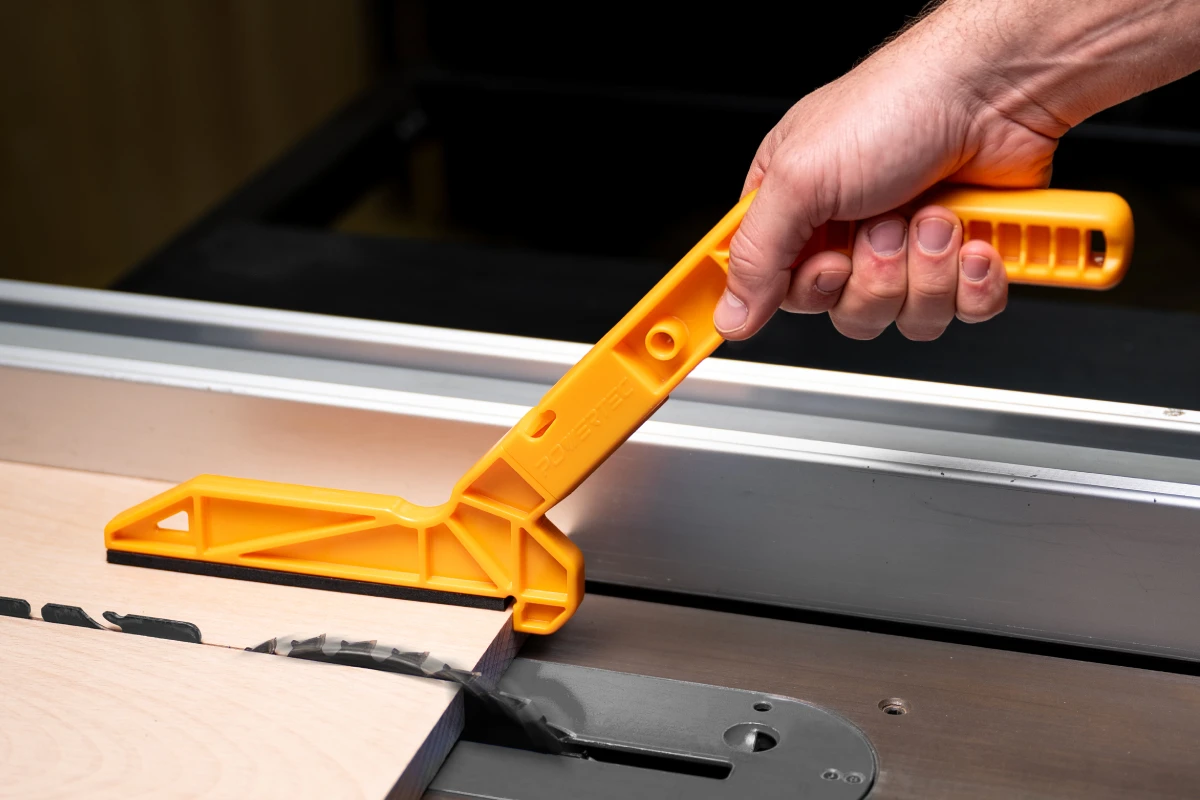
A rear hook stays positively engaged with the back of the workpiece and helps continue feeding it through the final portion of the operation.
Recommended configuration Replaceable L Push Stick (72358)
View 72358 Details ›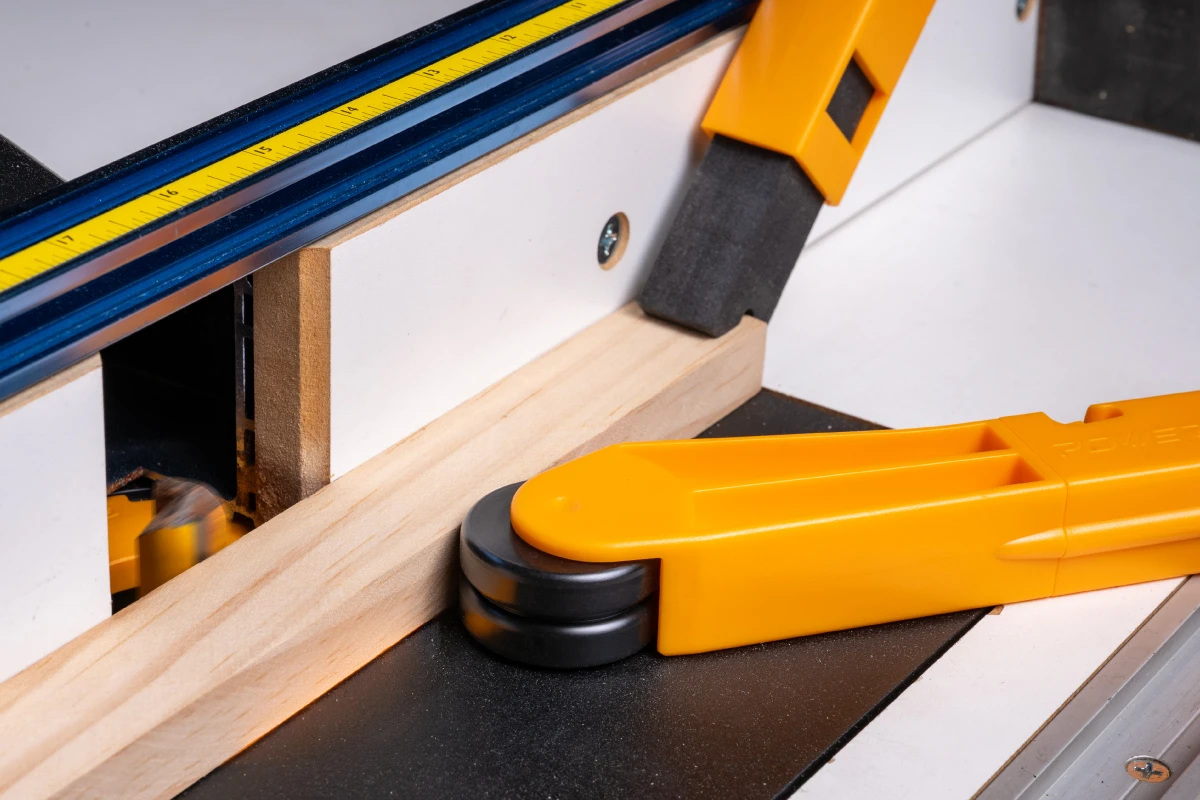
A roller guide applies steady side pressure toward the fence while the roller reduces friction and allows the stock to move forward.
Recommended configuration Stock Roller Guide Attachment (72359)
View 72359 Details ›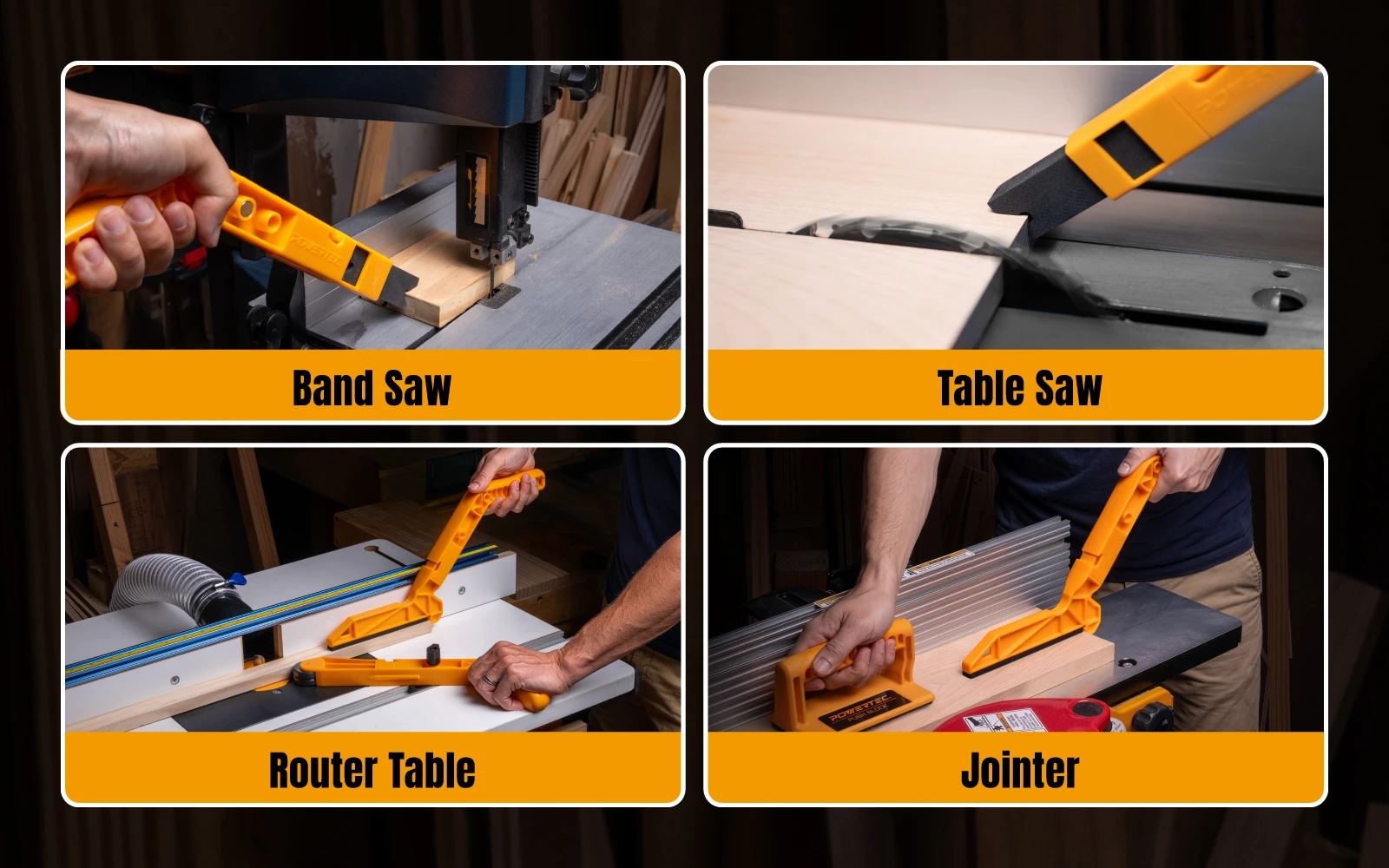
Different tasks require different contact points and directions of pressure. A modular kit allows you to keep several configurations ready without relying on one tool for every operation.
Recommended configuration Modular Push Stick Kit (72356)
View 72356 Details ›No single shape can provide narrow clearance, broad hold-down, rear-edge engagement, and fence-side pressure equally well. Experienced woodworkers change push tools because the cut changes.
A modular system makes that habit easier: instead of adapting your technique to one push stick, you configure the push tool for the operation.
How Do You Use a Push Stick Correctly?
Use a push stick as part of a complete machine setup and maintain control until the workpiece has fully cleared the blade or cutter. The exact method depends on the machine and operation, but the basic workflow is consistent.
What Push Stick Mistakes Should You Avoid?
The most common mistakes come from poor setup, using the wrong design, or stopping control too early. A push stick cannot correct a binding workpiece, a misaligned fence, or an unsuitable cutting operation.
✖Using the same push stick for every operation: Choose the contact shape and pressure direction that match the cut.
✖Stopping before the workpiece clears the blade: Maintain controlled feeding through the end of the cut.
✖Applying only forward pressure: Consider whether the stock also needs downward or fence-side control.
✖Using a worn or contaminated contact surface: Inspect the tip and replace worn pads with 72360 Replacement EVA Tips to maintain grip.
✖Forcing a binding workpiece: Stop the machine safely and correct the cause rather than pushing harder.
✖Treating a push stick as the only safeguard: Use the full set of guards, guides, and procedures required by the machine and operation.
Push Stick vs. Push Block: What Is the Difference?
A push stick is usually better for narrow clearance and precise forward feeding, while a push block offers broader contact and stronger downward hold-down on wider stock. Many woodworkers keep both in their shop safety setup because the tools complement rather than replace each other.
| Comparison | Push stick | Push block |
|---|---|---|
| Typical use | Narrow rips and operations needing clearance | Wider workpieces and broad hold-down |
| Contact area | Narrow or localized | Broad surface contact |
| Primary pressure | Forward with optional downward or rear-hook control | Downward plus forward pressure |
| Blade-side clearance | Often better for narrow spaces | Requires more room |
| Best choice? | When the operation needs clearance and targeted control | When the operation benefits from a large gripping surface |
Find the Right POWERTEC Push Stick for Your Workshop
Start with the woodworking problem you need to solve, then select the complete kit, standalone configuration, or replacement component that fits your workflow.
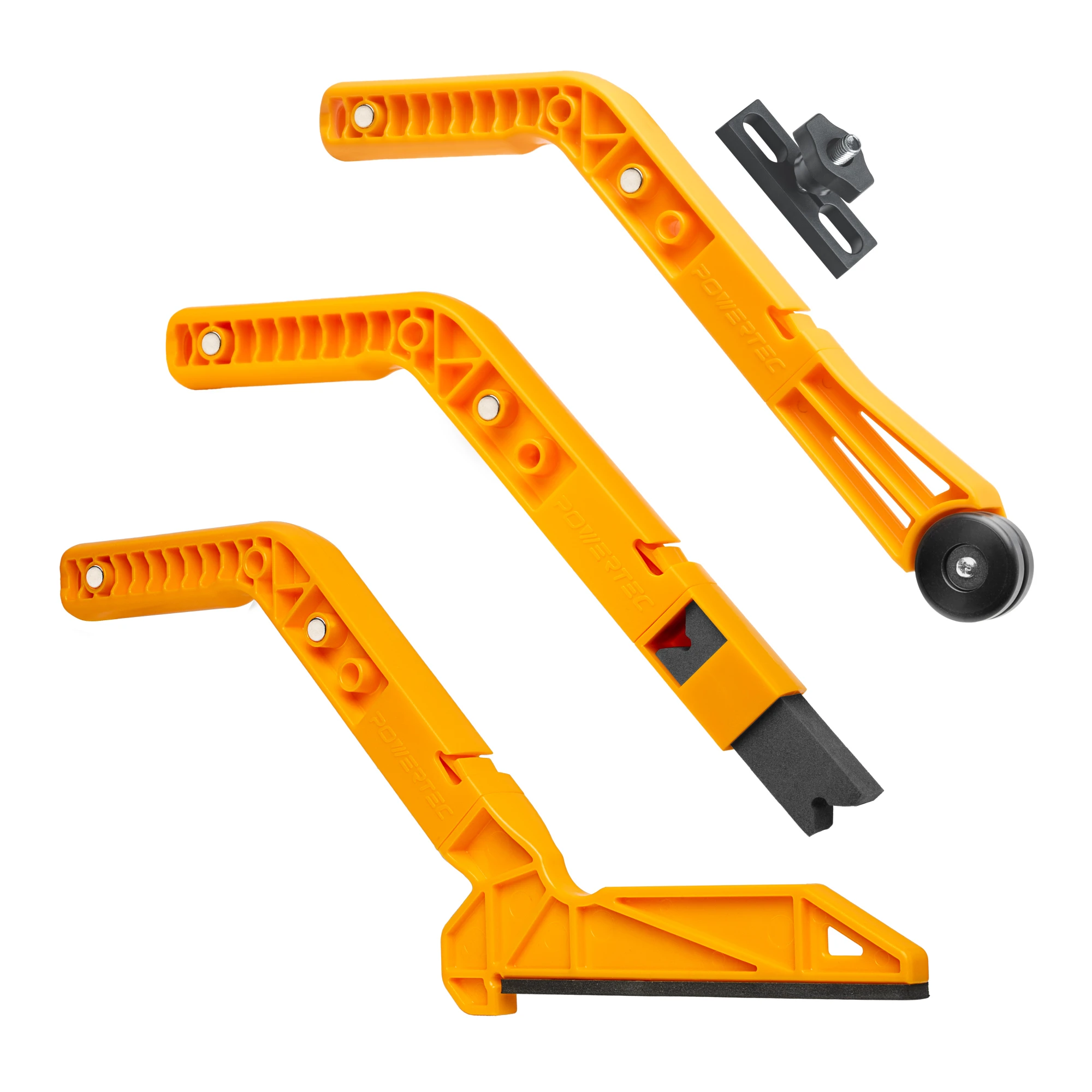
Best for: Woodworkers who use several machines or want multiple configurations ready for different cuts.
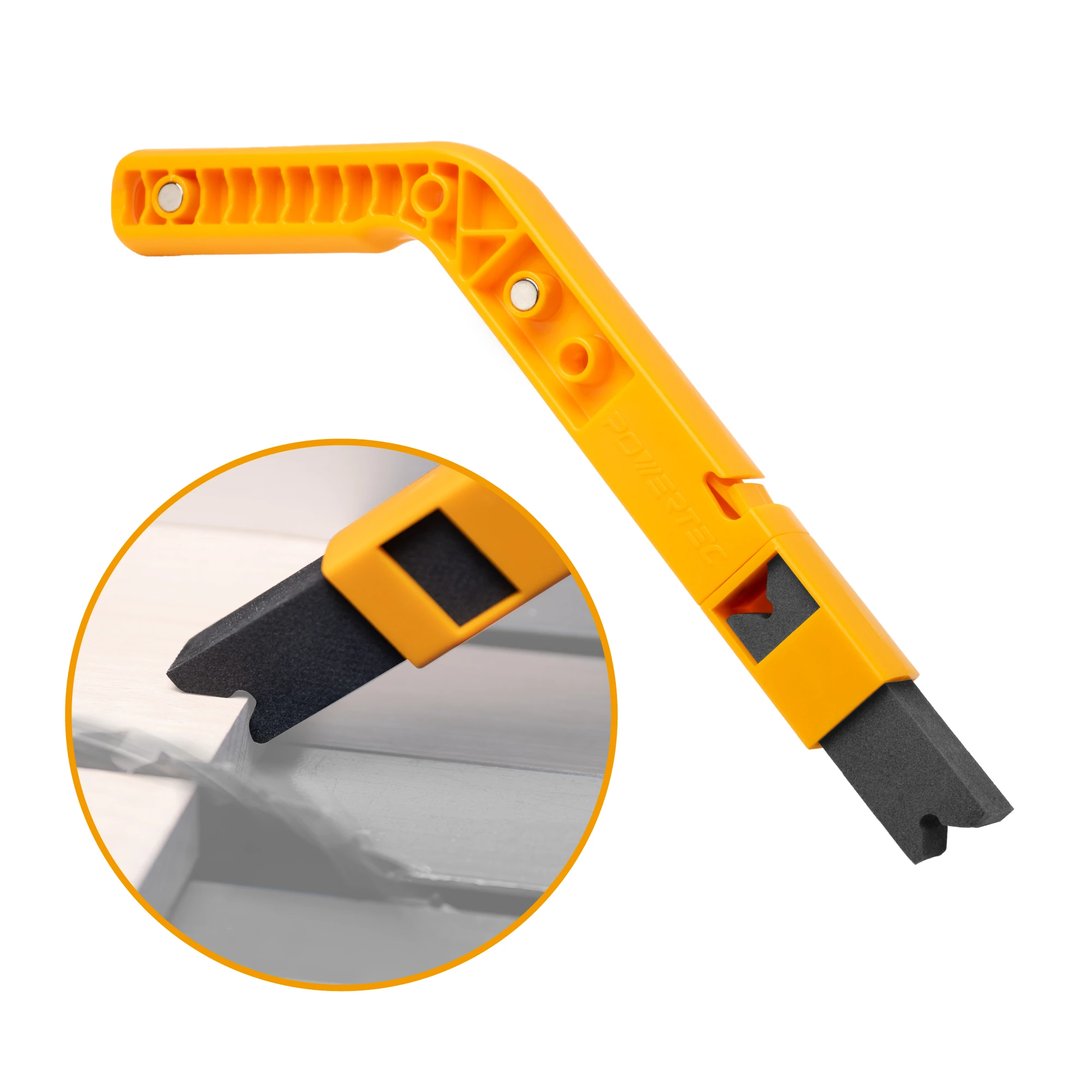
Best for: Narrow stock, precision feeding, and operations that benefit from a high-friction contact surface.
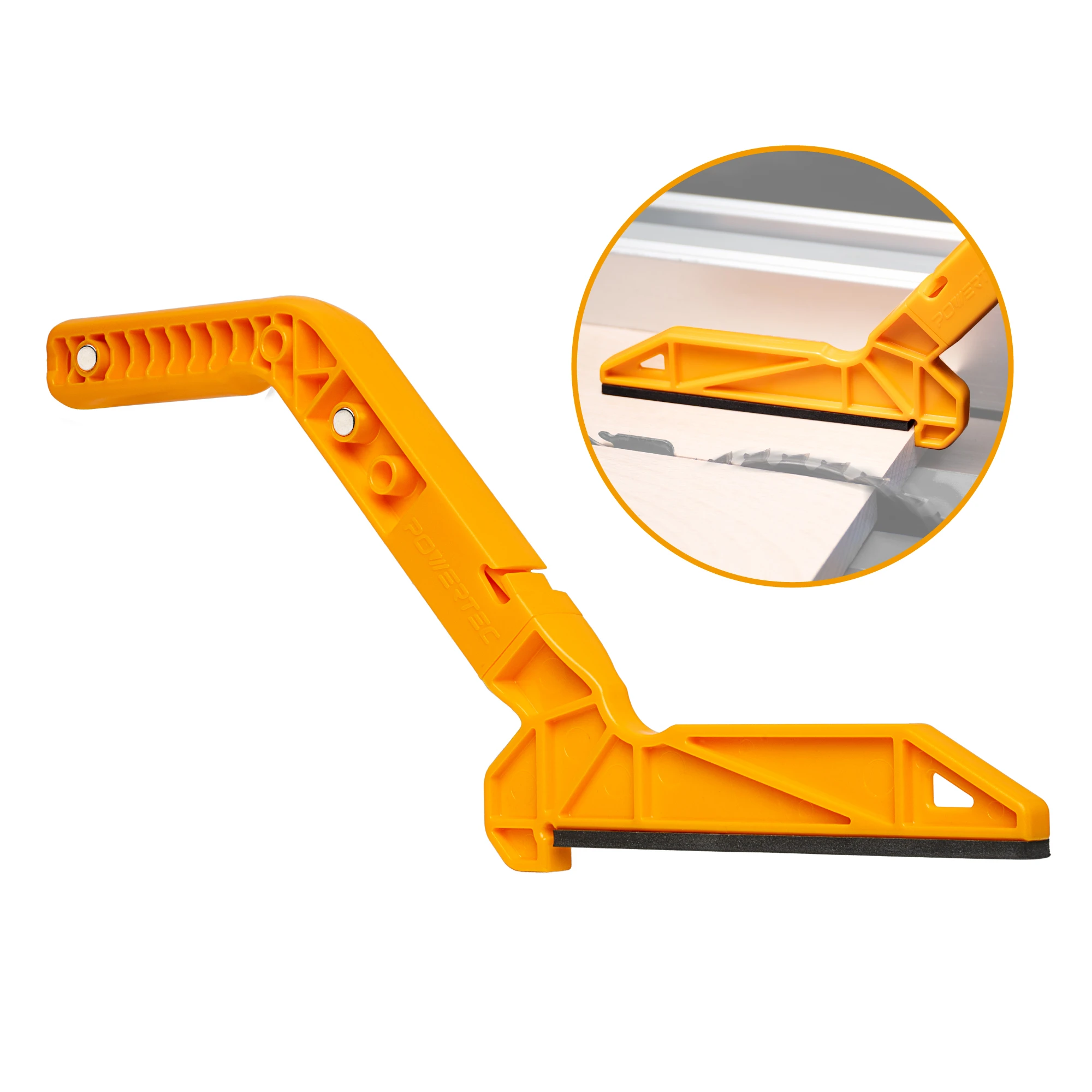
Best for: Longer stock, rear-edge engagement, and operations needing additional reach and downward control.
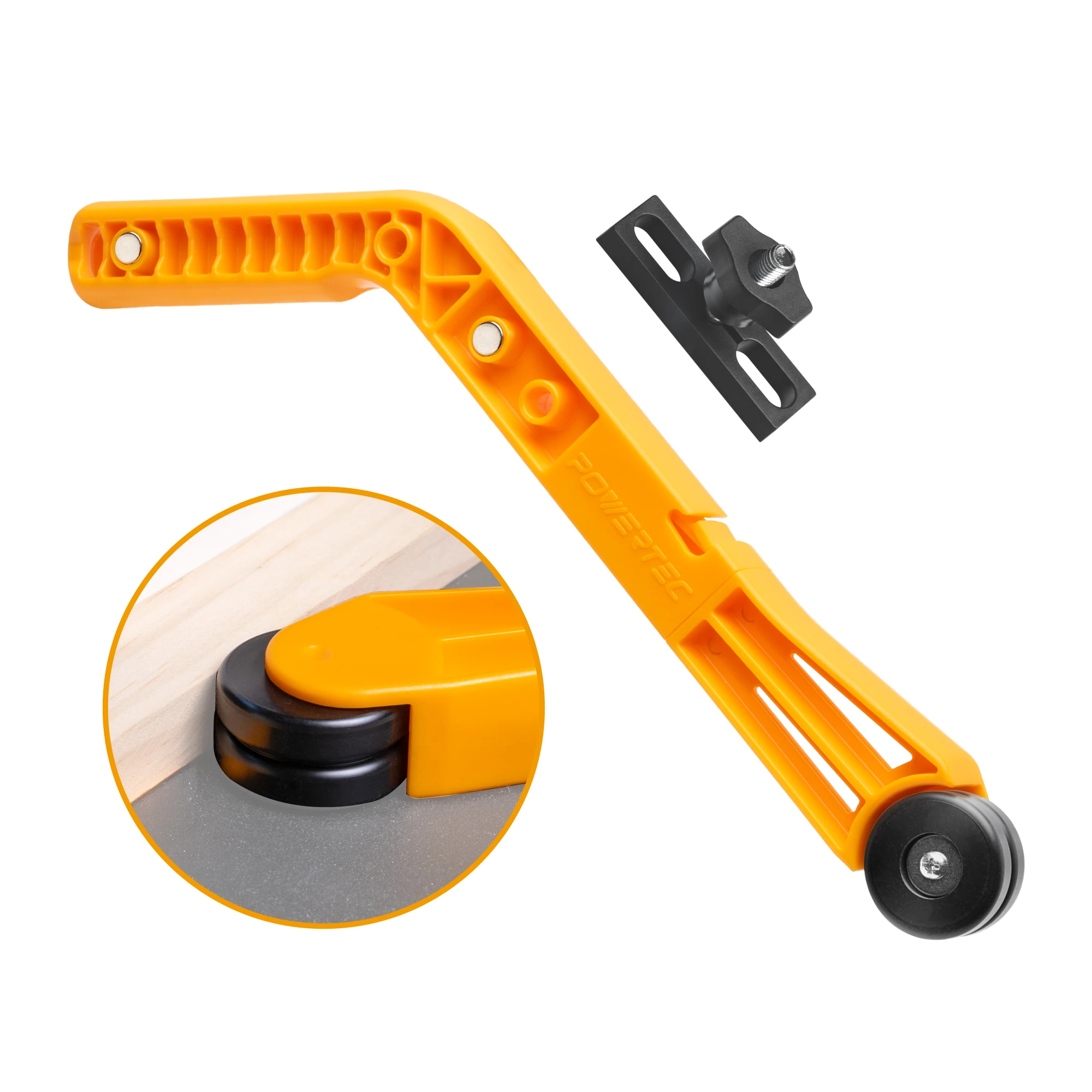
Best for: Maintaining pressure against a fence while feeding long stock or repeating consistent fence-guided cuts.
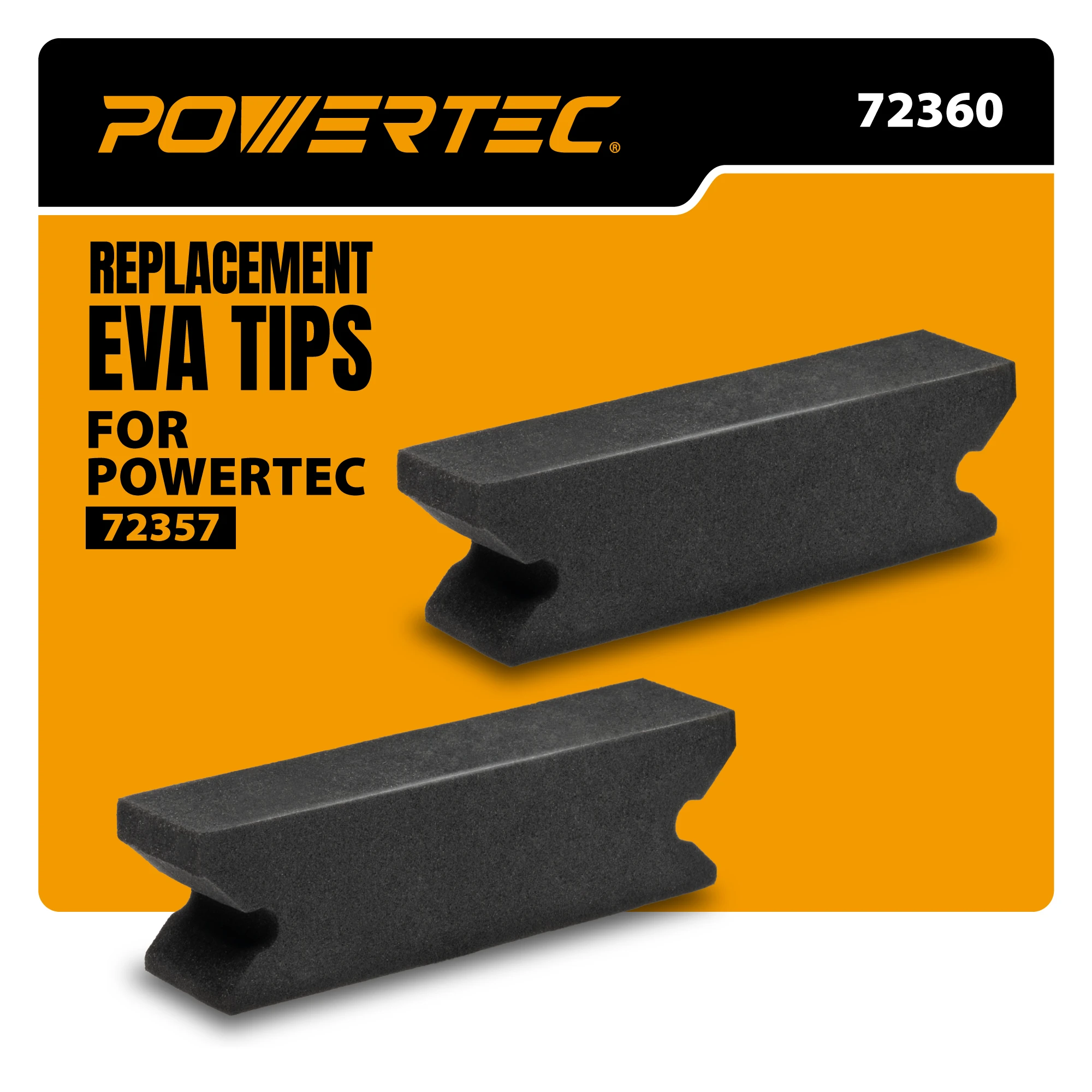
Best for: Replacing a worn, cut, or damaged contact surface on the 72356 and 72357 push-stick systems.
Frequently Asked Questions About Push Sticks
When should you use a push stick on a table saw?
What is the difference between a push stick and a push block?
What is EVA on a push stick?
What should I do if the push stick touches the blade?
Can a push stick prevent kickback?
Can I use a push stick on a router table or band saw?
How often should a push stick be replaced?
For machine-specific safety instructions, always begin with the manual supplied by the manufacturer.
OSHA: Woodworking Table Saws | OSHA: Point-of-Operation Guidance | This Is Carpentry: SawStop Portable Jobsite Saw