
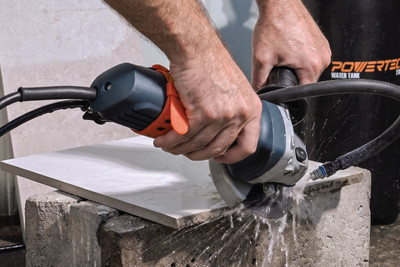
How Does Dust Suppression Work? A Guide to Wet Cutting Tile, Concrete & Masonry
POWERTEC on Nov 25th 2026
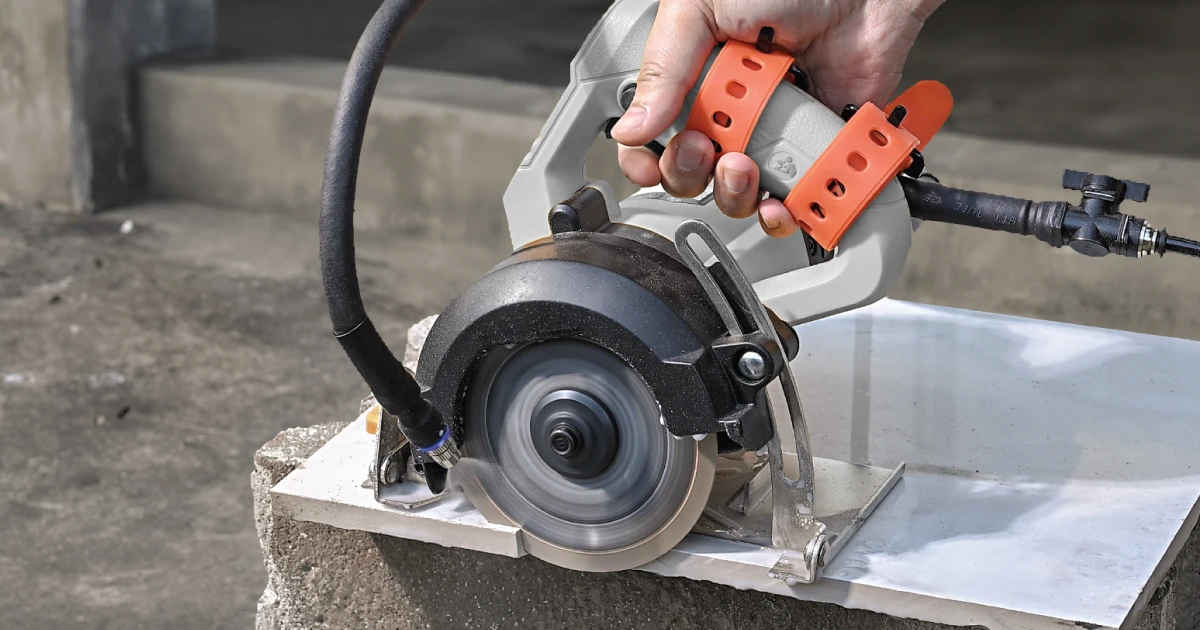
Cutting tile, concrete, stone, brick, and other masonry materials can send fine dust into the air and across the work area. When these materials contain crystalline silica, cutting can also release very small respirable crystalline silica particles that can be inhaled.
This isn't just a cleanup concern. OSHA identifies occupational exposure to respirable crystalline silica as a serious health hazard associated with silicosis, lung cancer, chronic obstructive pulmonary disease (COPD), and kidney disease. OSHA: Crystalline Silica Health Effects
One way to control dust at the source during applicable cutting operations is wet-cutting dust suppression—delivering water directly to the cutting area to reduce airborne dust.
During wet-cutting applications, that water can also help cool and lubricate the blade, reduce friction and heat buildup, and flush debris away from the cut.
Dust suppression can involve different methods depending on the application. For this guide, we're focusing specifically on wet cutting dust suppression: how it works, where it can be used, and how to deliver controlled water to the point of the cut.
What Is Dust Suppression?
Dust suppression is a method of controlling dust close to where it is generated before it spreads through the surrounding air and work area.
For cutting applications involving silica-containing materials such as tile, concrete, stone, brick, and other masonry, one approach is to use water at the point of the cut.
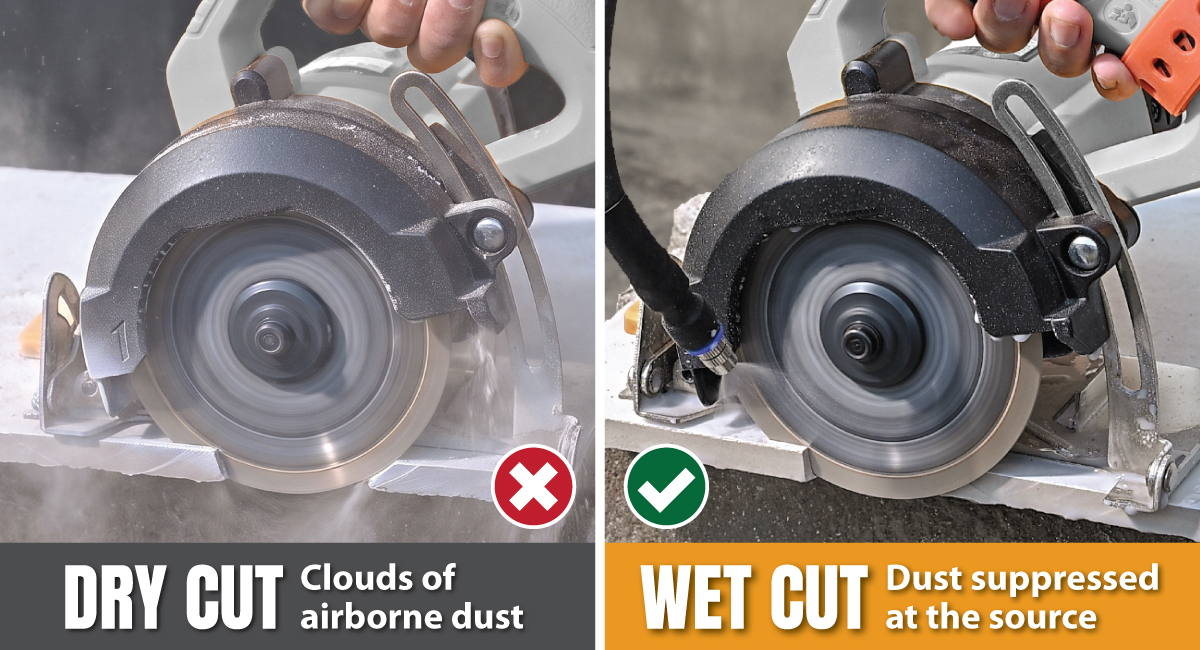
Instead of allowing cutting dust to immediately become airborne, water is delivered where the blade meets the material to wet the cutting area and help reduce the amount of dust released into the air.
OSHA recognizes wet cutting as an engineering-control method for specified construction applications involving silica-containing materials. Its guidance for walk-behind saws, for example, describes continuously directing water onto the blade and cutting area to wet the material and reduce the amount of dust generated. OSHA: Control of Silica Dust in Construction
Controlling dust close to where it is generated can help limit how much dust spreads through the surrounding work area, making dust suppression an important part of maintaining a cleaner, healthier work environment.
How Does Wet Cutting Dust Suppression Work?
A wet cutting dust suppression system brings water close to the source of the dust instead of dealing with the dust after it has spread through the work area.
The basic process is straightforward:
|
01
|
1. Direct Water at the Point of the Cut |
A hose, nozzle, or adjustable wand delivers water where the blade or bit contacts the material.
Positioning matters. The water needs to reach the area where the cutting action is generating dust.
|
02
|
2. Help Suppress Airborne Dust at the Source |
As the tool cuts through the material, water wets the cutting area and helps reduce the amount of dust that becomes airborne.
This approach can be used in wet-cutting applications involving silica-containing materials such as tile, concrete, stone, brick, and other masonry.
Additional Advantages of Wet Cutting
Dust control isn't the only benefit of delivering water to the cutting area.
During wet-cutting applications, water can also help:
These additional benefits support the cutting process while the water helps control dust at its source.
Bringing Controlled Water to the Point of the Cut
Effective wet cutting depends on getting water where it is needed: directly at the cutting area.
Depending on the tool and setup, this can mean adding an external water-delivery attachment that can be positioned and adjusted around the blade or bit.
That's where the POWERTEC Water Dust Suppression Attachment (72445) comes in.
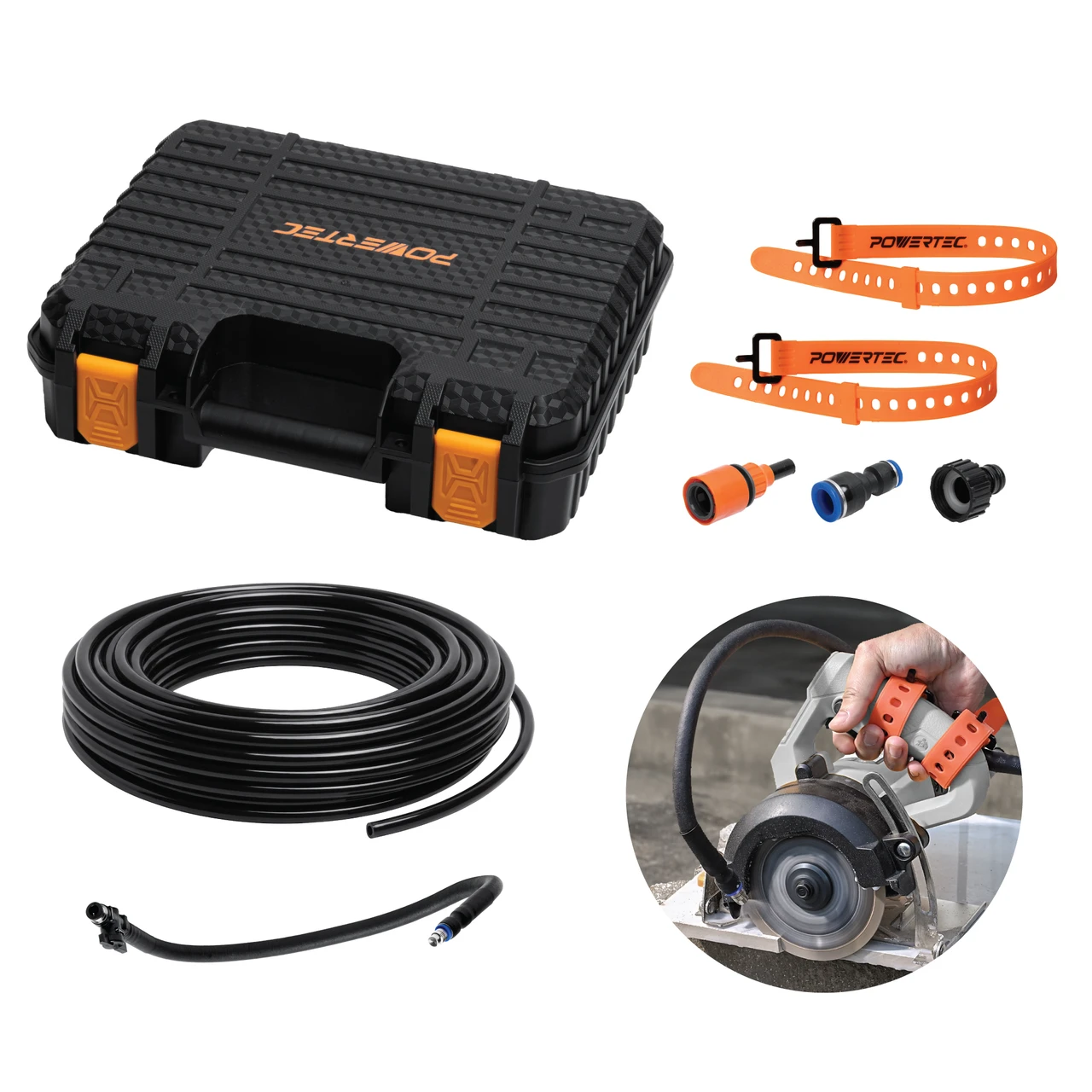
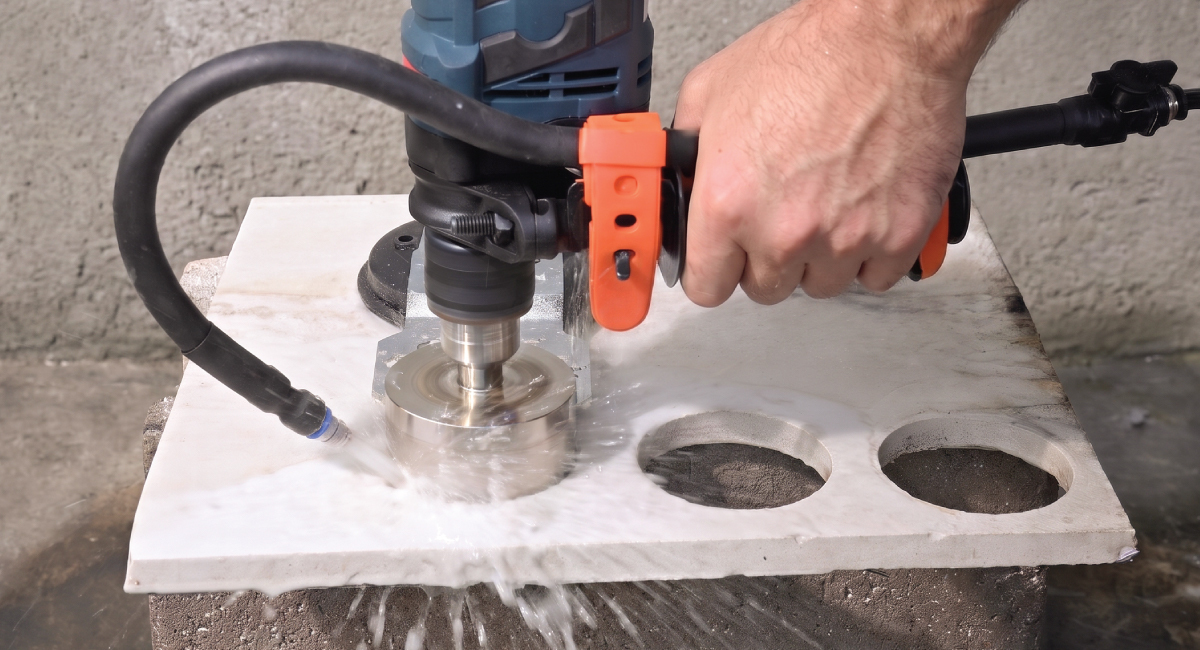
POWERTEC Water Dust Suppression Attachment (72445)The POWERTEC Water Dust Suppression Attachment (72445) is an adjustable water-delivery attachment designed to bring clean water directly to the cutting area when used with wet-rated grinders, saws, and drills. |
 |
Position the Water Where You Need It
The 22-5/8" bendable spray wand can be positioned so water reaches the point where the blade or bit meets the material.
Once adjusted, the wand is designed to hold its position. Two heavy-duty TPU straps secure the wand to the wet-rated power tool.
Adjust the Water Flow
A built-in flow valve lets you adjust the water delivery for the application.
A fine mist provides lighter water coverage while helping suppress airborne dust. Increase the flow for more direct blade cooling and to help flush debris from the cutting area.
Connect to a Standard Faucet
The included 33 ft anti-tangle hose uses quick-connect fittings to connect to a standard 3/4" GHT garden faucet.
The adjustable wand can then be positioned to direct water where the blade or bit meets the material, helping suppress airborne dust while supporting blade cooling and debris removal during wet cutting.
Three Ways to Supply Water to Your Wet-Cutting Setup
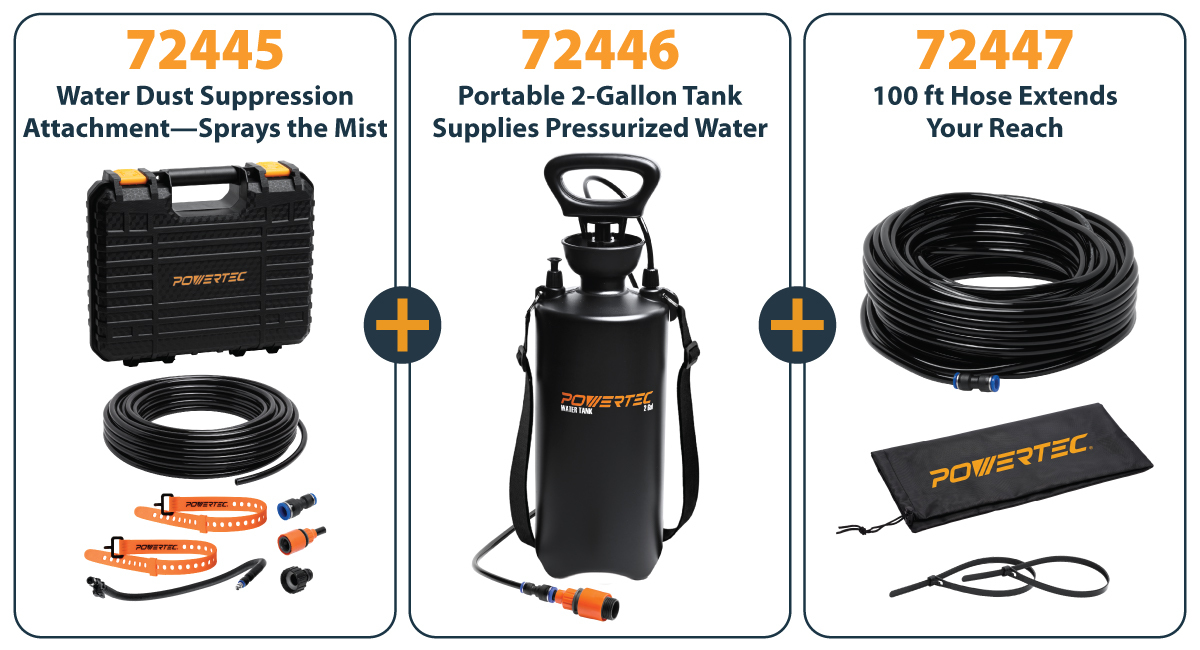
Different job sites don't always provide the same access to water. The POWERTEC Water Dust Suppression Attachment (72445) can be configured with two supporting products—the POWERTEC 2-Gallon Portable Water Tank (72446) and POWERTEC 100 Ft Extension Hose (72447)—to adapt the water supply to the work area.
|
|
|
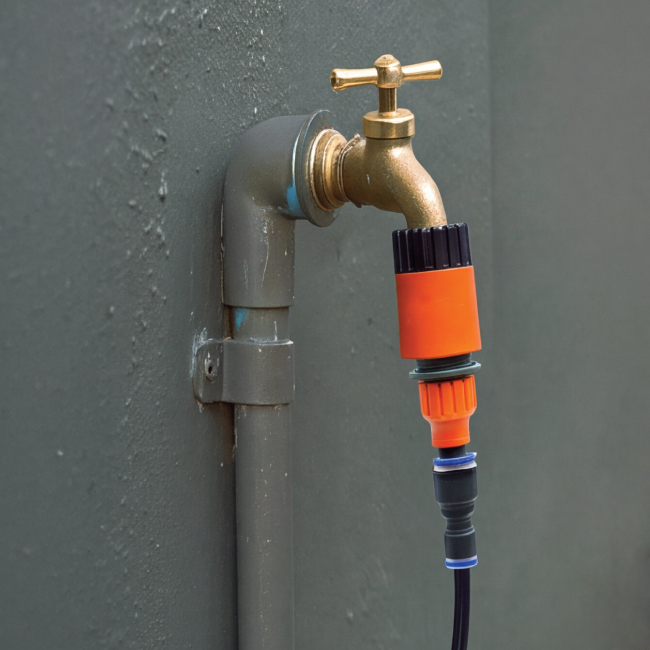
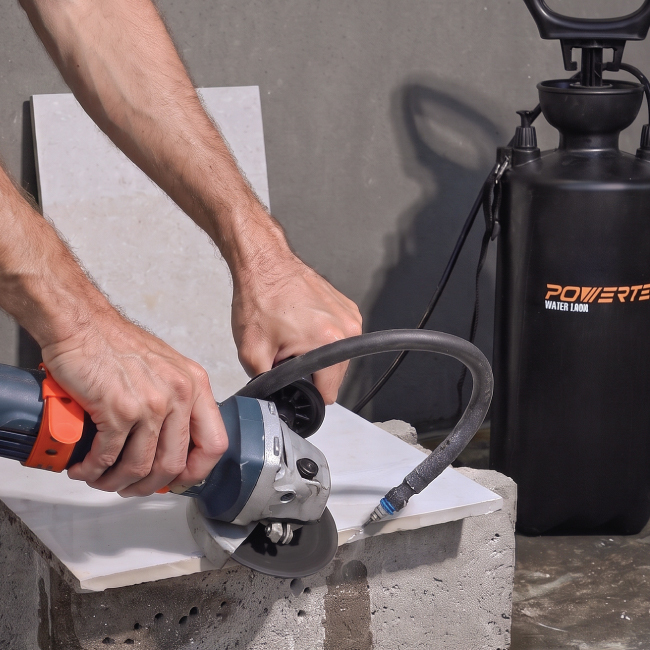

Together, the three products create a modular water-delivery system that can be configured around different working environments.
Which Water Setup Fits the Job?
| SITUATION | WHAT YOU NEED | WHAT IT DOES |
|---|---|---|
| Faucet is nearby | Water Attachment (72445) | Direct connection using the included 33 ft hose |
| No convenient faucet | Water Attachment (72445) + Portable Tank (72446) | Portable 2-gallon manual-pump water supply |
| Water source is farther away | Water Attachment (72445) + Extension Hose (72447) | An additional 100 ft of reach |
| Need portable water plus additional reach | Water Attachment (72445) + Portable Tank (72446) + Extension Hose (72447) | Portable water supply with additional reach |
Where Can Wet Cutting Dust Suppression Be Used?
Cutting silica-containing tile, concrete, stone, brick, and other masonry materials can generate respirable crystalline silica dust.
During applicable wet-cutting operations, delivering water to the cutting area can help control dust at its source while also supporting the cutting process.
The POWERTEC Water Dust Suppression Attachment (72445) is designed to direct controlled water to the cutting area when used with wet-rated grinders, saws, and drills.
Tile CuttingDirecting water to the point of the cut can help suppress dust while cooling and lubricating the blade during wet cutting of applicable tile materials. |
Concrete CuttingControlled water can be delivered where the blade or bit meets the concrete, helping suppress dust close to where it is generated. |
Stone CuttingThe adjustable wand can be positioned close to the blade or bit during wet cutting of stone, helping direct water where the cut is taking place. |
Brick & Masonry CuttingThe same principle applies when wet cutting brick and other masonry materials: direct water close to the cutting action to help control dust at its source. |
Wet Cutting vs. Dry Dust Collection
Wet cutting and dry dust collection control cutting dust in different ways.
| Wet cutting dust suppression | Dry dust collection |
|---|---|
| Delivers water at or near the cutting area | Uses suction to capture dust |
| Helps wet dust as it is generated | Draws dust toward a collection system |
| Can also help cool and lubricate the blade | Keeps the cutting operation dry |
| Requires tools and equipment suitable for wet use | Requires compatible dust-extraction equipment |
| Creates wet debris or slurry | Collects dry dust |
The appropriate dust-control method depends on the tool, material, task, work environment, and applicable requirements.
Always follow the cutting-tool manufacturer's instructions and applicable workplace safety requirements, rather than assuming one control method fits every application.
Managing Wet-Cutting Slurry
Water helps control cutting dust, but the material it captures still needs to be cleaned up.
Wet cutting can produce slurry—a mixture of water and material removed during cutting. If silica-containing slurry is allowed to dry and is later disturbed, dust can become airborne again.
OSHA's wet-cutting guidance recommends cleaning up slurry before it dries.
Dust control therefore doesn't necessarily end when the cut is finished. Proper cleanup is part of managing the work area.
Before You Start: Make Sure Your Tool Is Wet-Rated
Never introduce water to a power tool unless the tool manufacturer approves it for wet use.
The POWERTEC Water Dust Suppression Attachment (72445) is intended for use with clean water and wet-rated tools.
Before use:
| ✓Confirm that your grinder, saw, or drill is approved by its manufacturer for wet cutting. | ✓Use appropriate GFCI (Ground-Fault Circuit Interrupter) protection when working with water and electric tools. |
| ✓Follow appropriate electrical-safety practices for wet work. | ✓Use clean water only—no chemicals or solvents. |
| ✓Keep the water valve off while installing the attachment. | ✓Follow the tool and blade manufacturers' instructions. |
| ✓Follow applicable workplace safety and dust-control requirements. |
OSHA also identifies electrical safety as a particular concern when water is used for dust control on construction sites.
Wet methods should not be assumed to eliminate the need for other controls. OSHA notes, for example, that wet methods used indoors or in enclosed spaces may require additional ventilation depending on the operation.
Build Your Water Dust Suppression Setup
Start with the POWERTEC Water Dust Suppression Attachment (72445) and configure the water supply around where you need to work.
POWERTEC Water Dust Suppression Attachment (72445)Direct adjustable water to the cutting area of wet-rated grinders, saws, and drills. SHOP 72445 |
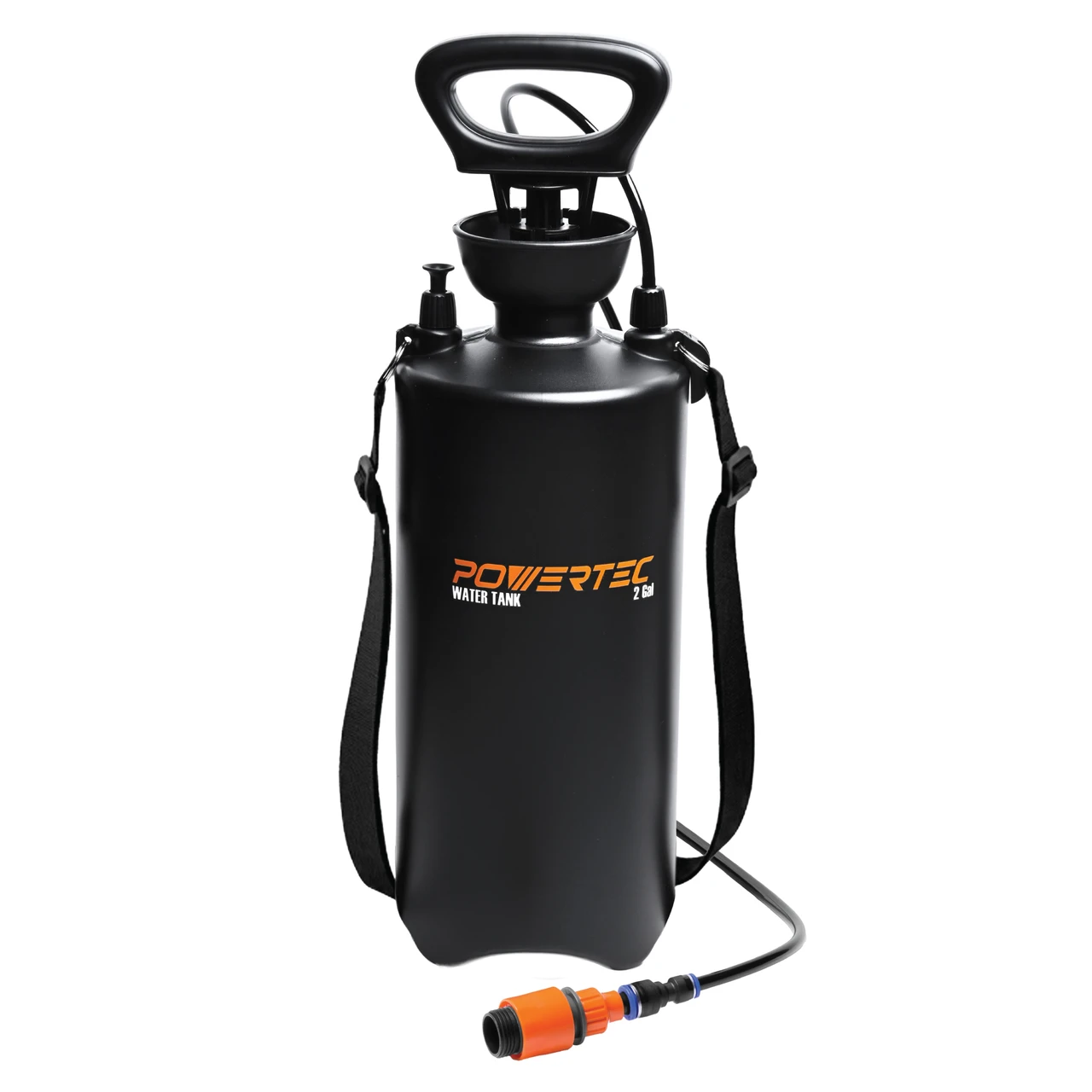
POWERTEC 2-Gallon Portable Water Tank (72446)Bring a manual-pump pressurized water supply to work areas without convenient faucet access. SHOP 72446 |
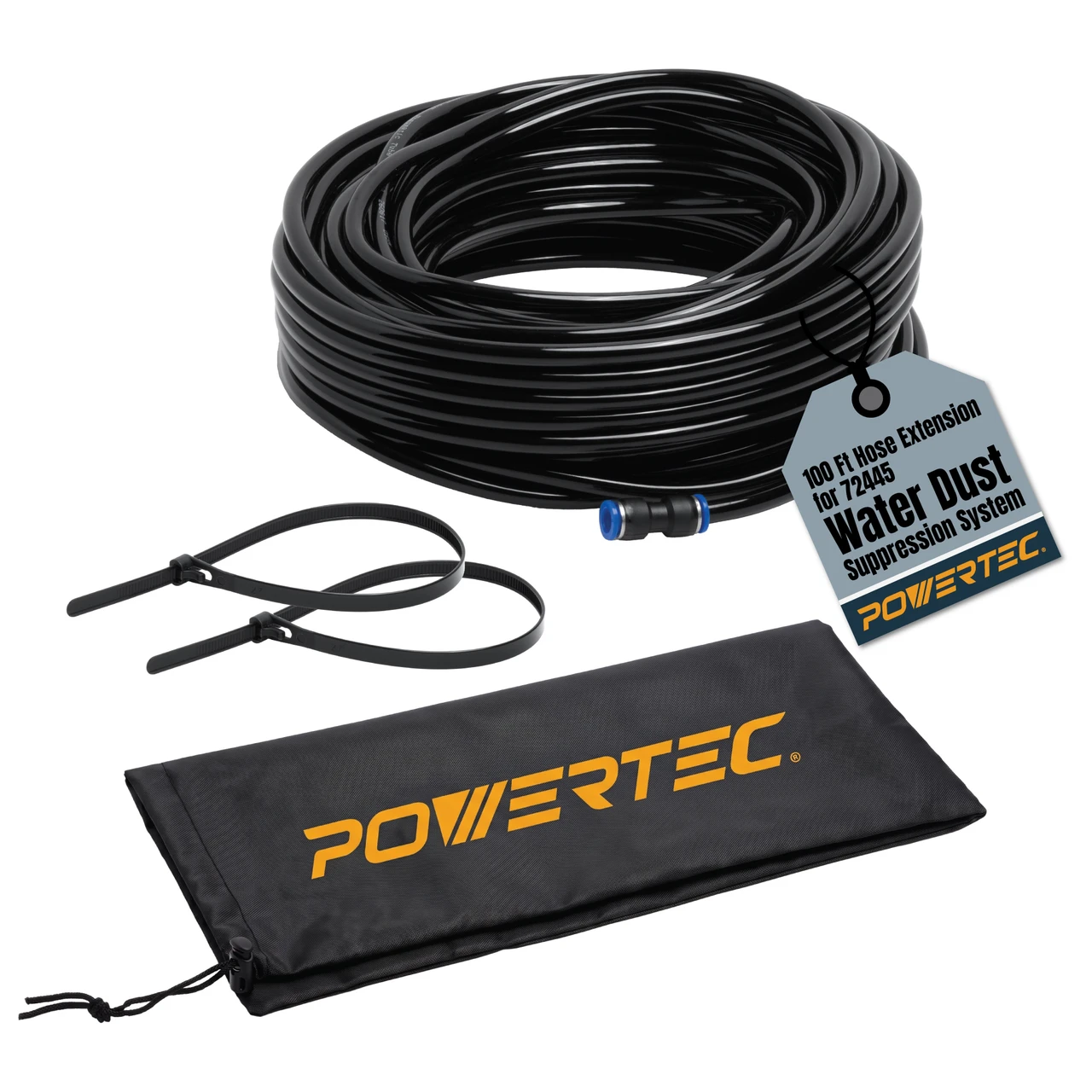
POWERTEC 100 Ft Extension Hose (72447)Add 100 ft of reach when the available water source is farther from the cutting area. SHOP 72447 |
Wet Cutting Dust Suppression FAQs
What is wet cutting dust suppression?
Wet cutting dust suppression involves delivering water at or near the cutting area to wet the material and help reduce the amount of dust that becomes airborne as the cut is made.
How does water help suppress silica-containing dust during cutting?
Water delivered at the point of the cut wets the material as the blade cuts through it, helping reduce the amount of dust released into the air. OSHA recognizes wet methods as a dust-control approach for specified silica-generating cutting operations.
Can you use a water attachment with an angle grinder?
Only use water with an angle grinder that its manufacturer specifically approves for wet use or wet cutting.
The POWERTEC Water Dust Suppression Attachment (72445) is designed to mount an adjustable water-delivery wand to wet-rated grinders, saws, and drills. Never introduce water to a power tool that isn't approved for wet operation.
Do you need a faucet to use the POWERTEC Water Dust Suppression Attachment (72445)?
No. The 72445 can connect to a standard 3/4" GHT garden faucet using its included 33 ft hose or be paired with the POWERTEC 2-Gallon Portable Water Tank (72446) when convenient faucet access isn't available.